What does Esther 9:10 mean?
“The ten sons of Haman the son of Hammedatha, the enemy of the Jews, slew they; but on the spoil laid they not their hand.” — Esther 9:10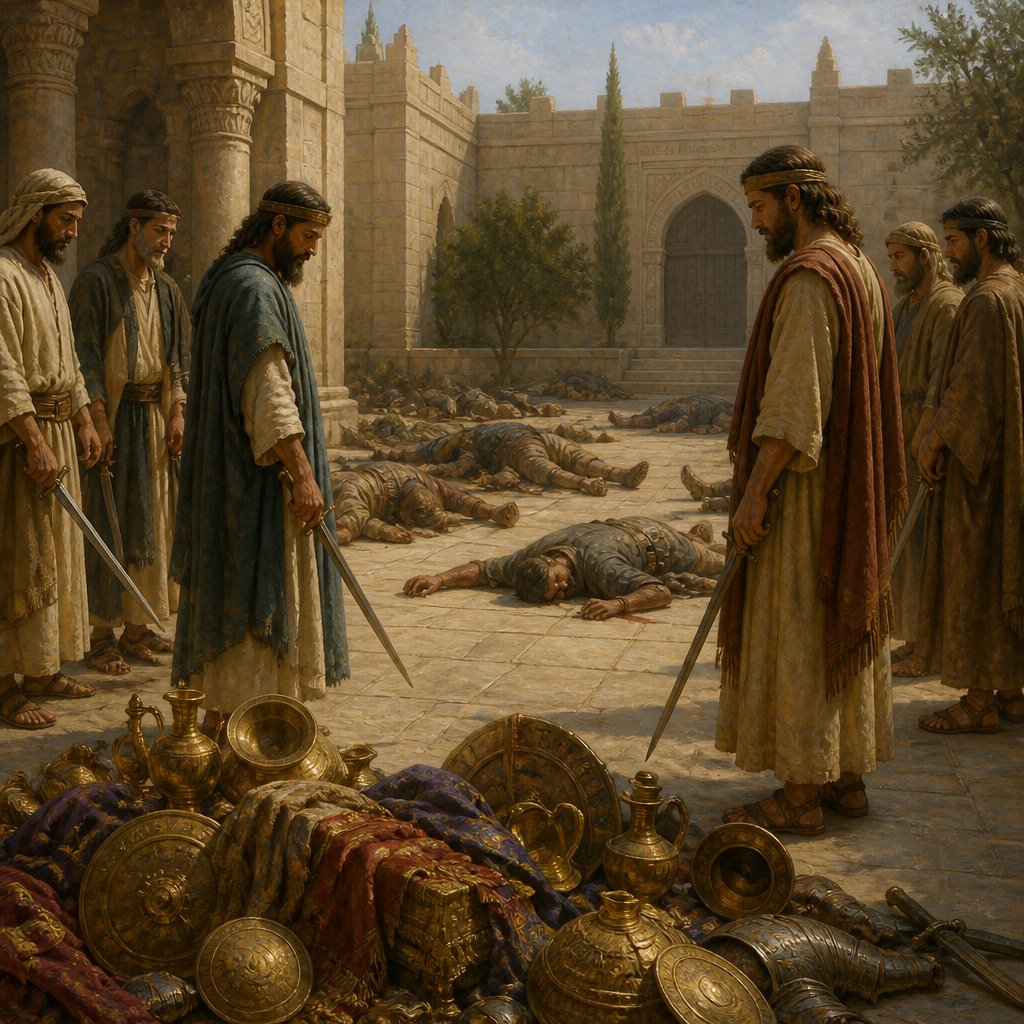
The verse Esther 9:10 in the King James Version of the Bible reads, “The ten sons of Haman the son of Hammedatha, the enemy of the Jews, slew they; but on the spoil laid they not their hand.” This verse is found within the Book of Esther, which is the 17th book in the Old Testament. This book is unique in that it does not explicitly mention the name of God, yet His providential care and sovereignty are evident throughout the narrative.
The context of this verse occurs during the climax of the story of Esther, which takes place in Persia during the reign of King Xerxes I. Haman, an official in the court of King Xerxes, sought to destroy the Jewish people and had received permission from the king to do so. However, through the courage and wisdom of Queen Esther and her cousin Mordecai, the plot is thwarted, and the Jewish people are ultimately saved. The verse refers to the aftermath of this victory, where the ten sons of Haman, who were also complicit in their father’s evil plan, were killed. Despite the victory, the Jews refused to take any spoils from their enemies, choosing instead to display a spirit of mercy and grace.
One of the primary themes in this verse is the triumph of good over evil. Throughout the book of Esther, we see the providential hand of God at work, orchestrating events to bring about the deliverance of His people. The defeat of Haman and his sons at the hands of the Jews is a clear demonstration of this theme. It serves as a reminder that God is ultimately in control and that he will always come to the aid of His people in times of trouble.
Another important theme in this verse is that of mercy and forgiveness. Despite the horrific plot that Haman had devised against the Jews, and despite the great victory that they had achieved, the Jews chose not to take vengeance on their enemies. Instead, they chose to extend mercy and grace, a reflection of the character of God himself. This act of mercy contrasts sharply with Haman’s own vengeful spirit, demonstrating the righteousness of the Jewish people in comparison to their enemies.
Symbolism also plays a significant role in this verse. The number ten is symbolic in the Bible and is often associated with completeness or perfection. In this case, the fact that all ten of Haman’s sons were killed symbolizes the completeness of the victory that the Jews achieved over their enemies. The refusal to take any spoils from their enemies further symbolizes their commitment to righteousness and purity, even in the face of great temptation and opportunity for personal gain.
Overall, Esther 9:10 is a powerful reminder of the triumph of good over evil, the importance of mercy and forgiveness, and the sovereignty of God in the affairs of His people. It serves as an encouragement to readers to trust in God's providence, seek righteousness, and extend mercy to others, even in the face of great adversity.
Get our apps


Artwork for Esther 9:10

Esther 9:10 - "The ten sons of Haman the son of Hammedatha, the enemy of the Jews, slew they; but on the spoil laid they not their hand."
"The ten sons of Haman the son of Hammedatha, the enemy of the Jews, slew they; but on the spoil laid they not their hand." - Esther 9:10

Esther 4:9 - "And Hatach came and told Esther the words of Mordecai."

Esther 9:32 - "And the decree of Esther confirmed these matters of Purim; and it was written in the book."

Esther 9:9 - "And Parmashta, and Arisai, and Aridai, and Vajezatha,"

Esther 4:10 - "¶ Again Esther spake unto Hatach, and gave him commandment unto Mordecai;"

Esther 9:29 - "Then Esther the queen, the daughter of Abihail, and Mordecai the Jew, wrote with all authority, to confirm this second letter of Purim."

"And Hatach came and told Esther the words of Mordecai." - Esther 4:9

Esther 9:8 - "And Poratha, and Adalia, and Aridatha,"

Esther 9:7 - "And Parshandatha, and Dalphon, and Aspatha,"

"And the decree of Esther confirmed these matters of Purim; and it was written in the book." - Esther 9:32

Esther 2:10 - "Esther had not shewed her people nor her kindred: for Mordecai had charged her that she should not shew it."
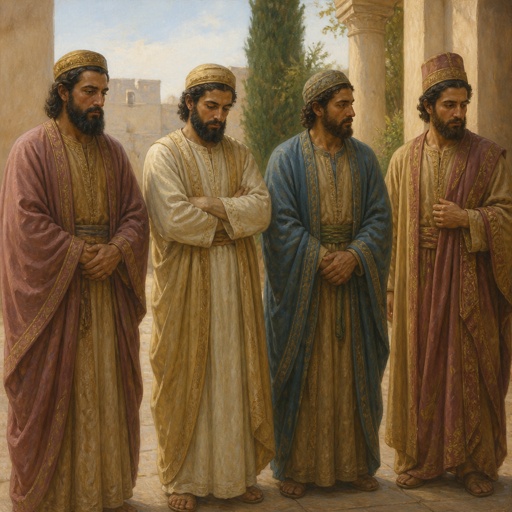
"And Parmashta, and Arisai, and Aridai, and Vajezatha," - Esther 9:9
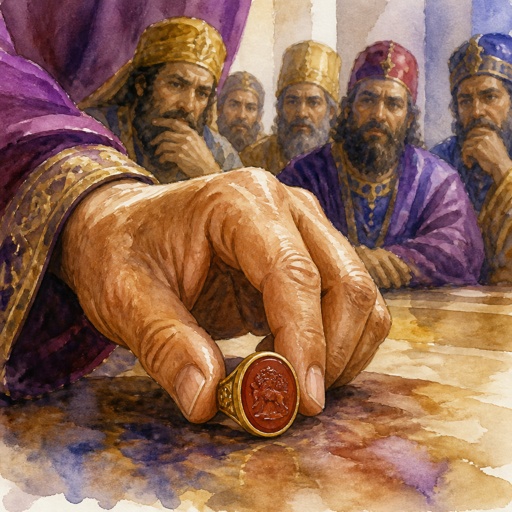
Esther 3:10 focus on ring

Esther 9:31 - "To confirm these days of Purim in their times appointed, according as Mordecai the Jew and Esther the queen had enjoined them, and as they had decreed for themselves and for their seed, the matters of the fastings and their cry."

Esther 9:13 - "Then said Esther, If it please the king, let it be granted to the Jews which are in Shushan to do to morrow also according unto this day's decree, and let Haman's ten sons be hanged upon the gallows."
"And Parshandatha, and Dalphon, and Aspatha," - Esther 9:7
"¶ Again Esther spake unto Hatach, and gave him commandment unto Mordecai;" - Esther 4:10
"And Poratha, and Adalia, and Aridatha," - Esther 9:8

Esther 9:6 - "And in Shushan the palace the Jews slew and destroyed five hundred men."

Esther 10:1 - "And the king Ahasuerus laid a tribute upon the land, and upon the isles of the sea."

Esther 9:25 - "But when Esther came before the king, he commanded by letters that his wicked device, which he devised against the Jews, should return upon his own head, and that he and his sons should be hanged on the gallows."

Esther 9:11 - "On that day the number of those that were slain in Shushan the palace was brought before the king."

Esther 9:23 - "And the Jews undertook to do as they had begun, and as Mordecai had written unto them;"
"Then Esther the queen, the daughter of Abihail, and Mordecai the Jew, wrote with all authority, to confirm this second letter of Purim." - Esther 9:29

Esther 9:17 - "On the thirteenth day of the month Adar; and on the fourteenth day of the same rested they, and made it a day of feasting and gladness."

Esther 1:9 - "Also Vashti the queen made a feast for the women in the royal house which belonged to king Ahasuerus."

Esther 9:14 - "And the king commanded it so to be done: and the decree was given at Shushan; and they hanged Haman's ten sons."

Esther 7:10 - "So they hanged Haman on the gallows that he had prepared for Mordecai. Then was the king's wrath pacified."

Esther 9:21 - "To stablish this among them, that they should keep the fourteenth day of the month Adar, and the fifteenth day of the same, yearly,"