What does Esther 9:15 mean?
“For the Jews that were in Shushan gathered themselves together on the fourteenth day also of the month Adar, and slew three hundred men at Shushan; but on the prey they laid not their hand.” — Esther 9:15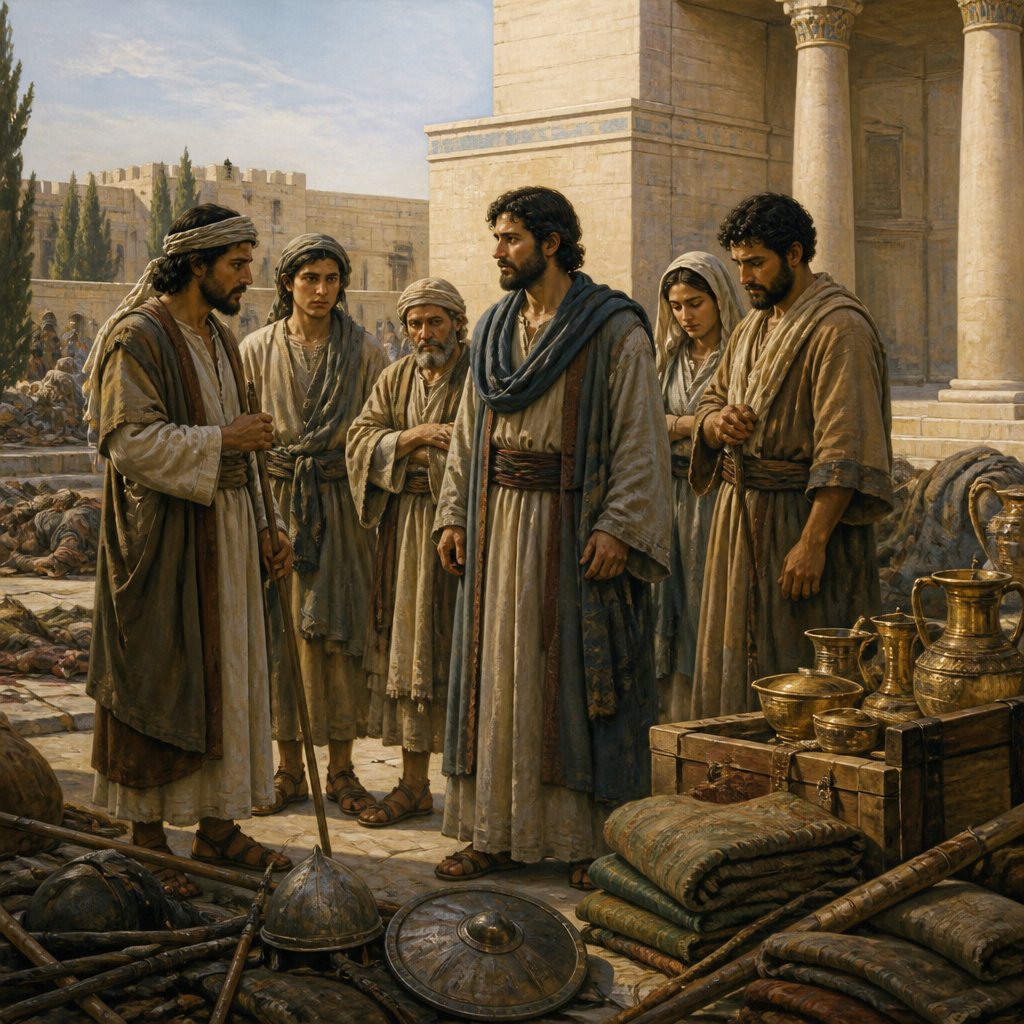
The book of Esther is a profound and fascinating story within the Old Testament. It is a narrative of courage, faith, and the ultimate triumph of good over evil. The verse Esther 9:15 in the King James Version reads:
"For the Jews that were in Shushan gathered themselves together on the fourteenth day also of the month Adar, and slew three hundred men at Shushan; but on the prey they laid not their hand."
This verse takes place during the culmination of the story of Esther, where the Jewish people are under threat of extermination from the evil Haman. However, through the courage of Queen Esther and the intervention of God, the Jewish people are ultimately saved. The verse speaks of the Jewish people in the city of Shushan gathering together on the fourteenth day of the month Adar and slaying three hundred men. It is important to note that the Jewish people did not take any plunder from the defeated, showing a sense of justice and righteousness in their actions.
One of the key themes present in this verse is the theme of deliverance. The Jewish people were under the threat of extermination, and through their unity and faith in God, they were able to overcome their enemies. This theme reflects the overarching theme of the book of Esther, which is the deliverance of the Jewish people from their enemies. It serves as a powerful reminder of the faithfulness of God in delivering His people from harm and the importance of standing together in times of adversity.
Another important theme in this verse is the theme of justice. The Jewish people, while facing an existential threat, did not seek revenge or take plunder from those they defeated. Instead, they acted with righteousness and integrity, demonstrating their commitment to upholding the moral principles of their faith. This theme of justice and righteousness is an essential aspect of the Jewish faith and is exemplified by the actions of the Jewish people in this verse.
The context of this verse is crucial to understanding its significance. The book of Esther takes place during the time of the Babylonian exile, a period of great upheaval and uncertainty for the Jewish people. The events in the book of Esther occur in the Persian Empire, where the Jewish people were a minority group facing persecution and discrimination. The story of Esther serves as a source of hope and inspiration for the Jewish people during a difficult time in their history.
Symbolism is also present in this verse, particularly in the number three hundred. In biblical numerology, the number three often symbolizes completeness or perfection. The fact that the Jewish people were able to defeat three hundred men without taking any plunder symbolizes the complete victory and righteousness of their actions. It also serves as a testament to their faith in God and the power of unity and courage in the face of adversity.
In conclusion, Esther 9:15 is a verse that encapsulates the themes of deliverance, justice, and righteousness within the larger narrative of the book of Esther. It serves as a powerful reminder of the faithfulness of God in delivering His people from harm, the importance of standing together in times of adversity, and the significance of acting with integrity and righteousness. This verse is a testament to the enduring message of hope and courage found in the story of Esther, and it continues to inspire and uplift readers to this day.
Get our apps


Artwork for Esther 9:15

Esther 9:15 - "For the Jews that were in Shushan gathered themselves together on the fourteenth day also of the month Adar, and slew three hundred men at Shushan; but on the prey they laid not their hand."
"For the Jews that were in Shushan gathered themselves together on the fourteenth day also of the month Adar, and slew three hundred men at Shushan; but on the prey they laid not their hand." - Esther 9:15

Esther 4:15 - "¶ Then Esther bade them return Mordecai this answer,"

Esther 4:9 - "And Hatach came and told Esther the words of Mordecai."

Esther 9:32 - "And the decree of Esther confirmed these matters of Purim; and it was written in the book."

Esther 9:9 - "And Parmashta, and Arisai, and Aridai, and Vajezatha,"

"¶ Then Esther bade them return Mordecai this answer," - Esther 4:15

Esther 9:29 - "Then Esther the queen, the daughter of Abihail, and Mordecai the Jew, wrote with all authority, to confirm this second letter of Purim."

"And Hatach came and told Esther the words of Mordecai." - Esther 4:9

Esther 9:8 - "And Poratha, and Adalia, and Aridatha,"

Esther 9:7 - "And Parshandatha, and Dalphon, and Aspatha,"

"And the decree of Esther confirmed these matters of Purim; and it was written in the book." - Esther 9:32
"And Parmashta, and Arisai, and Aridai, and Vajezatha," - Esther 9:9

Esther 9:31 - "To confirm these days of Purim in their times appointed, according as Mordecai the Jew and Esther the queen had enjoined them, and as they had decreed for themselves and for their seed, the matters of the fastings and their cry."

Esther 9:13 - "Then said Esther, If it please the king, let it be granted to the Jews which are in Shushan to do to morrow also according unto this day's decree, and let Haman's ten sons be hanged upon the gallows."

"And Parshandatha, and Dalphon, and Aspatha," - Esther 9:7

Esther 2:15 - "¶ Now when the turn of Esther, the daughter of Abihail the uncle of Mordecai, who had taken her for his daughter, was come to go in unto the king, she required nothing but what Hegai the king's chamberlain, the keeper of the women, appointed. And Esther obtained favour in the sight of all them that looked upon her."
"And Poratha, and Adalia, and Aridatha," - Esther 9:8

Esther 9:6 - "And in Shushan the palace the Jews slew and destroyed five hundred men."

Esther 9:25 - "But when Esther came before the king, he commanded by letters that his wicked device, which he devised against the Jews, should return upon his own head, and that he and his sons should be hanged on the gallows."

Esther 9:10 - "The ten sons of Haman the son of Hammedatha, the enemy of the Jews, slew they; but on the spoil laid they not their hand."

Esther 9:11 - "On that day the number of those that were slain in Shushan the palace was brought before the king."

Esther 9:23 - "And the Jews undertook to do as they had begun, and as Mordecai had written unto them;"
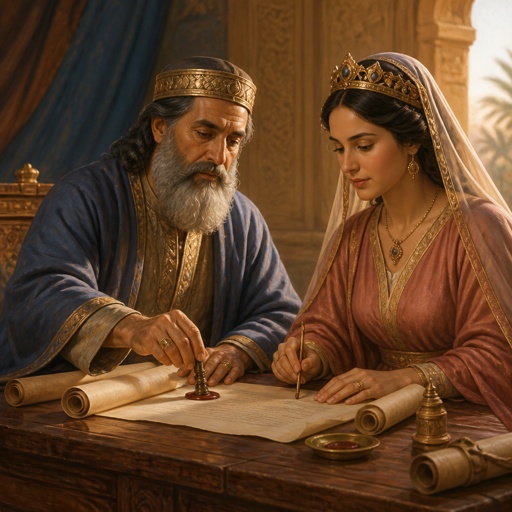
"Then Esther the queen, the daughter of Abihail, and Mordecai the Jew, wrote with all authority, to confirm this second letter of Purim." - Esther 9:29

Esther 9:17 - "On the thirteenth day of the month Adar; and on the fourteenth day of the same rested they, and made it a day of feasting and gladness."

Esther 1:9 - "Also Vashti the queen made a feast for the women in the royal house which belonged to king Ahasuerus."

Esther 9:14 - "And the king commanded it so to be done: and the decree was given at Shushan; and they hanged Haman's ten sons."

Esther 9:21 - "To stablish this among them, that they should keep the fourteenth day of the month Adar, and the fifteenth day of the same, yearly,"

Esther 9:3 - "And all the rulers of the provinces, and the lieutenants, and the deputies, and officers of the king, helped the Jews; because the fear of Mordecai fell upon them."

Esther 9:30 - "And he sent the letters unto all the Jews, to the hundred twenty and seven provinces of the kingdom of Ahasuerus, with words of peace and truth,"