What does Esther 9:19 mean?
“Therefore the Jews of the villages, that dwelt in the unwalled towns, made the fourteenth day of the month Adar a day of gladness and feasting, and a good day, and of sending portions one to another.” — Esther 9:19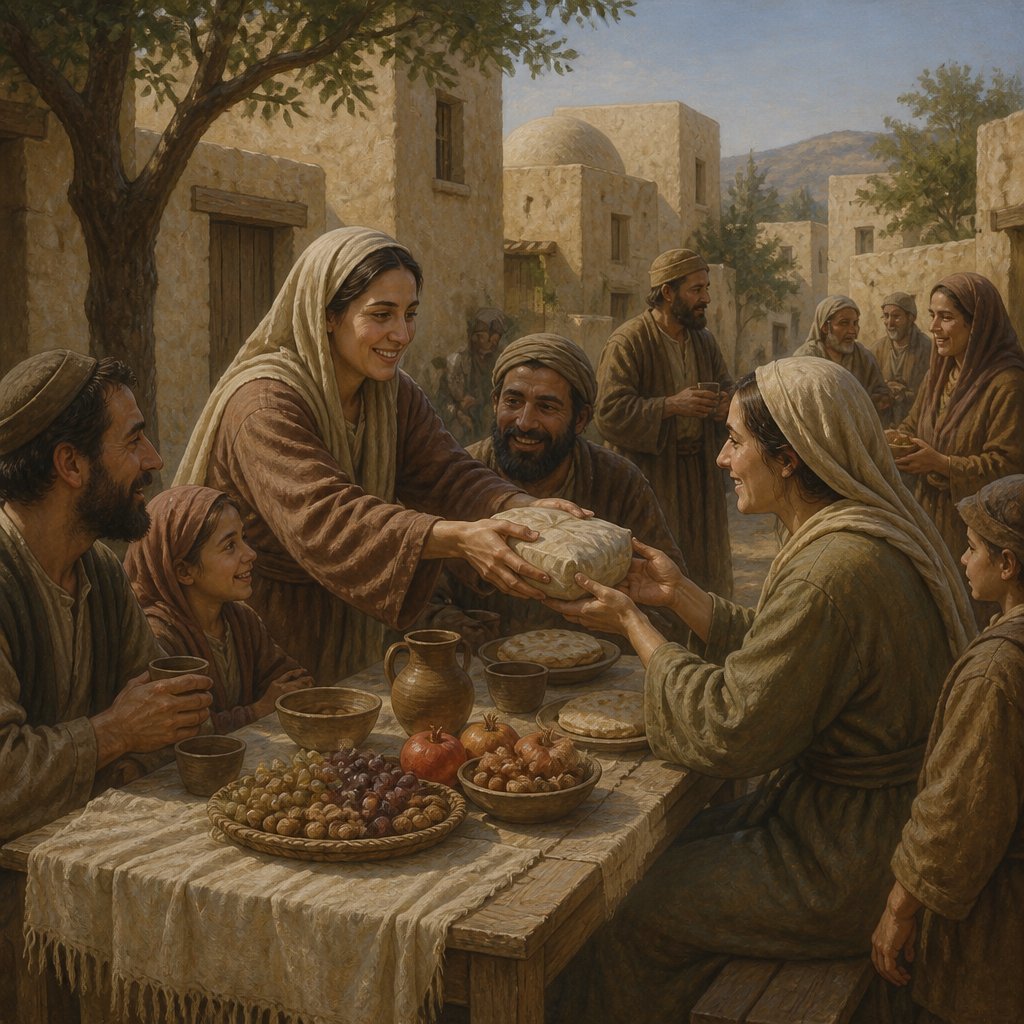
Esther 9:19 in the King James Version (KJV) reads, "Therefore the Jews of the villages, that dwelt in the unwalled towns, made the fourteenth day of the month Adar a day of gladness and feasting, and a good day, and of sending portions one to another."
The book of Esther is a beautiful and captivating story from the Old Testament that tells the tale of a young Jewish woman who becomes Queen of Persia and ultimately saves her people from a plot to destroy them. The verse in question comes at the end of the story, after the Jews have been granted permission to defend themselves against their enemies on a specified day. After successfully thwarting their attackers, the Jews in the villages celebrate their victory with feasting and gladness.
One of the major themes of Esther 9:19 is the triumph of good over evil. The Jewish people were threatened with annihilation, but through the bravery and resourcefulness of Esther and her uncle Mordecai, they not only defend themselves but also emerge victorious. This verse speaks to the joy and relief that come with overcoming adversity and the power of celebration in acknowledging and commemorating such triumphs.
The context of this verse is significant in understanding its meaning. The Jewish people were under the threat of extermination due to the treachery of Haman, the king's advisor. Through a series of events guided by divine providence, Esther and Mordecai were able to turn the tide, ultimately leading to the defeat of their enemies. The day of gladness and feasting on the fourteenth day of the month Adar was a time for the Jewish people to come together in unity, gratitude, and celebration after a period of intense fear and uncertainty.
Moreover, the act of sending portions one to another is a tangible expression of the unity and solidarity among the Jewish people. By sharing their blessings with one another, they reinforce their bonds and mutual support, emphasizing the importance of community and generosity. This act of giving also reflects the grateful hearts of the Jewish people, acknowledging that their victory was not due solely to their own efforts, but also to the providence of God.
The symbolism in Esther 9:19 can be interpreted in several ways. The feasting and gladness represent not only the joy of the Jewish people in their deliverance but also serve as a reminder of the blessings and abundance bestowed upon them by God. The day of celebration becomes a testimony to God's faithfulness and the triumph of righteousness.
Additionally, the sending of portions symbolizes the idea of sharing the fruits of victory with others. It underscores the need for generosity and the importance of supporting and uplifting one another, especially in times of rejoicing and thanksgiving. The act of giving also serves as a reminder of the Jewish people's duty to care for the less fortunate and to ensure that no one is left out of the communal celebration.
In conclusion, Esther 9:19 is a powerful and evocative verse that captures the essence of joy, gratitude, and unity in the face of adversity. It reminds us of the significance of celebrating victories, large and small, and the importance of coming together in fellowship and mutual support. Through feasting, gladness, and the act of giving, the verse conveys a profound message of hope, resilience, and the triumph of good over evil.
Get our apps


Artwork for Esther 9:19

Esther 9:19 - "Therefore the Jews of the villages, that dwelt in the unwalled towns, made the fourteenth day of the month Adar a day of gladness and feasting, and a good day, and of sending portions one to another."
"Therefore the Jews of the villages, that dwelt in the unwalled towns, made the fourteenth day of the month Adar a day of gladness and feasting, and a good day, and of sending portions one to another." - Esther 9:19

Esther 4:9 - "And Hatach came and told Esther the words of Mordecai."

Esther 9:32 - "And the decree of Esther confirmed these matters of Purim; and it was written in the book."

Esther 9:9 - "And Parmashta, and Arisai, and Aridai, and Vajezatha,"

Esther 9:29 - "Then Esther the queen, the daughter of Abihail, and Mordecai the Jew, wrote with all authority, to confirm this second letter of Purim."

"And Hatach came and told Esther the words of Mordecai." - Esther 4:9

Esther 9:8 - "And Poratha, and Adalia, and Aridatha,"

Esther 9:7 - "And Parshandatha, and Dalphon, and Aspatha,"

"And the decree of Esther confirmed these matters of Purim; and it was written in the book." - Esther 9:32
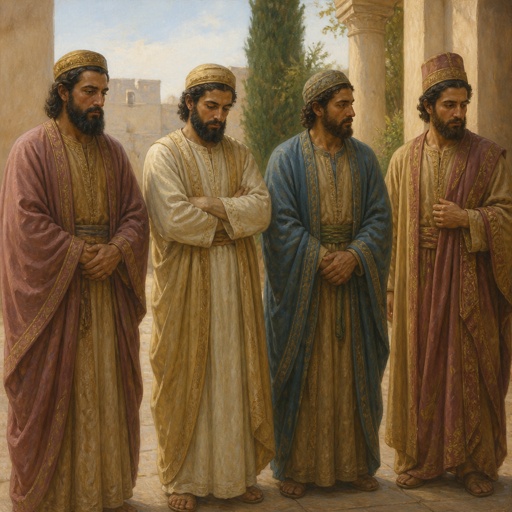
"And Parmashta, and Arisai, and Aridai, and Vajezatha," - Esther 9:9

Esther 9:31 - "To confirm these days of Purim in their times appointed, according as Mordecai the Jew and Esther the queen had enjoined them, and as they had decreed for themselves and for their seed, the matters of the fastings and their cry."

Esther 9:13 - "Then said Esther, If it please the king, let it be granted to the Jews which are in Shushan to do to morrow also according unto this day's decree, and let Haman's ten sons be hanged upon the gallows."

"And Parshandatha, and Dalphon, and Aspatha," - Esther 9:7
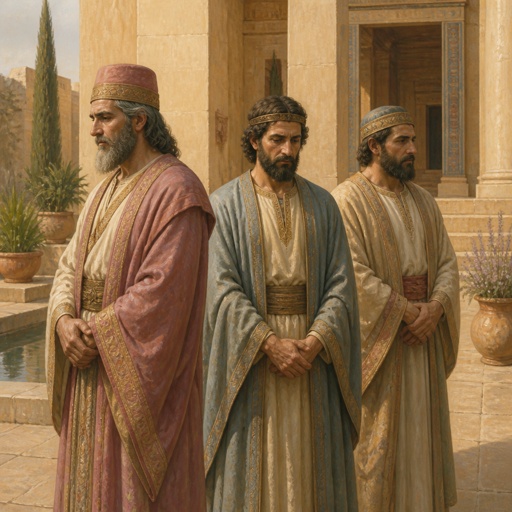
"And Poratha, and Adalia, and Aridatha," - Esther 9:8

Esther 2:19 - "And when the virgins were gathered together the second time, then Mordecai sat in the king's gate."

Esther 9:6 - "And in Shushan the palace the Jews slew and destroyed five hundred men."

Esther 9:25 - "But when Esther came before the king, he commanded by letters that his wicked device, which he devised against the Jews, should return upon his own head, and that he and his sons should be hanged on the gallows."

Esther 9:10 - "The ten sons of Haman the son of Hammedatha, the enemy of the Jews, slew they; but on the spoil laid they not their hand."

Esther 9:11 - "On that day the number of those that were slain in Shushan the palace was brought before the king."

Esther 9:23 - "And the Jews undertook to do as they had begun, and as Mordecai had written unto them;"

"Then Esther the queen, the daughter of Abihail, and Mordecai the Jew, wrote with all authority, to confirm this second letter of Purim." - Esther 9:29

Esther 9:17 - "On the thirteenth day of the month Adar; and on the fourteenth day of the same rested they, and made it a day of feasting and gladness."

Esther 1:9 - "Also Vashti the queen made a feast for the women in the royal house which belonged to king Ahasuerus."

Esther 9:14 - "And the king commanded it so to be done: and the decree was given at Shushan; and they hanged Haman's ten sons."

Esther 9:21 - "To stablish this among them, that they should keep the fourteenth day of the month Adar, and the fifteenth day of the same, yearly,"

Esther 9:3 - "And all the rulers of the provinces, and the lieutenants, and the deputies, and officers of the king, helped the Jews; because the fear of Mordecai fell upon them."

Esther 9:30 - "And he sent the letters unto all the Jews, to the hundred twenty and seven provinces of the kingdom of Ahasuerus, with words of peace and truth,"

Esther 9:12 - "¶ And the king said unto Esther the queen, The Jews have slain and destroyed five hundred men in Shushan the palace, and the ten sons of Haman; what have they done in the rest of the king's provinces? now what is thy petition? and it shall be granted thee: or what is thy request further? and it shall be done."

Esther 9:4 - "For Mordecai was great in the king's house, and his fame went out throughout all the provinces: for this man Mordecai waxed greater and greater."