What does Esther 9:5 mean?
“Thus the Jews smote all their enemies with the stroke of the sword, and slaughter, and destruction, and did what they would unto those that hated them.” — Esther 9:5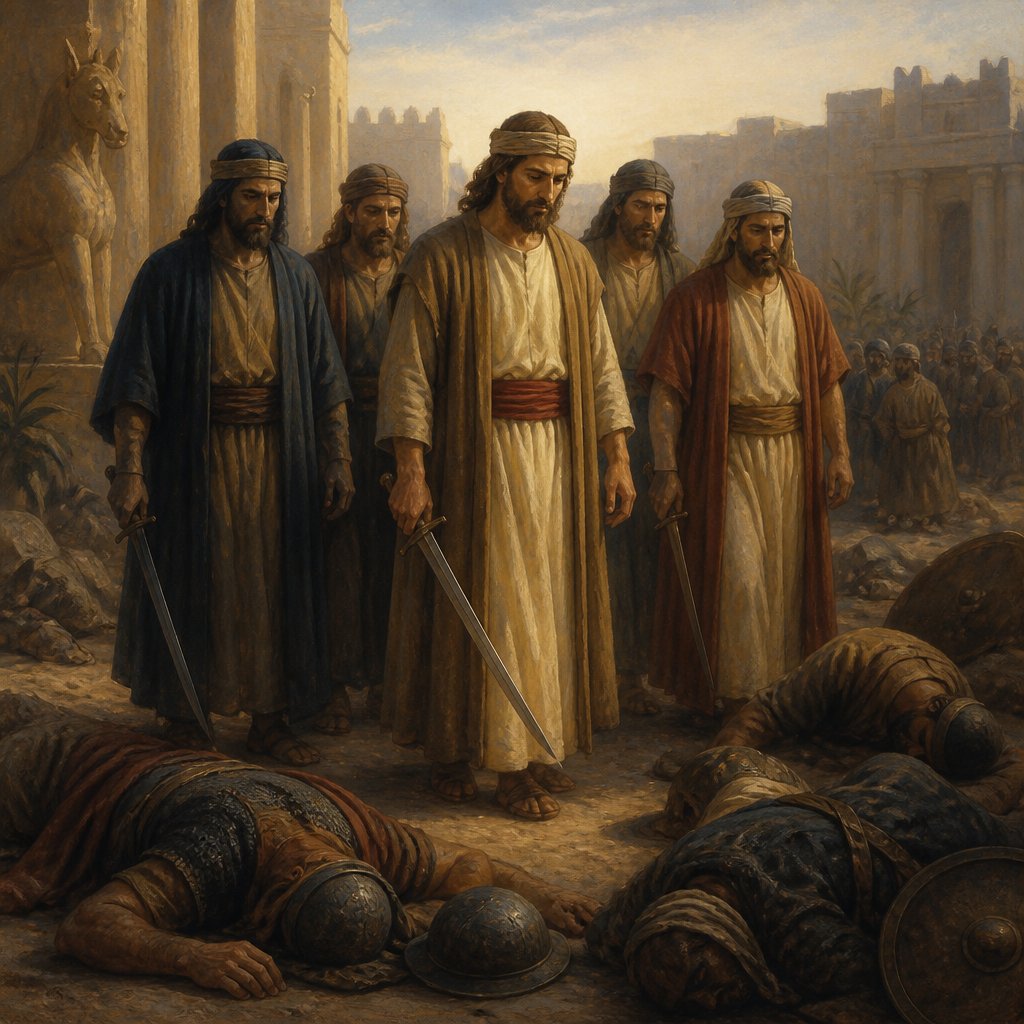
Esther 9:5 in the King James Version of the Bible reads: "Thus the Jews smote all their enemies with the stroke of the sword, and slaughter, and destruction, and did what they would unto those that hated them." This verse comes from the book of Esther, which is set in ancient Persia and tells the story of how the Jewish people were saved from a genocidal plot by the evil Haman, who was an advisor to King Xerxes.
The book of Esther is unique in the Hebrew Bible because it does not mention God explicitly. However, God's providence is evident throughout the story, as through a series of fortunate events, Esther, a Jewish woman, becomes the queen of Persia and is able to use her position to save her people. The celebration of Purim, an annual festival in Judaism, commemorates the events of this story, particularly the defeat of the enemies of the Jewish people as referenced in Esther 9:5.
The context of this particular verse is the culmination of the dramatic events in the book of Esther. After discovering Haman's plot to exterminate the Jewish people, Esther and her cousin Mordecai take action to save their people. With the king's approval, the Jewish people are granted the right to defend themselves against their enemies. The verse in question describes the Jewish people's success in defeating those who would seek to harm them.
The themes present in Esther 9:5 are numerous and significant. One theme is that of divine deliverance and intervention. Throughout the book of Esther, we see how seemingly coincidental events actually serve a higher purpose, ultimately leading to the deliverance of the Jewish people. This verse reinforces the idea that God is always at work behind the scenes, orchestrating events for the good of His people.
Another theme is that of justice and retribution. The defeat of the enemies of the Jewish people is a just response to their plot to bring harm to the innocent. This theme reflects the biblical principle of reaping what one sows, as well as the idea that God is a God of justice who will ultimately set all things right.
The symbolism in Esther 9:5 is powerful and multifaceted. The "stroke of the sword" represents the physical battle that the Jewish people fought to defend themselves. This symbolizes the need for vigilance and steadfastness in the face of danger. Moreover, the "slaughter and destruction" symbolize the complete defeat of their enemies, emphasizing the decisiveness of the victory.
Additionally, the verse serves as a symbol of hope and triumph over adversity. The Jewish people were on the brink of annihilation, yet through their faith and perseverance, they emerged victorious. This serves as a powerful symbol of the resilience of the Jewish people and their ability to overcome even the most daunting challenges.
In conclusion, Esther 9:5 is a pivotal verse in the book of Esther, encapsulating the themes of divine providence, justice, and triumph over adversity. It serves as a reminder of the power of faith and the ultimate victory of good over evil. The symbolism in this verse reinforces these themes and adds depth to the narrative. Ultimately, Esther 9:5 stands as a testament to the enduring strength and resilience of the Jewish people.
Get our apps


Artwork for Esther 9:5

Esther 9:5 - "Thus the Jews smote all their enemies with the stroke of the sword, and slaughter, and destruction, and did what they would unto those that hated them."
"Thus the Jews smote all their enemies with the stroke of the sword, and slaughter, and destruction, and did what they would unto those that hated them." - Esther 9:5

Esther 5:5 - "Then the king said, Cause Haman to make haste, that he may do as Esther hath said. So the king and Haman came to the banquet that Esther had prepared."

Esther 4:9 - "And Hatach came and told Esther the words of Mordecai."

Esther 9:32 - "And the decree of Esther confirmed these matters of Purim; and it was written in the book."

Esther 5:7 - "Then answered Esther, and said, My petition and my request is;"

Esther 9:9 - "And Parmashta, and Arisai, and Aridai, and Vajezatha,"

Esther 5:2

Esther 5:2 - "And it was so, when the king saw Esther the queen standing in the court, that she obtained favour in his sight: and the king held out to Esther the golden sceptre that was in his hand. So Esther drew near, and touched the top of the sceptre."

Esther 9:29 - "Then Esther the queen, the daughter of Abihail, and Mordecai the Jew, wrote with all authority, to confirm this second letter of Purim."

Esther 5:9 - "¶ Then went Haman forth that day joyful and with a glad heart: but when Haman saw Mordecai in the king's gate, that he stood not up, nor moved for him, he was full of indignation against Mordecai."

Esther 5:2

Esther 5:2

"And Hatach came and told Esther the words of Mordecai." - Esther 4:9

Esther 9:8 - "And Poratha, and Adalia, and Aridatha,"

Esther 9:7 - "And Parshandatha, and Dalphon, and Aspatha,"

"And the decree of Esther confirmed these matters of Purim; and it was written in the book." - Esther 9:32
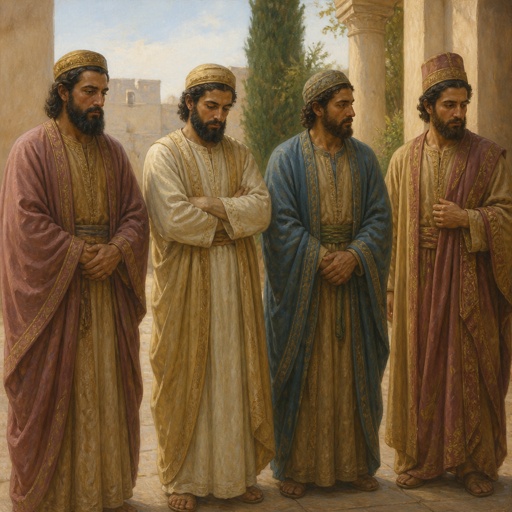
"And Parmashta, and Arisai, and Aridai, and Vajezatha," - Esther 9:9

Esther 5:4 - "And Esther answered, If it seem good unto the king, let the king and Haman come this day unto the banquet that I have prepared for him."
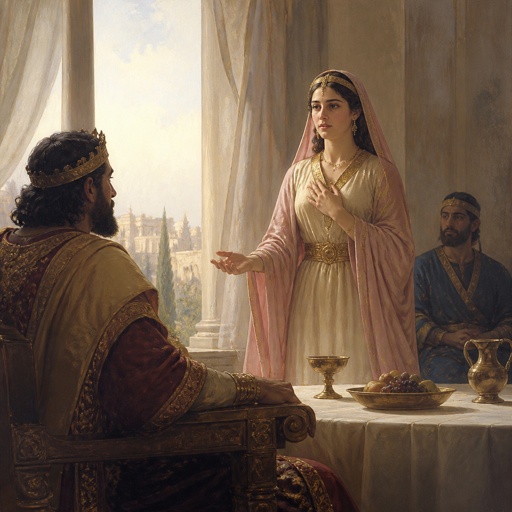
"Then answered Esther, and said, My petition and my request is;" - Esther 5:7

Esther 5:3 - "Then said the king unto her, What wilt thou, queen Esther? and what is thy request? it shall be even given thee to the half of the kingdom."

Esther 7:5 - "¶ Then the king Ahasuerus answered and said unto Esther the queen, Who is he, and where is he, that durst presume in his heart to do so?"

Esther 5:9-13 - "Esther 5:9-13: Then Haman went out that day joyful and with a glad heart; but when Haman saw Mordecai in the king’s gate, and that he did not stand or tremble before him, he was filled with indignation against Mordecai. Nevertheless Haman restrained himself and went home, and he sent and called for his friends and his wife Zeresh. Then Haman told them of his great riches, the multitude of his children, everything in which the king had promoted him, and how he had advanced him above the officials and servants of the king. Moreover Haman said, “Besides, Queen Esther invited no one but me to come in with the king to the banquet that she prepared; and tomorrow I am again invited by her, along with the king. Yet all this avails me nothing, so long as I see Mordecai the Jew sitting at the king’s gate.”"

Esther 5:2 - "And it was so, when the king saw Esther the queen standing in the court, that she obtained favour in his sight: and the king held out to Esther the golden sceptre that was in his hand. So Esther drew near, and touched the top of the sceptre."
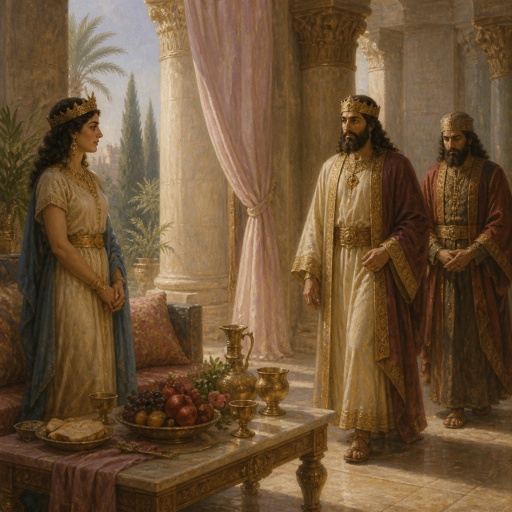
"Then the king said, Cause Haman to make haste, that he may do as Esther hath said. So the king and Haman came to the banquet that Esther had prepared." - Esther 5:5

Esther 4:5 - "Then called Esther for Hatach, one of the king's chamberlains, whom he had appointed to attend upon her, and gave him a commandment to Mordecai, to know what it was, and why it was."

Esther 9:31 - "To confirm these days of Purim in their times appointed, according as Mordecai the Jew and Esther the queen had enjoined them, and as they had decreed for themselves and for their seed, the matters of the fastings and their cry."

Esther 9:13 - "Then said Esther, If it please the king, let it be granted to the Jews which are in Shushan to do to morrow also according unto this day's decree, and let Haman's ten sons be hanged upon the gallows."

Esther 5:6 - "¶ And the king said unto Esther at the banquet of wine, What is thy petition? and it shall be granted thee: and what is thy request? even to the half of the kingdom it shall be performed."
"And Parshandatha, and Dalphon, and Aspatha," - Esther 9:7