What does Exodus 11:4 mean?
“And Moses said, Thus saith the LORD, About midnight will I go out into the midst of Egypt:” — Exodus 11:4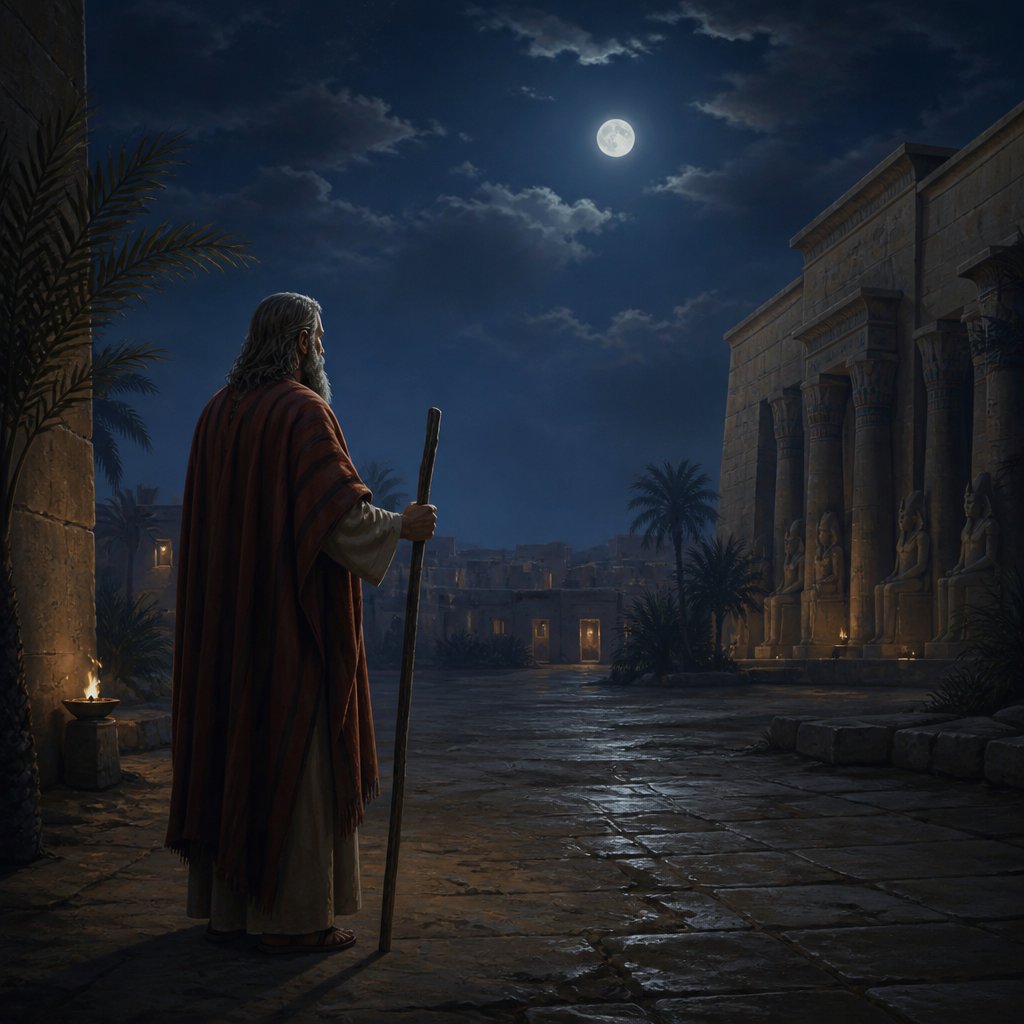
Exodus 11:4 in the King James Version of the Bible reads: "And Moses said, Thus saith the Lord, About midnight will I go out into the midst of Egypt."
This particular verse is part of the narrative of the tenth and final plague that God inflicts upon the land of Egypt before the Israelites are set free. Throughout the book of Exodus, God sends a series of plagues upon Egypt to convince Pharaoh to release the Israelites from bondage. In this verse, Moses is conveying God's message to Pharaoh that at midnight, God will go out into the midst of Egypt, bringing about the final and most devastating plague.
The context of this verse is important in understanding its significance. The Israelites had been enslaved in Egypt for generations, and God had heard their cries for deliverance. Through the leadership of Moses and the intervention of God, the Israelites had already witnessed nine plagues sent upon Egypt, each one escalating in severity. However, Pharaoh remained stubborn and refused to let the Israelites go.
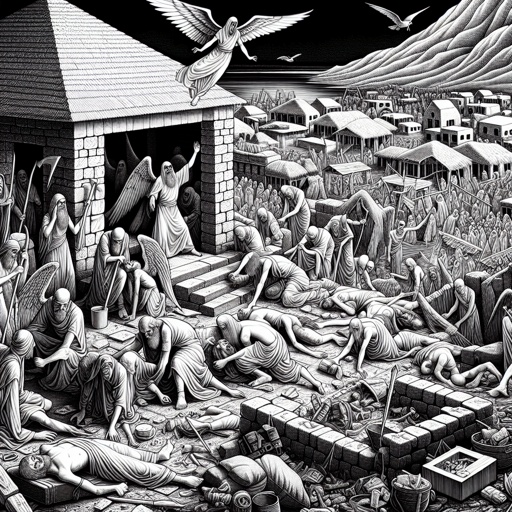
This verse marks the climax of the confrontation between God and Pharaoh. The impending plague of the death of the firstborn sons would finally convince Pharaoh to release the Israelites. The phrase "About midnight will I go out into the midst of Egypt" creates a sense of impending doom, as God's judgment is about to be executed on the land.
The theme of divine judgment is central to this verse. Throughout the Bible, God is portrayed as a just and righteous judge who punishes wrongdoing. In the case of the plagues in Exodus, God is exercising his judgment upon the oppressive and obstinate ruler of Egypt. This theme echoes throughout the Old and New Testaments, as God's judgment is often depicted as a necessary and inevitable consequence of human sin and disobedience.
The symbolism in this verse is also profound. The idea of God "going out" into the midst of Egypt carries deep theological significance. It conveys the concept of God's omnipresence and his active involvement in human affairs. In a broader sense, it symbolizes God's ongoing intervention in the world to bring about justice and deliverance for the oppressed.
Furthermore, the mention of "midnight" as the time of God's visitation is significant. Midnight is often associated with darkness and mystery, and in biblical symbolism, it represents a time of great transition and change. In this context, it foretells the imminent upheaval and transformation that will occur as a result of God's judgment.
In conclusion, Exodus 11:4 is a pivotal verse in the narrative of the Israelites' liberation from Egypt. It conveys the impending judgment of God upon Pharaoh and the fulfillment of his promise to set the Israelites free. The themes of divine judgment, divine intervention, and the symbolism of midnight all contribute to the rich and profound meaning of this verse in its broader biblical context. Ultimately, this verse serves as a powerful reminder of God's sovereignty and his unwavering commitment to justice and redemption.
Get our apps


Artwork for Exodus 11:4

Exodus 11:4 - "And Moses said, Thus saith the LORD, About midnight will I go out into the midst of Egypt:"
"And Moses said, Thus saith the LORD, About midnight will I go out into the midst of Egypt:" - Exodus 11:4

Exodus 4:11 - "And the LORD said unto him, Who hath made man's mouth? or who maketh the dumb, or deaf, or the seeing, or the blind? have not I the LORD?"

exodus 18:11

Exodus 17:11
exodus 3:11

The Plague on the Firstborn - Exodus 11
The Plague on the Firstborn - Exodus 11

The Plague on the Firstborn - Exodus 11
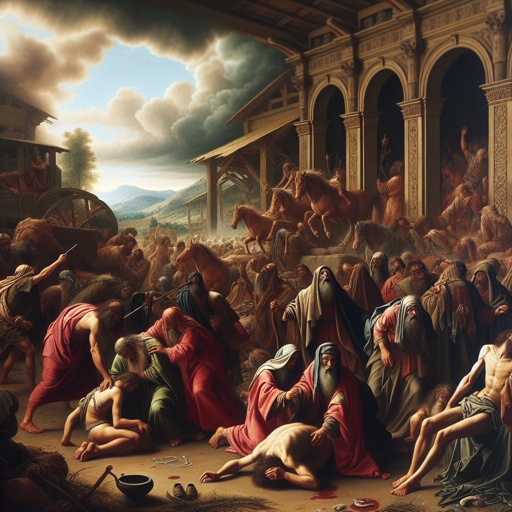
The Plague on the Firstborn - Exodus 11

Exodus 24:9-11

The Plague on the Firstborn - Exodus 11

The Plague on the Firstborn - Exodus 11

Exodus 23:4

Exodus 28:4

Exodus 28:4

Exodus 28:4

Exodus 28:4

Exodus 24:4

Exodus 23:4

Exodus 16:11 - "¶ And the LORD spake unto Moses, saying,"

Exodus 30:11 - "¶ And the LORD spake unto Moses, saying,"

Exodus 39:11 - "And the second row, an emerald, a sapphire, and a diamond."

The Plague on the Firstborn Son - Exodus 11

Exodus 40:11 - "And thou shalt anoint the laver and his foot, and sanctify it."

Exodus 4:1-5

Exodus 1:4 - "Dan, and Naphtali, Gad, and Asher."

Exodus 29:11 - "And thou shalt kill the bullock before the LORD, by the door of the tabernacle of the congregation."
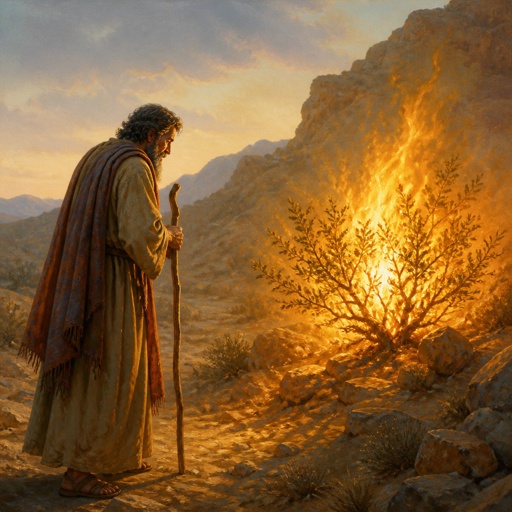
"And the LORD said unto him, Who hath made man's mouth? or who maketh the dumb, or deaf, or the seeing, or the blind? have not I the LORD?" - Exodus 4:11

The Plague on the Firstborn - Exodus 11, 12:1-30