What does Exodus 2:7 mean?
“Then said his sister to Pharaoh’s daughter, Shall I go and call to thee a nurse of the Hebrew women, that she may nurse the child for thee?” — Exodus 2:7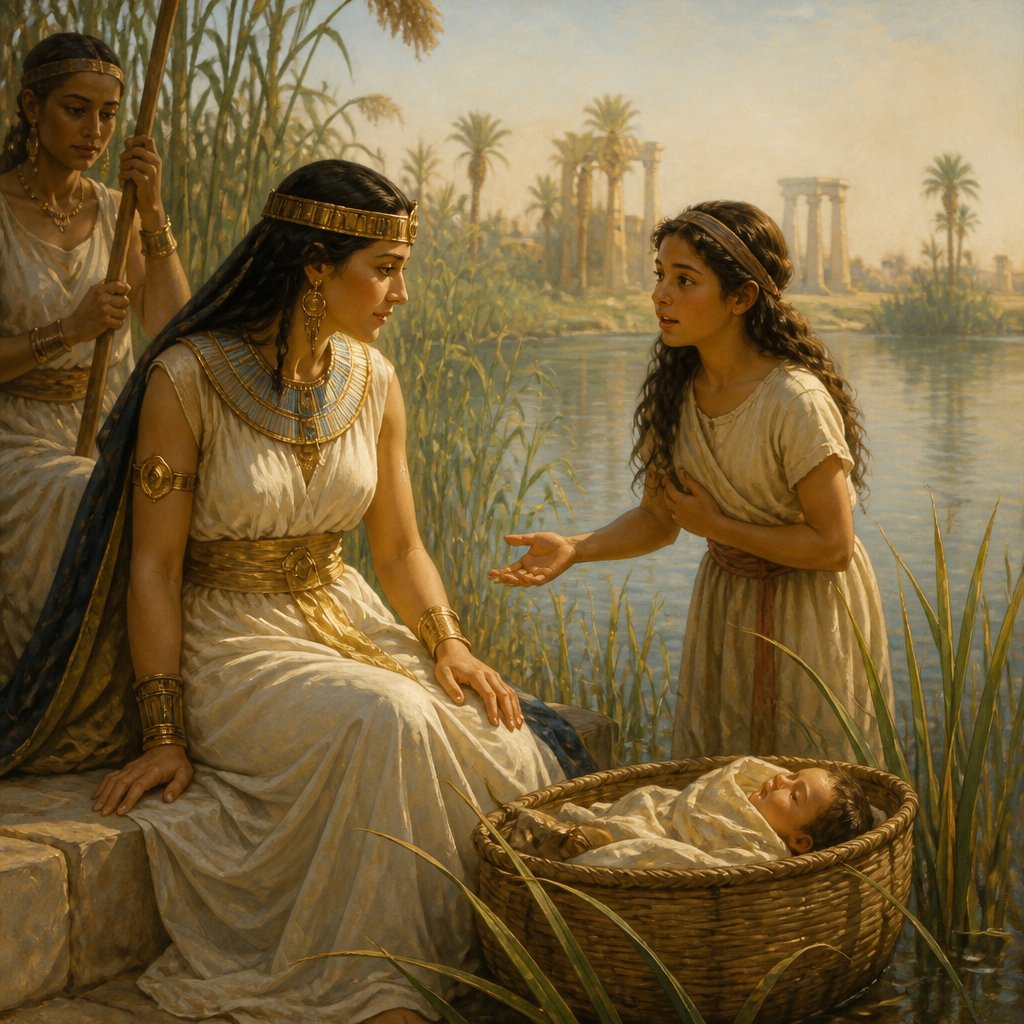
Exodus 2:7 (KJV) says, "Then said his sister to Pharaoh's daughter, Shall I go and call to thee a nurse of the Hebrew women, that she may nurse the child for thee?"
This verse comes from the story of Moses, who was saved from being killed as a baby by the daughter of Pharaoh and was raised in the Egyptian royal court. In this verse, we see Moses' sister, Miriam, cleverly offering to find a nurse for the Hebrew baby that Pharaoh's daughter has found in the river. This is a pivotal moment in the story as it sets into motion the events that will eventually lead to Moses becoming the leader of the Hebrews and the one to lead them out of slavery in Egypt.
The theme of this verse is the providence of God and His sovereign plan. Despite the attempts of Pharaoh to eliminate the Hebrew male babies, God still finds a way to preserve Moses and raise him up to become the deliverer of His people. This theme is a recurring motif throughout the Bible, where God's plan is ultimately fulfilled despite the obstacles and opposition that may arise.
The context of this verse is crucial to understanding its significance. At this time, the Hebrew people were living as slaves in Egypt, and Pharaoh had issued a decree to kill all Hebrew male babies in an attempt to control their population. In the midst of this oppression, Moses is born and saved by the providence of God. When he is discovered by Pharaoh's daughter, she takes him in and raises him as her own, setting into motion the events that will lead to his role as the leader of the Hebrew people.
The symbolism in this verse is significant as well. Moses, as a baby, represents the hope of the Hebrew people for deliverance from their bondage. His rescue by Pharaoh's daughter symbolizes the unexpected ways in which God works to accomplish His purposes. Miriam's offer to find a nurse for the baby hints at the role that she will play in the story, as she becomes a key figure in supporting and protecting her brother throughout his life.
The verse also speaks to the theme of bravery and resourcefulness in the face of adversity. Miriam, a young girl at the time, shows courage and quick thinking in offering to find a nurse for the baby, risking her own safety in the process. This act of bravery sets the stage for her future role in the story and highlights the strength and resilience of the Hebrew people in the face of oppression.
Overall, Exodus 2:7 is a verse that encompasses the themes of providence, bravery, and the sovereignty of God. It sets the stage for the epic story of Moses and the deliverance of the Hebrew people from slavery in Egypt, and it serves as a reminder of God's faithfulness and His ability to work all things together for good. It is a powerful and inspiring verse that continues to resonate with readers today, reminding us of the hope and courage that can be found even in the most challenging circumstances.
Get our apps


Artwork for Exodus 2:7
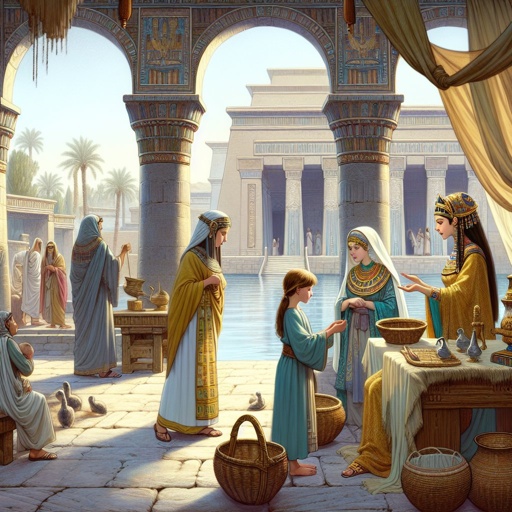
Exodus 2:7 - "Then said his sister to Pharaoh's daughter, Shall I go and call to thee a nurse of the Hebrew women, that she may nurse the child for thee?"

Exodus 2: 7 Miriam asked Pharaoh's daughter whether she could go and get a hebrew nurse with river, pyramids in background. Maids looking on
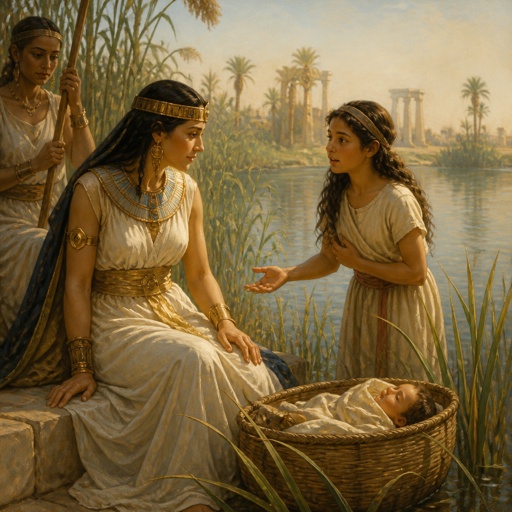
"Then said his sister to Pharaoh's daughter, Shall I go and call to thee a nurse of the Hebrew women, that she may nurse the child for thee?" - Exodus 2:7

Exodus 7:2 - "Thou shalt speak all that I command thee: and Aaron thy brother shall speak unto Pharaoh, that he send the children of Israel out of his land."

Exodus 7:10

Exodus 7:10

Exodus 12:7

Exodus 12:7

Exodus 7:14-24

Exodus 7:7 - "And Moses was fourscore years old, and Aaron fourscore and three years old, when they spake unto Pharaoh."

Exodus 25:7 - "Onyx stones, and stones to be set in the ephod, and in the breastplate."

Exodus 7:8 - "¶ And the LORD spake unto Moses and unto Aaron, saying,"

The Plague of Blood - Exodus 7:14-24

The Plague on Livestock - Exodus 9:1-7

Exodus Chapter 7 Verses 8-10

The Plague of Blood - Exodus 7:14-24

The Plague on Livestock - Exodus 9:1-7

The Plague of Blood - Exodus 7:14-24

Exodus 35:7 - "And rams' skins dyed red, and badgers' skins, and shittim wood,"

Exodus 36:7 - "For the stuff they had was sufficient for all the work to make it, and too much."

The Plague of Blood - Exodus 7:14-24

Exodus 7:6 - "And Moses and Aaron did as the LORD commanded them, so did they."

Exodus 7:25 - "And seven days were fulfilled, after that the LORD had smitten the river."

The Plague Death on Livestock - Exodus 9:1-7

The Plague Death on Livestock - Exodus 9:1-7

Exodus 8:7 - "And the magicians did so with their enchantments, and brought up frogs upon the land of Egypt."

Exodus 31:7 - "The tabernacle of the congregation, and the ark of the testimony, and the mercy seat that is thereupon, and all the furniture of the tabernacle,"

Exodus 20:2

Exodus 27:7 - "And the staves shall be put into the rings, and the staves shall be upon the two sides of the altar, to bear it."

Exodus 29:7 - "Then shalt thou take the anointing oil, and pour it upon his head, and anoint him."