What does Exodus 2:9 mean?
“And Pharaoh’s daughter said unto her, Take this child away, and nurse it for me, and I will give thee thy wages. And the woman took the child, and nursed it.” — Exodus 2:9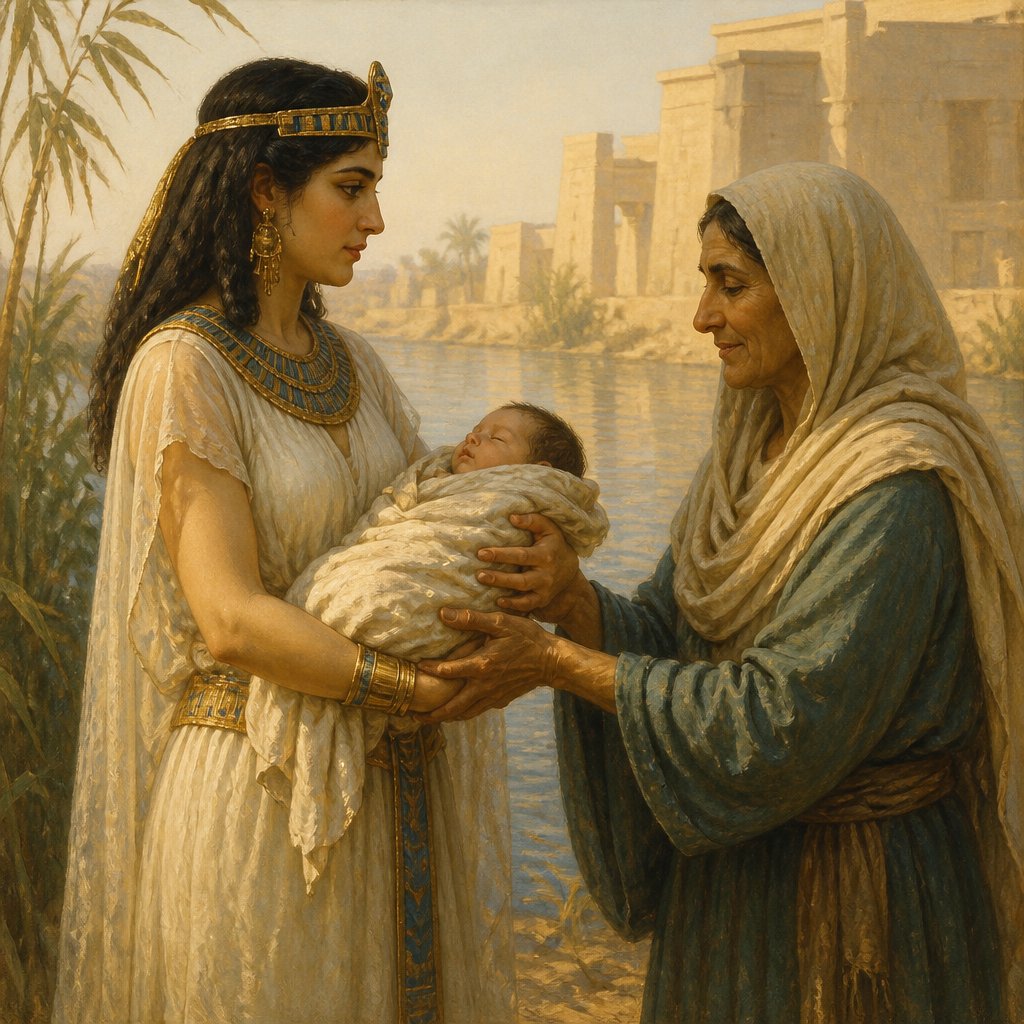
Exodus 2:9 in the King James Version of the Bible reads, "And Pharaoh's daughter said unto her, Take this child away, and nurse it for me, and I will give thee thy wages. And the woman took the child, and nursed it."
This verse is part of the narrative in the book of Exodus, which chronicles the Israelites' enslavement in Egypt and their eventual liberation under the leadership of Moses. The verse specifically tells the story of Moses' infancy, when his mother, Jochebed, placed him in a basket among the reeds of the Nile River to save him from Pharaoh's decree to kill all Hebrew male babies.
The verse is a powerful testament to the themes of providence, faith, and the mysterious ways in which God works in human history. It is also a testament to the strength of maternal love and the willingness of a mother to do whatever it takes to protect her child.
At the time of Moses' birth, the Israelites were living as slaves under the oppressive rule of Pharaoh in Egypt. Pharaoh, fearing that the Israelites were becoming too numerous and powerful, ordered that all Hebrew male babies be killed at birth. In this context, Jochebed’s decision to place her infant son in a basket and set him adrift in the Nile was an act of desperate faith and love. She trusted that God would protect her son and provide a way for him to survive, despite the seemingly hopeless circumstances.
The verse also highlights the role of women in the biblical narrative. Pharaoh's daughter, who discovered the baby Moses among the reeds, showed compassion and mercy by rescuing him and taking him as her own. She defied her own father's decree and chose to raise Moses as her own son. This act of kindness and bravery would ultimately play a crucial role in the liberation of the Israelites, as Moses would go on to lead his people out of Egypt.
The symbolism in this verse is profound. The Nile River, which was both a life-giving source of sustenance for the Egyptians and a symbol of the oppressive power of Pharaoh, becomes the means of Moses’ salvation. The reeds, which initially concealed and protected Moses’ basket, represent the hidden ways in which God works in the world, often using the most unexpected and humble means to accomplish His purposes.
Furthermore, the generosity and compassion of Pharaoh's daughter, who offered to pay Moses' mother to nurse him, speaks to the unexpected ways in which God can bring about redemption and restoration. Despite the oppressive circumstances of slavery and the hostile decree of Pharaoh, God provided a way for Moses to be raised in safety and ultimately fulfill his calling to lead the Israelites to freedom.
In addition, this verse demonstrates the theme of divine providence, as God's hand can be seen working behind the scenes to protect and guide His chosen people. Jochebed’s decision to place her son in the Nile was an act of courage and faith, but it was ultimately God who orchestrated the circumstances that allowed for Moses' survival and eventual leadership of the Israelites.
In conclusion, Exodus 2:9 is a powerful and poignant verse that conveys profound themes of providence, faith, and the mysterious ways in which God works in human history. It also highlights the roles of maternal love, compassion, and bravery in the biblical narrative. The verse serves as a reminder of the enduring significance of these themes and their relevance to the human experience.
Get our apps


Artwork for Exodus 2:9
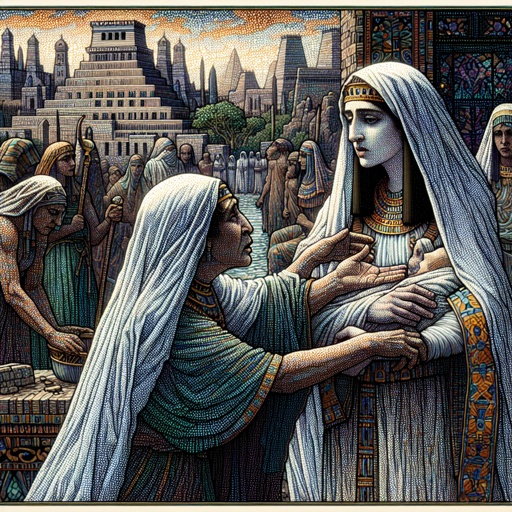
Exodus 2:9

Exodus 2:9

Exodus 2:9 - "And Pharaoh's daughter said unto her, Take this child away, and nurse it for me, and I will give thee thy wages. And the woman took the child, and nursed it."
"And Pharaoh's daughter said unto her, Take this child away, and nurse it for me, and I will give thee thy wages. And the woman took the child, and nursed it." - Exodus 2:9

Exodus 9:2 - "For if thou refuse to let them go, and wilt hold them still,"
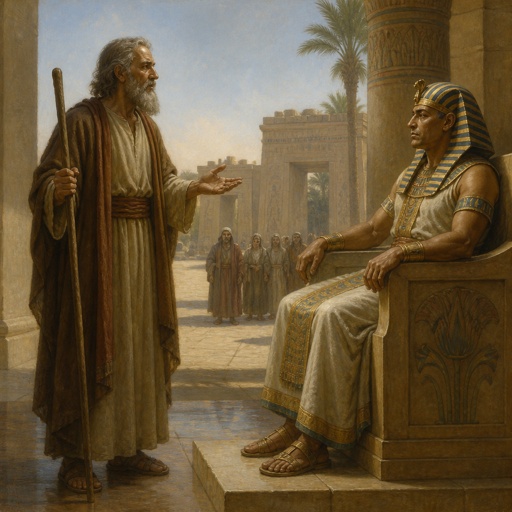
"For if thou refuse to let them go, and wilt hold them still," - Exodus 9:2

Exodus 40:9

Exodus 24:9-11

Exodus 35:9 - "And onyx stones, and stones to be set for the ephod, and for the breastplate."

Exodus 9:31 - "And the flax and the barley was smitten: for the barley was in the ear, and the flax was bolled."

Exodus 9:32 - "But the wheat and the rie were not smitten: for they were not grown up."

The Plague of Boils - Exodus 9:8-12

The Plague of Boils - Exodus 9:8-12

The Plague of Boils - Exodus 9:8-12.

The Plague of Hail - Exodus 9:13-35

The Plague of Boils - Exodus 9:8-12

The Plague of Hail - Exodus 9:13-35

The Plague of Boils - Exodus 9:8-12

The Plague on Livestock - Exodus 9:1-7

The Plague of Hail - Exodus 9:13-35

The Plague of Hail - Exodus 9:13-35

The Plague of Boils - Exodus 9:8-12

The Plague of Boils - Exodus 9:8-12

The Plague on Livestock - Exodus 9:1-7

The Plague of Boils - Exodus 9:8-12

Exodus 9:26 - "Only in the land of Goshen, where the children of Israel were, was there no hail."

Exodus 24:9 - "¶ Then went up Moses, and Aaron, Nadab, and Abihu, and seventy of the elders of Israel:"

Exodus 31:9 - "And the altar of burnt offering with all his furniture, and the laver and his foot,"

Exodus 20:9 - "Six days shalt thou labour, and do all thy work:"

The Plague Death on Livestock - Exodus 9:1-7