What does Exodus 26:35 mean?
“And thou shalt set the table without the vail, and the candlestick over against the table on the side of the tabernacle toward the south: and thou shalt put the table on the north side.” — Exodus 26:35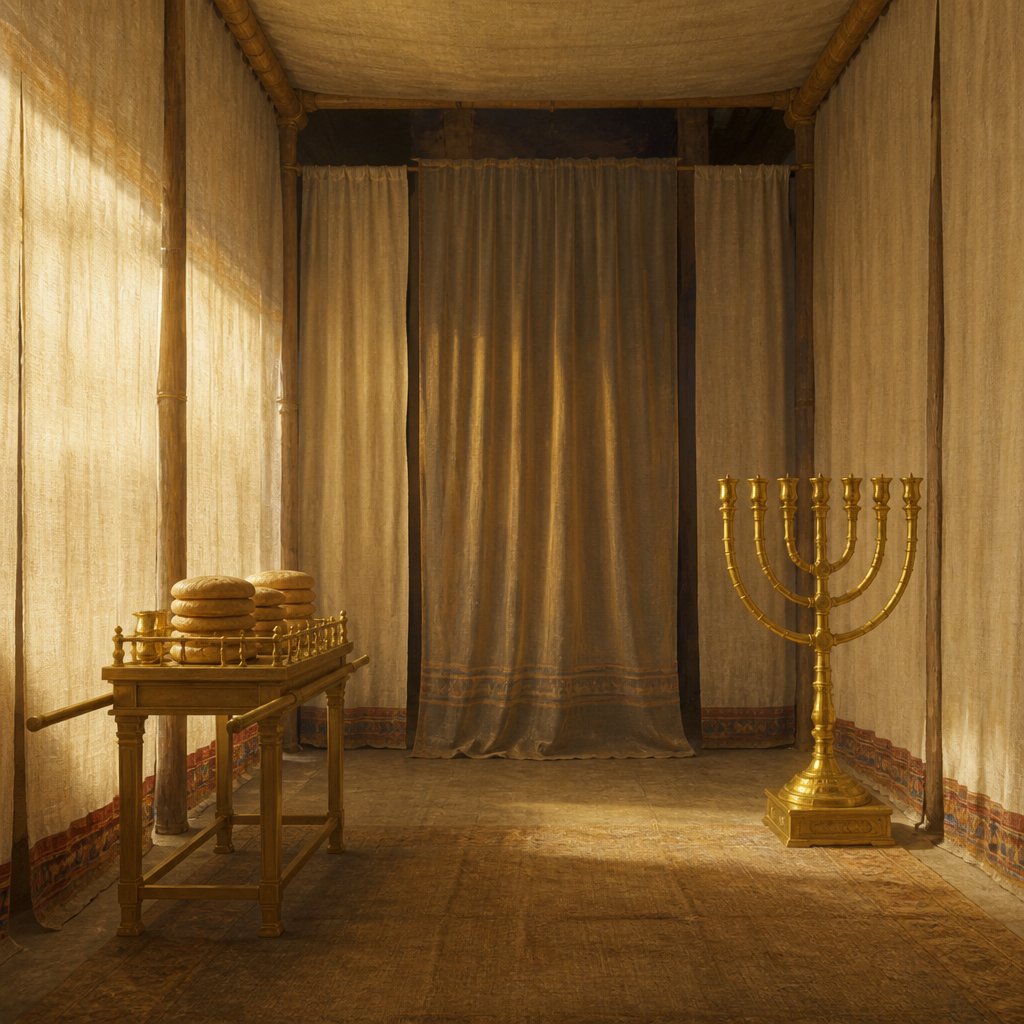
Exodus 26:35 in the King James Version of the Bible reads, "And thou shalt set the table without the vail, and the candlestick over against the table on the side of the tabernacle toward the south: and thou shalt put the table on the north side." This verse comes from the book of Exodus, which describes the instructions given to Moses by God for the construction of the Tabernacle, the portable sanctuary used by the Israelites during their time in the wilderness.
In order to fully understand the significance of this verse, it is important to consider the larger context of the book of Exodus. The Israelites have been enslaved in Egypt for generations, and God has raised up Moses to lead them out of captivity. Through a series of miraculous events and plagues, he convinces the Pharaoh to let the Israelites go. As they journey through the wilderness, God provides for their needs and gives them instructions for how to worship and serve him.
The specific verse in question pertains to the layout and arrangement of the Tabernacle, which was the central place of worship for the Israelites during their time in the wilderness. The "table" referred to in this verse is the Table of Showbread, which was located in the Holy Place of the Tabernacle. It was a table upon which bread was placed as an offering to God. The positioning of the table and the candlestick (or lampstand) held symbolic significance and served as a visual representation of the importance of God's presence and provision.
The positioning of the table and the candlestick speaks to the divine order and symmetry that was to be present within the Tabernacle. The table, representing the provision of sustenance, was to be set "without the vail," or outside the inner sanctuary, emphasizing the accessibility of God's provision for his people. The candlestick, or lampstand, was to be placed "over against the table on the side of the tabernacle toward the south," ensuring that it provided light for the Holy Place, illuminating the bread on the table and symbolizing the presence of God.
The placement of the table on the north side further emphasizes the divine order and precision prescribed by God for the Tabernacle. In the Bible, the north is often associated with darkness and evil, while the south is associated with light and righteousness. By placing the table on the north side and the candlestick on the south side, God was symbolically asserting his authority over darkness and evil, ensuring that his provision and light would prevail in the midst of the Israelites.
Symbolically, the arrangement of the table and the candlestick also speaks to the spiritual nourishment and illumination that God provides for his people. The bread on the table represents God's sustenance and provision, while the light from the candlestick represents his guidance and presence. Together, they serve as a reminder of God's faithfulness and care for his people, even in the midst of the wilderness.
In a broader sense, the specific instructions for the arrangement of the Tabernacle serve to highlight the importance of order, precision, and symbolism in the worship of God. The Israelites were given specific instructions for every aspect of the Tabernacle, from its construction to its daily operation, emphasizing the holiness and reverence with which they were to approach God.
In conclusion, Exodus 26:35 from the King James Version of the Bible presents a seemingly mundane set of instructions for the arrangement of the Tabernacle, but upon closer examination, it reveals profound spiritual truths about God's provision, presence, and divine order. The significance of the placement of the table and the candlestick speaks to the accessibility of God's provision, the divine order and precision of his instructions, and the spiritual nourishment and illumination that he provides for his people.
Get our apps


Artwork for Exodus 26:35

Exodus 26:35 - "And thou shalt set the table without the vail, and the candlestick over against the table on the side of the tabernacle toward the south: and thou shalt put the table on the north side."
"And thou shalt set the table without the vail, and the candlestick over against the table on the side of the tabernacle toward the south: and thou shalt put the table on the north side." - Exodus 26:35

Exodus 35:26 - "And all the women whose heart stirred them up in wisdom spun goats' hair."
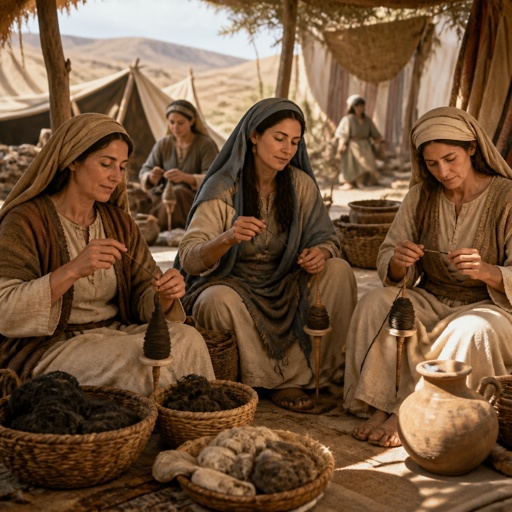
"And all the women whose heart stirred them up in wisdom spun goats' hair." - Exodus 35:26

Genesis 26:35

Exodus 32.15-35

genesis 26:1-35

Exodus 35:18 - "The pins of the tabernacle, and the pins of the court, and their cords,"

Exodus 39:35 - "The ark of the testimony, and the staves thereof, and the mercy seat,"

Genesis 26:35 - "Which were a grief of mind unto Isaac and to Rebekah."

Exodus 35:9 - "And onyx stones, and stones to be set for the ephod, and for the breastplate."

Exodus 35:32 - "And to devise curious works, to work in gold, and in silver, and in brass,"

Exodus 35:6 - "And blue, and purple, and scarlet, and fine linen, and goats' hair,"

Exodus 35:8 - "And oil for the light, and spices for anointing oil, and for the sweet incense,"

Exodus 35:12 - "The ark, and the staves thereof, with the mercy seat, and the vail of the covering,"

The Plague of Hail - Exodus 9:13-35

The Plague of Hail - Exodus 9:13-35

Exodus 35:13 - "The table, and his staves, and all his vessels, and the shewbread,"

Exodus 35:28 - "And spice, and oil for the light, and for the anointing oil, and for the sweet incense."

Exodus 35:27 - "And the rulers brought onyx stones, and stones to be set, for the ephod, and for the breastplate;"

Exodus 35:7 - "And rams' skins dyed red, and badgers' skins, and shittim wood,"

The Plague of Hail - Exodus 9:13-35

The Plague of Hail - Exodus 9:13-35

Exodus 35:20 - "¶ And all the congregation of the children of Israel departed from the presence of Moses."

Exodus 35:17 - "The hangings of the court, his pillars, and their sockets, and the hanging for the door of the court,"

Exodus 32:35 - "And the LORD plagued the people, because they made the calf, which Aaron made."

Exodus 35:14 - "The candlestick also for the light, and his furniture, and his lamps, with the oil for the light,"

exodus 26:1

Exodus 26:30

Exodus 26:31