What does Ezekiel 13:13 mean?
“Therefore thus saith the Lord GOD; I will even rend it with a stormy wind in my fury; and there shall be an overflowing shower in mine anger, and great hailstones in my fury to consume it.” — Ezekiel 13:13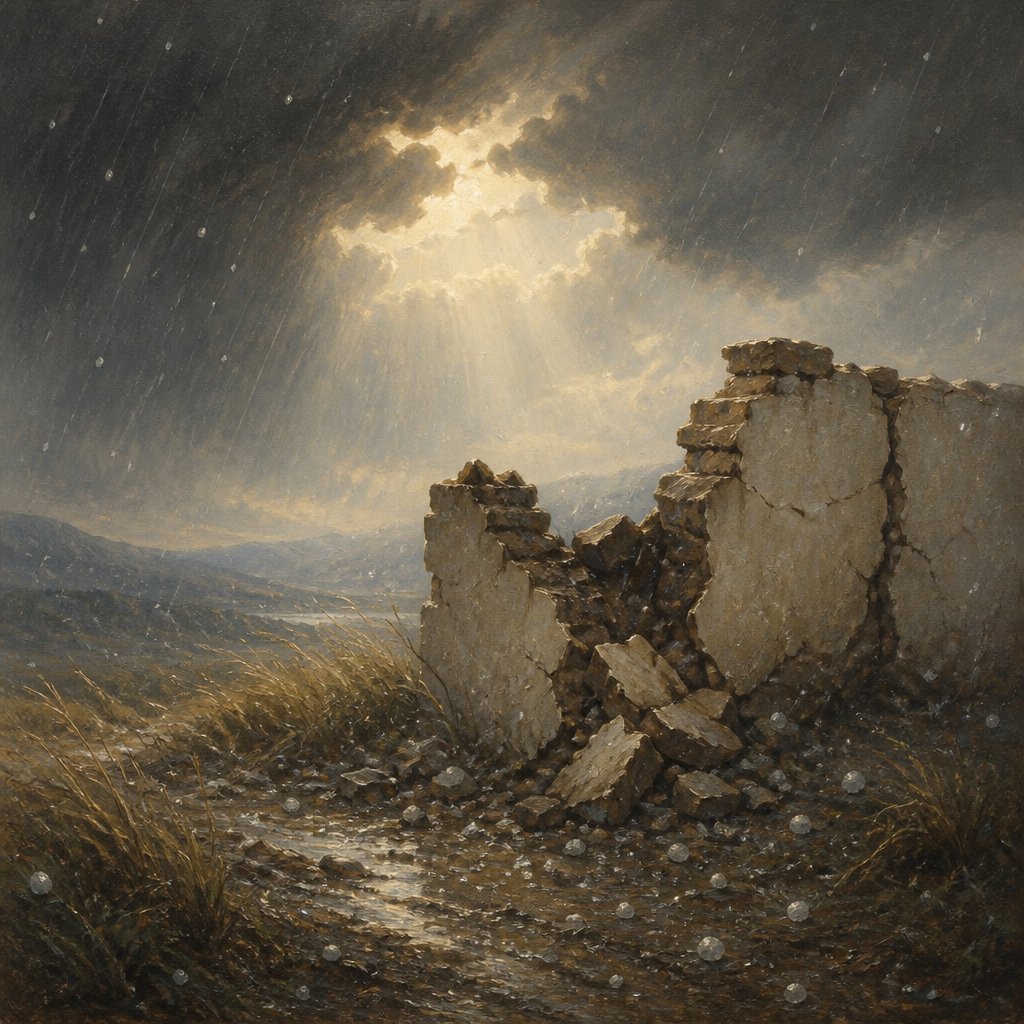
Ezekiel 13:13 (KJV) "Therefore thus saith the Lord God; I will even rend it with a stormy wind in my fury; and there shall be an overflowing shower in mine anger, and great hailstones in my fury to consume it."
In this verse, the prophet Ezekiel delivers a message from God, warning the people of Israel of impending divine judgment. The Lord God declares that He will bring destruction upon the false prophets and their works, using a stormy wind, overflowing shower, and great hailstones as instruments of His wrath.
To understand the depth and significance of this verse, it is necessary to consider the historical and cultural context in which it was delivered. Ezekiel prophesied during a time of great turmoil and upheaval in Israel. The nation of Israel had been divided and conquered by the Babylonians, and the people were suffering under the oppression of their captors. In the midst of this turmoil, false prophets had arisen, spreading lies and false hope to the people. God, through Ezekiel, warns these false prophets of their impending judgment and rightly discerns their deceitful words.
The themes in this verse are multifaceted and profound. The foremost theme is divine judgment, reflecting God's righteous anger and abhorrence towards false prophets and their deceitful teachings. It also emphasizes the overarching theme of God's sovereignty and the inevitable consequences of opposing His will. The imagery of a stormy wind, overflowing shower, and great hailstones conveys the magnitude and severity of God's wrath, underscoring the severity of divine judgment upon those who lead His people astray.
The symbolism in this verse further adds depth to its meaning. The stormy wind represents the powerful force of God's judgment that will sweep away the lies and deceit of the false prophets. The overflowing shower symbolizes the deluge of God's anger, washing away the false teachings that have misled His people. The great hailstones represent the destructive nature of God's wrath, serving as a metaphor for the devastating consequences of false prophecy.
Moreover, this verse serves as a reminder of the consequences of false teachings and the importance of discerning the truth. It admonishes against following deceivers and holds leaders accountable for leading astray God's people. Through this, it underscores the significance of discernment and the responsibility of spiritual leaders to speak the truth and lead God's people in righteousness.
In a broader theological context, this verse also points to the overarching narrative of God's redemptive plan for His people. While the impending judgment may seem severe, it is ultimately a demonstration of God's love and faithfulness to His people. Through the destruction of false prophets, God seeks to purify His people and bring them back to Himself, ultimately leading them to salvation.
In conclusion, Ezekiel 13:13 is a powerful and evocative verse that conveys the severity of God's judgment upon false prophets. It emphasizes themes of divine judgment, God's sovereignty, and the consequences of false teachings while also serving as a call to discernment and accountability. The imagery and symbolism used in this verse further deepen its significance, illustrating the magnitude of God's wrath and the destructive nature of false prophecy. Ultimately, this verse serves as a reminder of the importance of seeking and adhering to the truth, as well as God's unwavering love and faithfulness to His people.
Get our apps


Artwork for Ezekiel 13:13

Ezekiel 13:13 - "Therefore thus saith the Lord GOD; I will even rend it with a stormy wind in my fury; and there shall be an overflowing shower in mine anger, and great hailstones in my fury to consume it."
"Therefore thus saith the Lord GOD; I will even rend it with a stormy wind in my fury; and there shall be an overflowing shower in mine anger, and great hailstones in my fury to consume it." - Ezekiel 13:13

Ezekiel 28:13

Ezekiel 1:6-13

Ezekiel 13:1 - "And the word of the LORD came unto me, saying,"

Isiah 61:1-3 Isaiah 61:1-3

Ezekiel 13:4 - "O Israel, thy prophets are like the foxes in the deserts."

Ezekiel 19:13 - "And now she is planted in the wilderness, in a dry and thirsty ground."

Ezekiel 23:13 - "Then I saw that she was defiled, that they took both one way,"

Ezekiel 10:13 - "As for the wheels, it was cried unto them in my hearing, O wheel."

Job 1:3

Job 1:3

Ezekiel 26:13 - "And I will cause the noise of thy songs to cease; and the sound of thy harps shall be no more heard."

Ezekiel 21:13 - "Because it is a trial, and what if the sword contemn even the rod? it shall be no more, saith the Lord GOD."

Joshua 1:3

Philippians 1:3

John 1:3

Ephesians 1:3

John 1:3

Job 1:3

Ezekiel 27:13 - "Javan, Tubal, and Meshech, they were thy merchants: they traded the persons of men and vessels of brass in thy market."

Ezekiel 38:1-3

Philippians 1:3-8

Isaiah 6:1-3

Ezekiel 4:1-3

Psalm 27:1-3

Genesis 21:1-3

John 19:1-3

revelations 22:1-3

John 9:1-3