What does Ezekiel 27:19 mean?
“Dan also and Javan going to and fro occupied in thy fairs: bright iron, cassia, and calamus, were in thy market.” — Ezekiel 27:19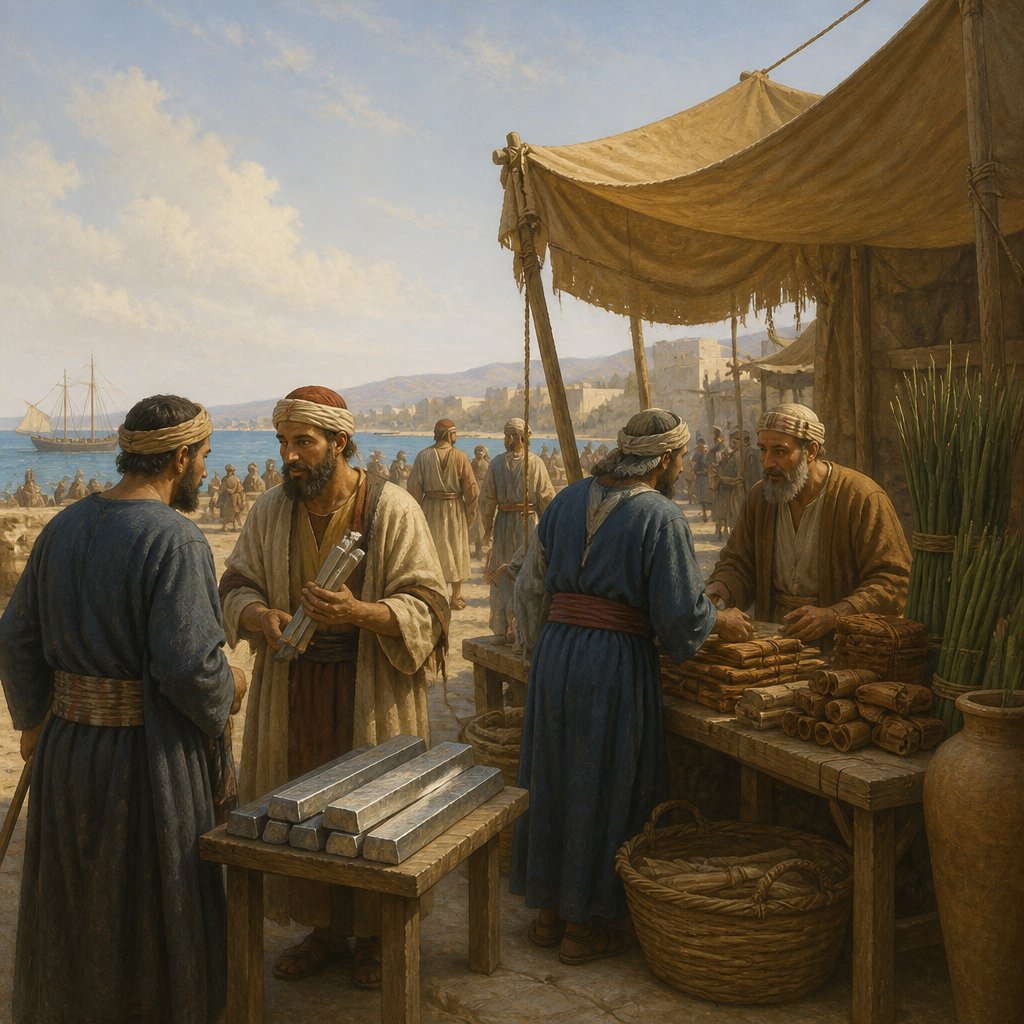
Ezekiel 27:19 in the King James Version reads, "Dan also and Javan going to and fro occupied in thy fairs: bright iron, cassia, and calamus, were in thy market." This verse is part of a larger narrative in the book of Ezekiel, where the prophet is delivering a message of judgment against the city of Tyre, a wealthy and powerful trading hub in the ancient Near East.
In this particular verse, Ezekiel is listing the various nations that traded with Tyre and the goods they brought to its markets. "Dan" likely refers to a region in northern Israel, while "Javan" is a reference to Greece. These nations were "going to and fro" in Tyre's fairs, indicating the bustling and active nature of its trade. The specific goods mentioned – bright iron, cassia, and calamus – highlight the diverse and valuable commodities that were exchanged in Tyre.
The broader context of Ezekiel 27 reveals a central theme of judgment against Tyre for its pride, arrogance, and violence. The city had become wealthy through its extensive trade networks, and its leaders had become haughty and self-assured as a result. Ezekiel's prophecy serves as a warning that this prosperity would not last, and that Tyre would face destruction and exile as a result of its sins.
In light of this overarching theme, Ezekiel 27:19 can be interpreted as a commentary on the fleeting nature of worldly wealth and power. The items listed – bright iron, cassia, and calamus – represent the material riches and luxury goods that Tyre was known for. However, the prophet is highlighting the transitory nature of these possessions, emphasizing that they will ultimately fail to protect the city from divine judgment.
Additionally, the mention of Dan and Javan as traders with Tyre underscores the city's cosmopolitan nature and the far-reaching extent of its trade networks. Tyre was known for its cultural diversity and for attracting merchants from many different regions. However, Ezekiel's message reinforces the idea that even this extensive web of connections and resources would not be enough to shield the city from the consequences of its moral corruption.
Symbolically, the verse can also be seen as a metaphor for the broader theme of spiritual idolatry and the pursuit of wealth at the expense of faithfulness to God. The city of Tyre had become enamored with its own success and had turned away from the worship of Yahweh, the God of Israel. The passage serves as a cautionary tale about the dangers of placing material wealth and prosperity above spiritual integrity.
In conclusion, Ezekiel 27:19 is a small but significant element of a larger prophetic message that carries important themes of judgment, transience, and spiritual fidelity. It serves as a reminder that worldly goods and success are ultimately fleeting, and that true security and fulfillment can only be found through a faithful relationship with God. This verse challenges us to consider where we are placing our priorities and to seek lasting value in the things of the spirit rather than the things of the world.
Get our apps


Artwork for Ezekiel 27:19

Ezekiel 27:19 - "Dan also and Javan going to and fro occupied in thy fairs: bright iron, cassia, and calamus, were in thy market."
"Dan also and Javan going to and fro occupied in thy fairs: bright iron, cassia, and calamus, were in thy market." - Ezekiel 27:19

Ezekiel 28:11-19

Ezekiel 28:11-19

Ezekiel 28:11-19

Ezekiel 28:11-19

Ezekiel 28:11-19

Ezekiel 28:11-19

Genesis 19-27

Exodus 27:19-20

Genesis 27:18-19

John 19:25-27

Ezekiel 27:20 - "Dedan was thy merchant in precious clothes for chariots."

John 19:25-27

John 19:26-27

Exodus 27:19-21

Ezekiel 27:28 - "The suburbs shall shake at the sound of the cry of thy pilots."

Ezekiel 27:1 - "The word of the LORD came again unto me, saying,"

Ezekiel 27:14 - "They of the house of Togarmah traded in thy fairs with horses and horsemen and mules."

Ezekiel 27:2 - "Now, thou son of man, take up a lamentation for Tyrus;"

Ezekiel 27:23 - "Haran, and Canneh, and Eden, the merchants of Sheba, Asshur, and Chilmad, were thy merchants."

Ezekiel 48:27 - "And by the border of Zebulun, from the east side unto the west side, Gad a portion."

Ezekiel 27:4 - "Thy borders are in the midst of the seas, thy builders have perfected thy beauty."

John 19:25-27 with emphasis on Mary

Ezekiel 37:27 - "My tabernacle also shall be with them: yea, I will be their God, and they shall be my people."

Proverbs 27:19 - "As in water face answereth to face, so the heart of man to man."

Ezekiel 19:13 - "And now she is planted in the wilderness, in a dry and thirsty ground."

Ezekiel 27:21 - "Arabia, and all the princes of Kedar, they occupied with thee in lambs, and rams, and goats: in these were they thy merchants."

Ezekiel 19:1 - "Moreover take thou up a lamentation for the princes of Israel,"

Ezekiel 11:19 in pointillism style with no text