What does Ezekiel 37:14 mean?
“And shall put my spirit in you, and ye shall live, and I shall place you in your own land: then shall ye know that I the LORD have spoken it, and performed it, saith the LORD.” — Ezekiel 37:14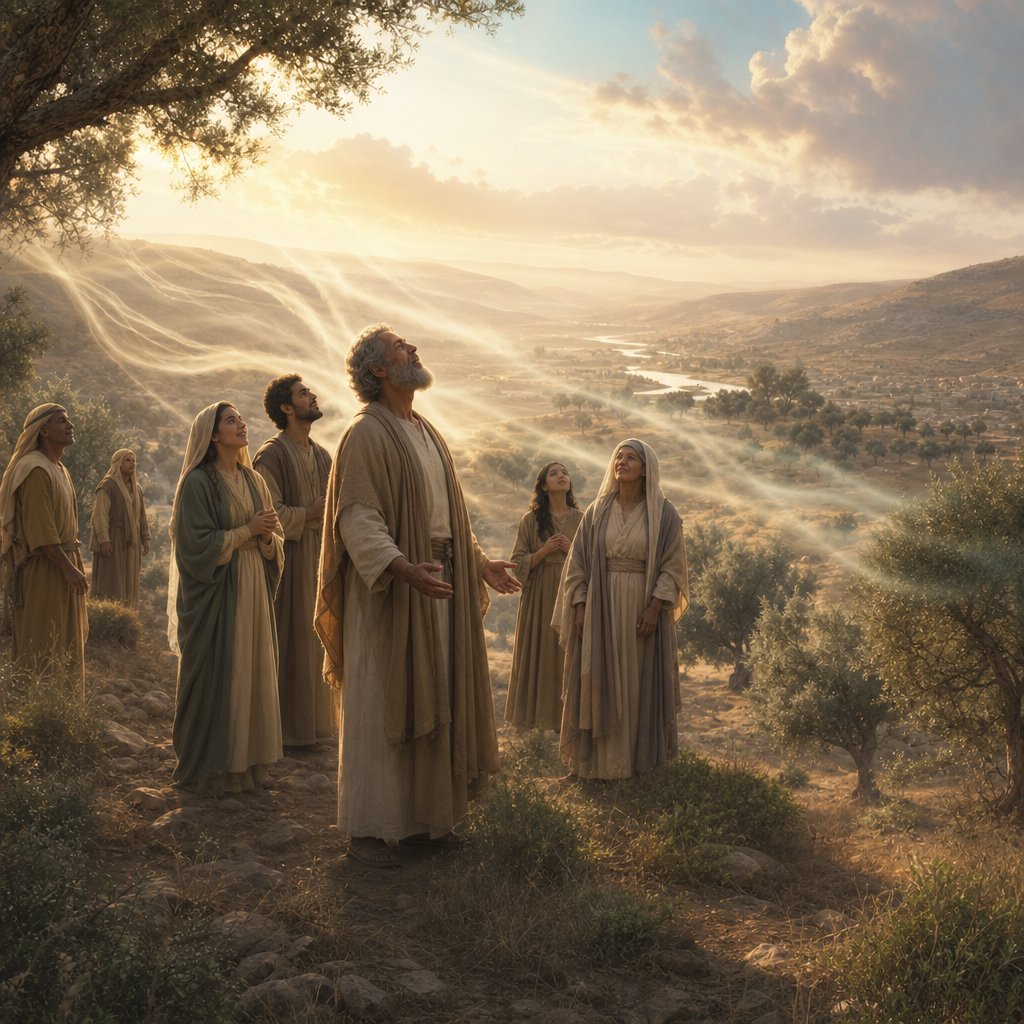
Ezekiel 37:14 in the King James Version reads, “And shall put my spirit in you, and ye shall live, and I shall place you in your own land: then shall ye know that I the LORD have spoken it, and performed it, saith the LORD.” In its plain sense the verse is God’s own summary of what the vision in Ezekiel 37 is meant to teach: the LORD is not merely describing a hopeful possibility for a ruined people, but declaring an act he himself will accomplish—an act so unmistakable that the result will be knowledge, not guesswork: “then shall ye know that I the LORD have spoken it, and performed it.”
The immediate context is the vision of the valley filled with “very many” and “very dry” bones. Those bones are interpreted within the chapter as representing the whole house of Israel saying, “Our bones are dried, and our hope is lost: we are cut off for our parts.” The setting is exile and national collapse, when the people’s condition appears beyond remedy. Into that scene the LORD brings Ezekiel to witness a reversal that only God can do: bones come together, sinews and flesh come upon them, and skin covers them, yet there is still no life until breath enters. Ezekiel 37:14 stands at the end of the explanation of this sign, expressing in one sentence the two great movements of the vision: life given by God’s Spirit, and restoration to the land given by God’s promise.
The themes are restoration, resurrection-like renewal, covenant faithfulness, and divine sovereignty. “And shall put my spirit in you, and ye shall live” places the cause of Israel’s reviving not in Israel’s strength, politics, or moral recovery, but in the LORD’s own Spirit. In the KJV wording the life is the direct consequence of God’s action: God puts his Spirit; therefore they live. This connects with the imagery of breath in the vision. The chapter uses the language of breath and spirit to portray life coming where there was only death and helplessness. The bones cannot animate themselves; they do not even have the organs of life until the LORD restores them; and even then, without the breath they remain lifeless. The verse therefore teaches that true national renewal for Israel is not merely organizational rebuilding or external reassembly; it is a spiritual quickening that comes from God.
The promise, “and I shall place you in your own land,” ties that spiritual renewal to a concrete historical and geographical restoration. The land is not incidental; it is the sphere of covenant blessing and identity, the place associated with the LORD’s promises to the fathers and the visible sign of being gathered rather than scattered. In Ezekiel’s day the exile represented not only displacement but judgment and apparent abandonment. By saying, “I shall place you,” the LORD emphasizes that the return is his work and his gift, not Israel’s achievement. The phrase also implies stability and settledness: not a temporary visit, but being set in place by God’s hand.
The symbolism of the verse gathers up the whole vision into a theological declaration. The “bones” represent hopelessness, powerlessness, and the apparent finality of judgment; their being “very dry” intensifies the impossibility. The assembling of bones and the covering with flesh suggests reconstitution of a people—identity, structure, and wholeness restored. The coming of breath points to the essential element without which a restored body is still dead: the enlivening presence of God. Ezekiel 37:14 translates that symbolism into the promise of the LORD’s Spirit within the people, producing actual life. It presents restoration as both inward and outward: the inward gift of the Spirit and the outward placement in the land.
The closing purpose clause, “then shall ye know that I the LORD have spoken it, and performed it,” is one of Ezekiel’s recurring refrains. It highlights the book’s constant concern that God’s acts in judgment and salvation are revelatory: they make known who the LORD is. In this verse, knowledge of the LORD comes through the fulfillment of his word. The LORD is not only the one who speaks; he is the one who performs what he speaks. That pairing—spoken and performed—underscores the certainty of the promise and the authority of God’s word over history. The restoration is designed to end Israel’s despair and also to establish in them a settled recognition of the LORD’s faithfulness and power.
Within the broader movement of Ezekiel, this verse belongs to the transition from judgment to hope. Earlier oracles had announced the consequences of Israel’s unfaithfulness and the devastation of the land; later sections focus on the LORD’s intention to restore, cleanse, and dwell with his people. Ezekiel 37 is closely followed by the promise of reunification and enduring peace under “one king,” and the prospect of God’s sanctuary among them. In that flow, Ezekiel 37:14 functions like a hinge statement: the LORD will bring life by his Spirit, return them to their place, and thereby prove himself true to his own word.
The significance of Ezekiel 37:14, taken as it stands in the KJV, is therefore the assurance that what looks dead and finished to human eyes is not beyond the reach of God. Israel’s revival is portrayed as nothing less than a divine re-creation: the LORD puts his Spirit, life results, and restoration follows. The verse anchors hope not in circumstances but in the LORD who speaks and performs, and it frames the end of restoration as relational knowledge—Israel coming to know, by lived reality, that the LORD is the one who keeps his word.
Get our apps


Artwork for Ezekiel 37:14
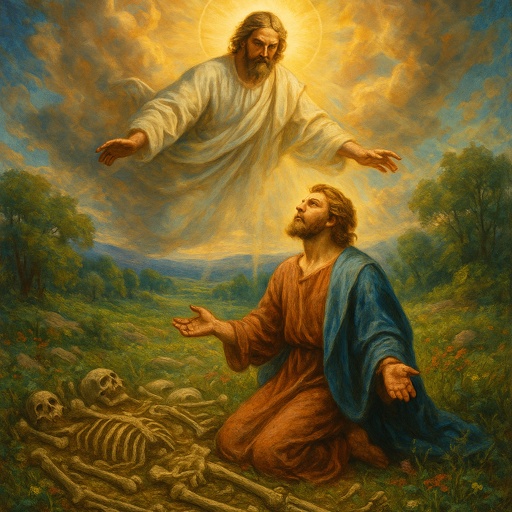
"And shall put my spirit in you, and ye shall live, and I shall place you in your own land: then shall ye know that I the LORD have spoken it, and performed it, saith the LORD." - Ezekiel 37:14

Ezekiel 37:14 - "And shall put my spirit in you, and ye shall live, and I shall place you in your own land: then shall ye know that I the LORD have spoken it, and performed it, saith the LORD."

"And shall put my spirit in you, and ye shall live, and I shall place you in your own land: then shall ye know that I the LORD have spoken it, and performed it, saith the LORD." - Ezekiel 37:14
"And shall put my spirit in you, and ye shall live, and I shall place you in your own land: then shall ye know that I the LORD have spoken it, and performed it, saith the LORD." - Ezekiel 37:14

Full picture of dry bones Ezekiel 37:1-14

Ezekiel 37: 1-14 Add a cross behind with a white piece of material across it with the wind blowing over the white material on the cross

Ezekiel 37

Ezekiel 37:7

ezekiel 37 dry bones

Ezekiel 37:1-10 – The valley of dry bones.

Ezekiel 37 1-7

Ezekiel 37:1-10 – The vision of the valley of dry bones.

Ezekiel 37:1-10 – The vision of the valley of dry bones.

Ezekiel 37:15 - "¶ The word of the LORD came again unto me, saying,"

1 Corinthians 14:37

Ezekiel 37:20 - "¶ And the sticks whereon thou writest shall be in thine hand before their eyes."

1 Corinthians 14:36-37

Ezekiel 37:27 - "My tabernacle also shall be with them: yea, I will be their God, and they shall be my people."

Ezekiel 37:17 - "And join them one to another into one stick; and they shall become one in thine hand."

Ezekiel 20:37 - "And I will cause you to pass under the rod, and I will bring you into the bond of the covenant:"

in the context of Ezekiel 37, draw a valley full of dry human bones

Exodus 37:14 - "Over against the border were the rings, the places for the staves to bear the table."

in accordance with Ezekiel 37, draw a picture of a valley that is full of dry bones for an far as you can see. Standing in the valley is the prophet Ezekiel standing in wonder.

Ezekiel 37:5 - "Thus saith the Lord GOD unto these bones; Behold, I will cause breath to enter into you, and ye shall live:"

Ezekiel 37:28 - "And the heathen shall know that I the LORD do sanctify Israel, when my sanctuary shall be in the midst of them for evermore."

Job 37:14 - "Hearken unto this, O Job: stand still, and consider the wondrous works of God."

Ezekiel 37:3 - "And he said unto me, Son of man, can these bones live? And I answered, O Lord GOD, thou knowest."

Ezekiel 37:8 - "And when I beheld, lo, the sinews and the flesh came up upon them, and the skin covered them above: but there was no breath in them."

"¶ The word of the LORD came again unto me, saying," - Ezekiel 37:15

Ezekiel 37:2 - "And caused me to pass by them round about: and, behold, there were very many in the open valley; and, lo, they were very dry."