What does Ezra 1:8 mean?
“Even those did Cyrus king of Persia bring forth by the hand of Mithredath the treasurer, and numbered them unto Sheshbazzar, the prince of Judah.” — Ezra 1:8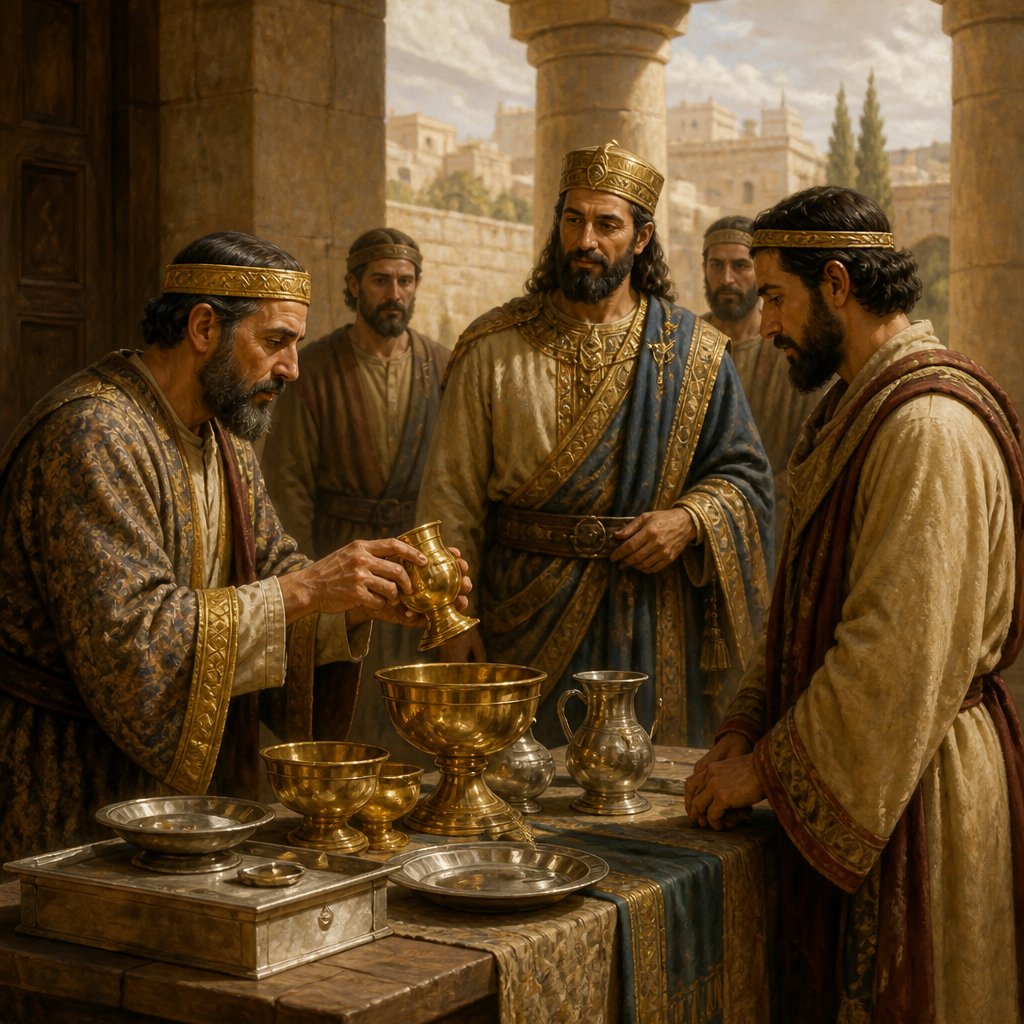
The verse Ezra 1:8 in the King James Version of the Bible reads, "Even those did Cyrus king of Persia bring forth by the hand of Mithredath the treasurer, and numbered them unto Sheshbazzar, the prince of Judah." This verse comes from the book of Ezra, which chronicles the return of the Israelites from exile in Babylon to their homeland of Judah, and the subsequent rebuilding of the temple in Jerusalem. The verse specifically refers to the treasures that were taken from the temple in Jerusalem during its destruction, and now being returned to Sheshbazzar, the prince of Judah, by the order of King Cyrus of Persia.
This verse carries several themes that are prominent throughout the book of Ezra. Firstly, it showcases the fulfillment of God's promise to return His people to their homeland. This is a recurring theme in the Old Testament – the faithfulness of God to His people, even when they have strayed from Him. The return of the treasures to the Israelites is a physical manifestation of God's restoration of their fortunes and their relationship with Him. It demonstrates His sovereignty over the nations, as He uses a pagan king, Cyrus, to accomplish His purposes and bring about the return of His people.
Another important theme in this verse is the providence of God. The fact that the treasures are being returned to the Israelites, after they had been taken from them during the Babylonian exile, shows that God is in control of all things. He is orchestrating events to bring about His plans, and using even pagan rulers to accomplish His will. This theme is also relevant to the broader context of the book of Ezra, as the rebuilding of the temple and the city of Jerusalem are all part of God's sovereign plan to restore His people.
Contextually, this verse comes at a crucial point in the narrative of Ezra. The return of the treasures to the Israelites sets the stage for the rebuilding of the temple in Jerusalem, which is a central focus of the book. The treasures are necessary for the reconstruction of the temple, as they provide the resources needed for the rebuilding efforts. Thus, this verse marks a pivotal moment in the restoration of the Israelites as a people and the reestablishment of their worship of God in their homeland.
In terms of symbolism, the treasures being returned to the Israelites can be seen as a symbol of God's faithfulness and provision. The return of the treasures represents the restoration of the Israelites' relationship with God and the rebuilding of their spiritual legacy. It symbolizes the return of their prosperity and the potential for a renewed commitment to their covenant with God. Additionally, the treasures themselves hold symbolic value, representing the wealth and glory of the temple and the significance of Jerusalem as the holy city of God.
Overall, Ezra 1:8 is a verse that carries significant thematic, contextual, and symbolic weight within the broader narrative of the book of Ezra. It speaks to the faithfulness and providence of God, the restoration of His people, and the symbolic value of the treasures being returned to the Israelites. It is a verse that highlights the sovereignty of God over the nations and the fulfillment of His promises to His people.
Get our apps


Artwork for Ezra 1:8

Ezra 1:8 - "Even those did Cyrus king of Persia bring forth by the hand of Mithredath the treasurer, and numbered them unto Sheshbazzar, the prince of Judah."
"Even those did Cyrus king of Persia bring forth by the hand of Mithredath the treasurer, and numbered them unto Sheshbazzar, the prince of Judah." - Ezra 1:8

Ezra 8:1 - "These are now the chief of their fathers, and this is the genealogy of them that went up with me from Babylon, in the reign of Artaxerxes the king."

Ezra 8:21

Ezra 8:8 - "And of the sons of Shephatiah; Zebadiah the son of Michael, and with him fourscore males."

Ezra 8:32 - "And we came to Jerusalem, and abode there three days."

Ezra 2:8 - "The children of Zattu, nine hundred forty and five."

Nehemiah 8:1 - "And all the people gathered themselves together as one man into the street that was before the water gate; and they spake unto Ezra the scribe to bring the book of the law of Moses, which the LORD had commanded to Israel."

Ezra 1:1

Ezra 1:1
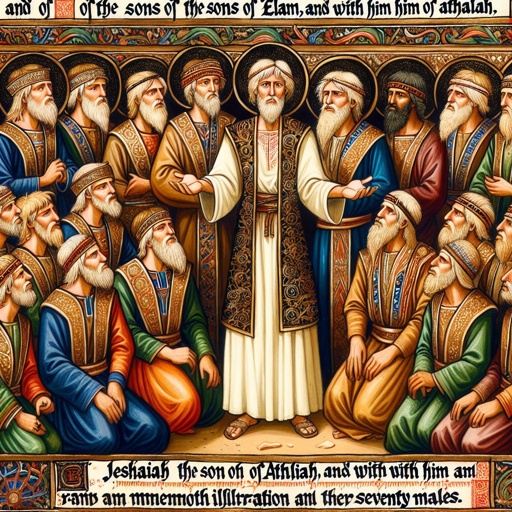
Ezra 8:7 - "And of the sons of Elam; Jeshaiah the son of Athaliah, and with him seventy males."

Ezra 8:10 - "And of the sons of Shelomith; the son of Josiphiah, and with him an hundred and threescore males."
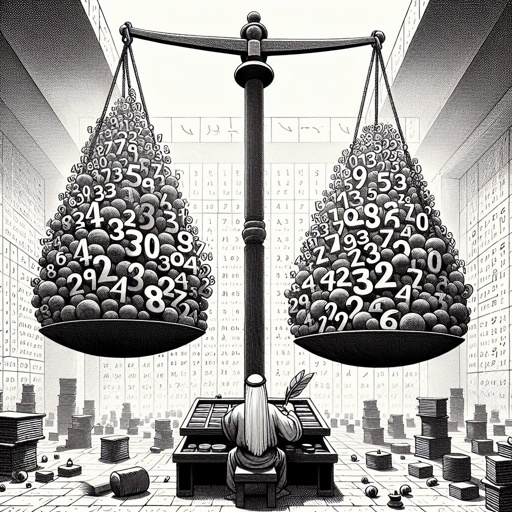
Ezra 8:34 - "By number and by weight of every one: and all the weight was written at that time."

Ezra 8:14 - "Of the sons also of Bigvai; Uthai, and Zabbud, and with them seventy males."

Ezra 8:5 - "Of the sons of Shechaniah; the son of Jahaziel, and with him three hundred males."

Ezra 8:12 - "And of the sons of Azgad; Johanan the son of Hakkatan, and with him an hundred and ten males."

Ezra 7:8 - "And he came to Jerusalem in the fifth month, which was in the seventh year of the king."

Ezra 8:19 - "And Hashabiah, and with him Jeshaiah of the sons of Merari, his brethren and their sons, twenty;"

Ezra 8:6 - "Of the sons also of Adin; Ebed the son of Jonathan, and with him fifty males."

Ezra 8:23 - "So we fasted and besought our God for this: and he was intreated of us."

Ezra 8:11 - "And of the sons of Bebai; Zechariah the son of Bebai, and with him twenty and eight males."

Ezra 8:2 - "Of the sons of Phinehas; Gershom: of the sons of Ithamar; Daniel: of the sons of David; Hattush."

Ezra 8:4 - "Of the sons of Pahath-moab; Elihoenai the son of Zerahiah, and with him two hundred males."

"And of the sons of Shephatiah; Zebadiah the son of Michael, and with him fourscore males." - Ezra 8:8

Ezra 8:9 - "Of the sons of Joab; Obadiah the son of Jehiel, and with him two hundred and eighteen males."

Ezra 8:24 - "¶ Then I separated twelve of the chief of the priests, Sherebiah, Hashabiah, and ten of their brethren with them,"

Ezra 8:13 - "And of the last sons of Adonikam, whose names are these, Eliphelet, Jeiel, and Shemaiah, and with them threescore males."
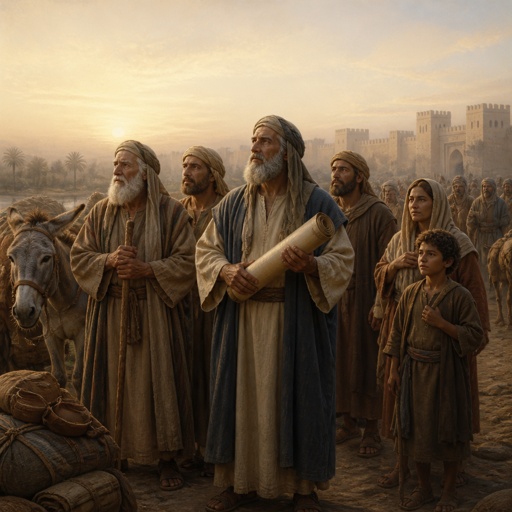
"These are now the chief of their fathers, and this is the genealogy of them that went up with me from Babylon, in the reign of Artaxerxes the king." - Ezra 8:1

Ezra 4:8 - "Rehum the chancellor and Shimshai the scribe wrote a letter against Jerusalem to Artaxerxes the king in this sort:"

Ezra 8:3 - "Of the sons of Shechaniah, of the sons of Pharosh; Zechariah: and with him were reckoned by genealogy of the males an hundred and fifty."