What does Ezra 10:11 mean?
“Now therefore make confession unto the LORD God of your fathers, and do his pleasure: and separate yourselves from the people of the land, and from the strange wives.” — Ezra 10:11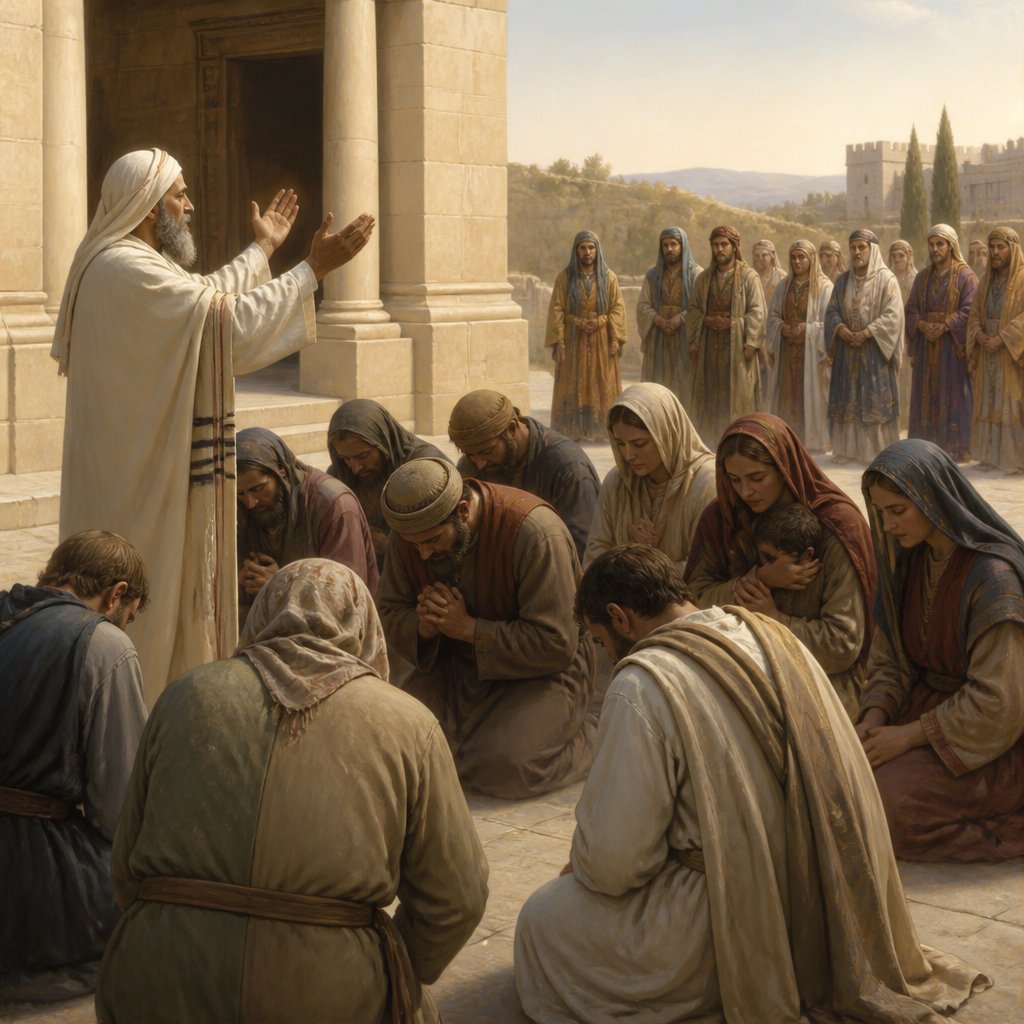
Ezra 10:11 (KJV) reads, "Now therefore make confession unto the LORD God of your fathers, and do his pleasure: and separate yourselves from the people of the land, and from the strange wives."
This verse comes from the book of Ezra, which is part of the Old Testament. The book of Ezra tells the story of the Israelites' return from exile in Babylon and the rebuilding of the temple in Jerusalem. Ezra was a scribe and priest who played a pivotal role in the spiritual renewal of the people. The verse in question comes from a passage in which the people of Israel are confessing their sin of marrying foreign women, which was prohibited by God. The verse serves as a call to repentance and separation from sinful behavior.
The key theme of this verse is the importance of confessing sins and doing God's will. The act of confession is a fundamental aspect of the Christian faith, as it involves acknowledging one's sins before God and seeking forgiveness. In this verse, the Israelites are urged to make confession unto the Lord God of their fathers. This act of confession is not only a personal acknowledgment of wrongdoing but also a public declaration of their desire to return to God and His ways.
Additionally, the verse emphasizes the need to do God's pleasure. This refers to living in accordance with God's commandments and seeking to please Him in all aspects of life. This theme underscores the idea that true repentance involves a change in behavior and a commitment to living in obedience to God.
The call to separate themselves from the people of the land and from the strange wives is a clear demonstration of the importance of maintaining purity and separation from worldly influences. The Israelites were instructed to separate themselves from the foreign women they had married, as these marriages had led them away from God and into sin. This act of separation symbolizes the need for believers to distance themselves from anything that hinders their relationship with God.
The context of this verse is important for understanding its significance. At the time of Ezra, the Israelites had returned from exile in Babylon and were in the process of rebuilding their nation and reestablishing their commitment to God. However, they had fallen into sin by intermarrying with the people of the land, contrary to God's instructions. The verse reflects Ezra's efforts to lead the people in repentance and purification, seeking to restore their relationship with God and reclaim their identity as His chosen people.
Symbolically, the verse can be seen as a representation of the ongoing struggle between the desires of the flesh and the call to live in holiness. The foreign wives symbolize the allure of worldly influences and the temptation to compromise one's faith. The act of separation symbolizes the need for believers to break free from these temptations and to pursue a life of purity and devotion to God.
In conclusion, Ezra 10:11 is a powerful call to confession, repentance, and obedience to God's will. It serves as a reminder of the importance of acknowledging sin, seeking forgiveness, and making a conscious effort to live in accordance with God's commandments. The verse also underscores the need for believers to remain separate from worldly influences and to prioritize their relationship with God above all else. It is a timeless and relevant message that continues to inspire believers to pursue a life of faithfulness and obedience to God.
Get our apps


Artwork for Ezra 10:11
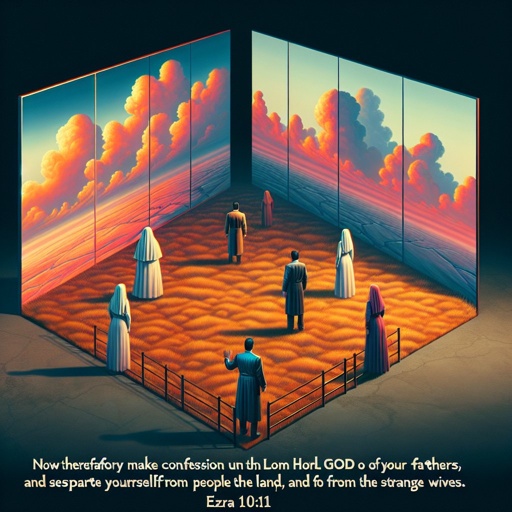
Ezra 10:11 - "Now therefore make confession unto the LORD God of your fathers, and do his pleasure: and separate yourselves from the people of the land, and from the strange wives."
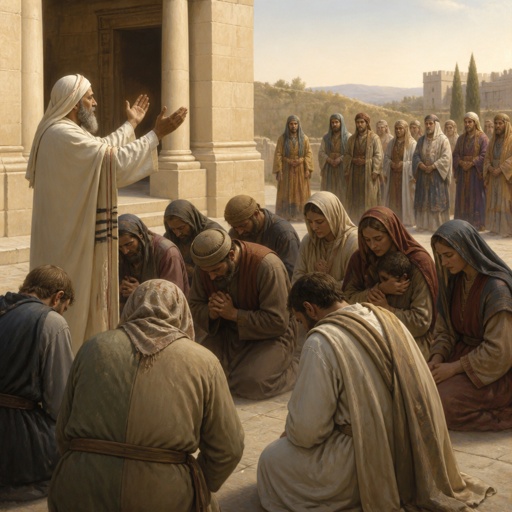
"Now therefore make confession unto the LORD God of your fathers, and do his pleasure: and separate yourselves from the people of the land, and from the strange wives." - Ezra 10:11

Ezra 10:10-12

Ezra 10:10 - "And Ezra the priest stood up, and said unto them, Ye have transgressed, and have taken strange wives, to increase the trespass of Israel."

Ezra 10:3

Ezra 3:10

Ezra 10:3

Ezra 10:5 - "Then arose Ezra, and made the chief priests, the Levites, and all Israel, to swear that they should do according to this word. And they sware."

Ezra 7:10 - "For Ezra had prepared his heart to seek the law of the LORD, and to do it, and to teach in Israel statutes and judgments."

Ezra 10:38 - "And Bani, and Binnui, Shimei,"

Ezra 10:37 - "Mattaniah, Mattenai, and Jaasau,"

Ezra 10:40 - "Machnadebai, Shashai, Sharai,"

Ezra 10:32 - "Benjamin, Malluch, and Shemariah."

Ezra 10:36 - "Vaniah, Meremoth, Eliashib,"

Ezra 10:35 - "Benaiah, Bedeiah, Chelluh,"

Ezra 10:42 - "Shallum, Amariah, and Joseph."

Ezra 10:41 - "Azareel, and Shelemiah, Shemariah,"

Ezra 10:39 - "And Shelemiah, and Nathan, and Adaiah,"

Ezra 10:20 - "And of the sons of Immer; Hanani, and Zebadiah."

Ezra 10:34 - "Of the sons of Bani; Maadai, Amram, and Uel,"

Ezra 7:11 - "¶ Now this is the copy of the letter that the king Artaxerxes gave unto Ezra the priest, the scribe, even a scribe of the words of the commandments of the LORD, and of his statutes to Israel."

Ezra 2:11 - "The children of Bebai, six hundred twenty and three."

Ezra 2:10 - "The children of Bani, six hundred forty and two."

Ezra 10:21 - "And of the sons of Harim; Maaseiah, and Elijah, and Shemaiah, and Jehiel, and Uzziah."

Ezra 10:24 - "Of the singers also; Eliashib: and of the porters; Shallum, and Telem, and Uri."

Ezra 10:28 - "Of the sons also of Bebai; Jehohanan, Hananiah, Zabbai, and Athlai."

Ezra 10:31 - "And of the sons of Harim; Eliezer, Ishijah, Malchiah, Shemaiah, Shimeon,"

"Azareel, and Shelemiah, Shemariah," - Ezra 10:41

"And Bani, and Binnui, Shimei," - Ezra 10:38

"And Shelemiah, and Nathan, and Adaiah," - Ezra 10:39