What does Ezra 10:12 mean?
“Then all the congregation answered and said with a loud voice, As thou hast said, so must we do.” — Ezra 10:12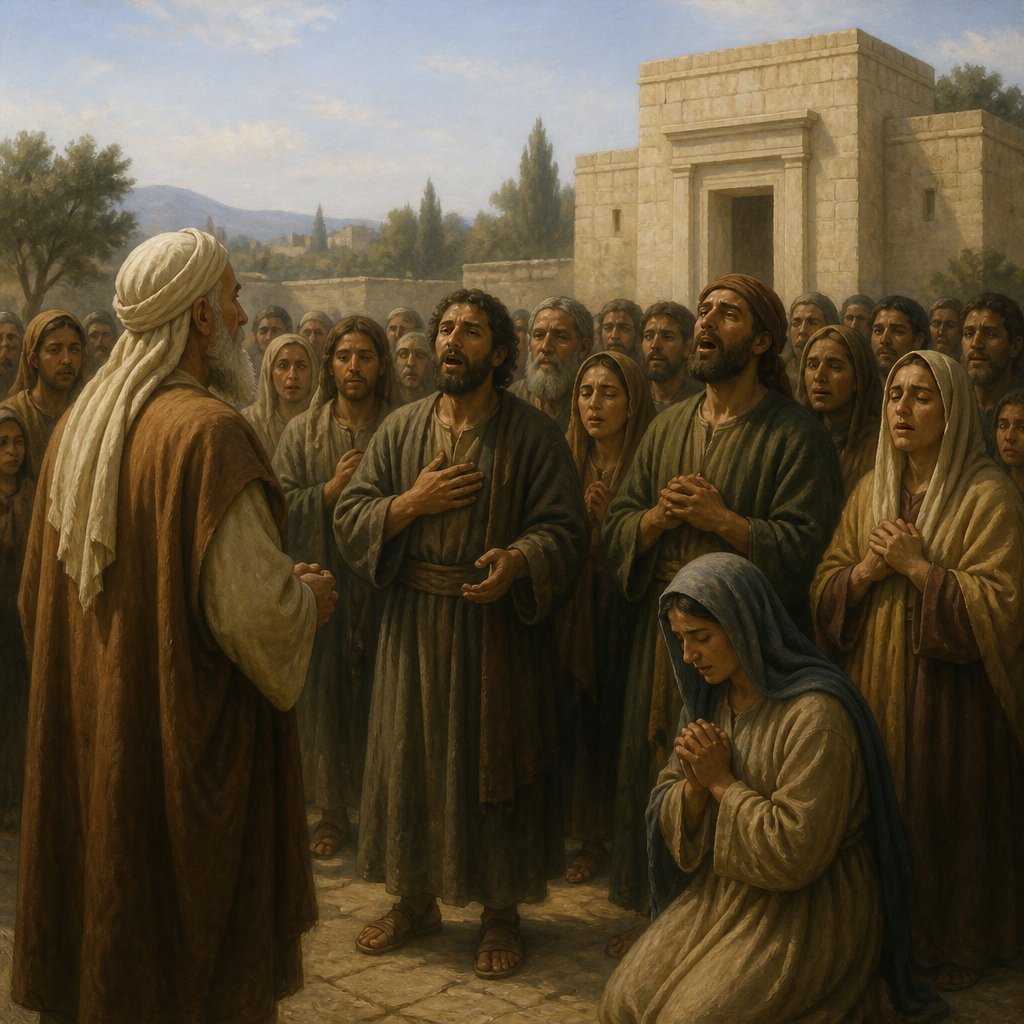
Ezra 10:12 in the King James Version of the Bible reads: "Then all the congregation answered and said with a loud voice, As thou hast said, so must we do."
The book of Ezra is a historical narrative that details the return of the Israelites from exile in Babylon to their homeland of Judah. Ezra was a priest and scribe who played a key role in the restoration of the Jewish community in Jerusalem, leading the people in a spiritual revival and the reestablishment of the Mosaic Law.
In Ezra 10, we see the people of Israel gathered together in response to Ezra's call for them to confess their sins and separate themselves from the foreign wives they had taken in violation of God's commandments. The congregation's response in verse 12 is a declaration of their commitment to obeying God's will and following the instructions given to them by Ezra.
The verse holds several themes that resonate throughout the book of Ezra and the broader biblical narrative. One of the central themes is the importance of obedience to God and His commandments. Throughout the Bible, God calls His people to live in accordance with His will and to follow His laws. The congregation's declaration in Ezra 10:12 reflects their recognition of the need to align themselves with God's desires and to submit to His authority.
Another theme is the nature of corporate confession and repentance. The Israelites came together as a community to acknowledge their sins and to seek reconciliation with God. This demonstrates the biblical principle that sin is not just an individual matter, but also has communal and societal implications. The congregation's response in Ezra 10:12 exemplifies their willingness to take collective responsibility for their actions and to work towards corporate renewal and restoration.
Symbolically, the loud voice with which the congregation responds conveys the seriousness and urgency of their commitment. Their united declaration signifies a unity of purpose and a shared resolve to turn away from sin and to return to God. This echoes the biblical emphasis on the power of unity and agreement among God's people, as expressed in passages such as Matthew 18:19-20 and Acts 2:1.
The context of this verse is also significant. The Israelites had just returned from exile and were in the process of rebuilding their community and their relationship with God. Their willingness to heed Ezra's call for confession and separation from foreign influences reflects their desire to reestablish a covenantal relationship with God and to reclaim their identity as His chosen people.
In a broader sense, Ezra 10:12 serves as a reminder of the ongoing need for confession, repentance, and obedience in the Christian life. It underscores the importance of acknowledging and turning away from sin, both individually and corporately, and recommitting ourselves to following God's will. It also highlights the transformative power of collective action and the role of community in pursuing spiritual renewal.
In conclusion, Ezra 10:12 captures the commitment of the Israelite congregation to obeying God's commands and seeking reconciliation with Him. It encapsulates themes of obedience, communal confession, and the power of collective action, while also serving as a timeless reminder of the importance of repentance and renewal in the Christian journey. As believers today, we can draw inspiration from the example of the Israelites in Ezra's time and be encouraged to emulate their wholehearted dedication to God's will.
Get our apps


Artwork for Ezra 10:12

Ezra 10:12 - "Then all the congregation answered and said with a loud voice, As thou hast said, so must we do."
"Then all the congregation answered and said with a loud voice, As thou hast said, so must we do." - Ezra 10:12

Ezra 10:10-12

Ezra 10:10 - "And Ezra the priest stood up, and said unto them, Ye have transgressed, and have taken strange wives, to increase the trespass of Israel."

Ezra 10:3

Ezra 3:10

Ezra 7:12 - "Artaxerxes, king of kings, unto Ezra the priest, a scribe of the law of the God of heaven, perfect peace, and at such a time."

Ezra 10:3

Ezra 10:5 - "Then arose Ezra, and made the chief priests, the Levites, and all Israel, to swear that they should do according to this word. And they sware."

Ezra 7:10 - "For Ezra had prepared his heart to seek the law of the LORD, and to do it, and to teach in Israel statutes and judgments."

Ezra 6:1-12

Ezra 10:38 - "And Bani, and Binnui, Shimei,"

Ezra 10:37 - "Mattaniah, Mattenai, and Jaasau,"

Ezra 10:40 - "Machnadebai, Shashai, Sharai,"

Ezra 10:32 - "Benjamin, Malluch, and Shemariah."

Nehemiah 12:33 - "And Azariah, Ezra, and Meshullam,"

Ezra 10:36 - "Vaniah, Meremoth, Eliashib,"

Ezra 10:35 - "Benaiah, Bedeiah, Chelluh,"

Ezra 10:42 - "Shallum, Amariah, and Joseph."

Ezra 10:41 - "Azareel, and Shelemiah, Shemariah,"

Ezra 10:39 - "And Shelemiah, and Nathan, and Adaiah,"

Nehemiah 12:13 - "Of Ezra, Meshullam; of Amariah, Jehohanan;"

Ezra 10:20 - "And of the sons of Immer; Hanani, and Zebadiah."

Ezra 10:34 - "Of the sons of Bani; Maadai, Amram, and Uel,"

Ezra 2:10 - "The children of Bani, six hundred forty and two."

"And Azariah, Ezra, and Meshullam," - Nehemiah 12:33

Ezra 10:21 - "And of the sons of Harim; Maaseiah, and Elijah, and Shemaiah, and Jehiel, and Uzziah."

Ezra 10:24 - "Of the singers also; Eliashib: and of the porters; Shallum, and Telem, and Uri."

Ezra 10:28 - "Of the sons also of Bebai; Jehohanan, Hananiah, Zabbai, and Athlai."

Ezra 10:31 - "And of the sons of Harim; Eliezer, Ishijah, Malchiah, Shemaiah, Shimeon,"