What does Ezra 10:17 mean?
“And they made an end with all the men that had taken strange wives by the first day of the first month.” — Ezra 10:17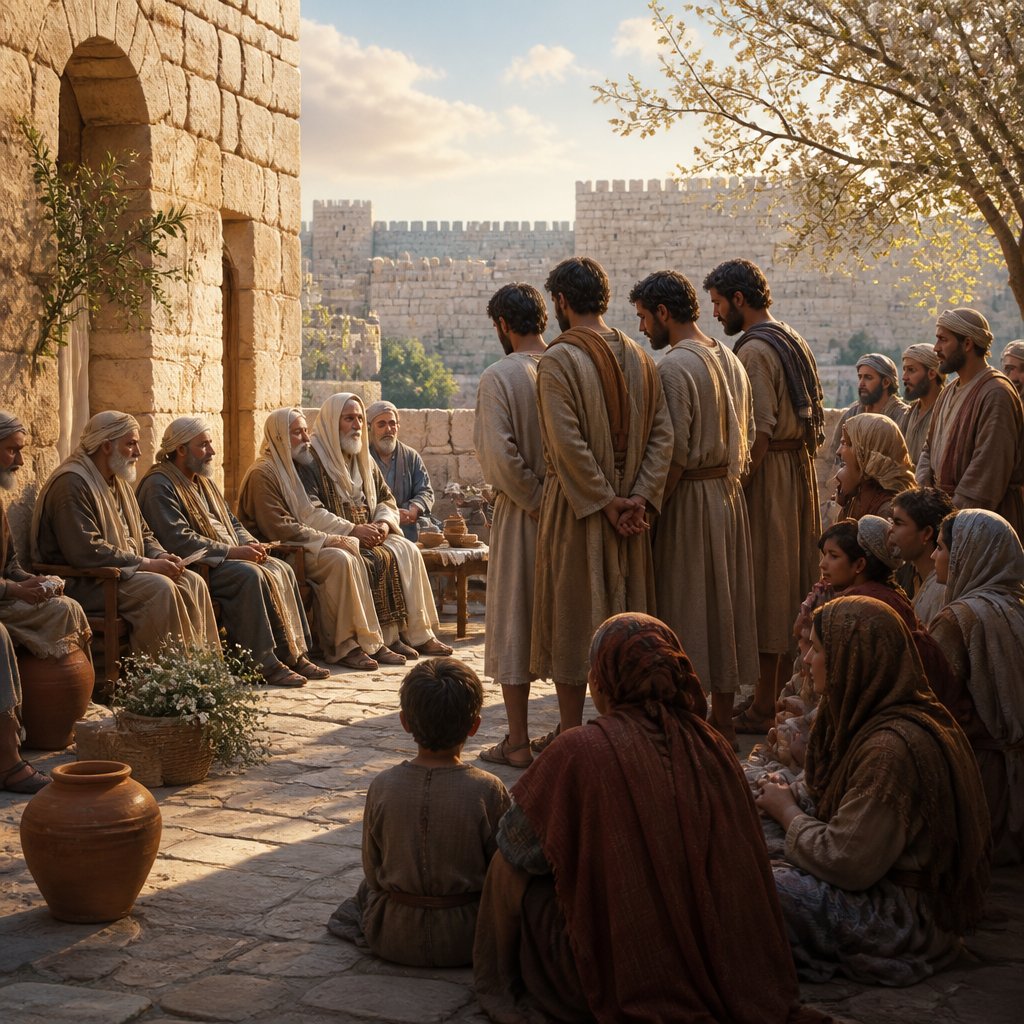
Ezra 10:17 (KJV): "And they made an end with all the men that had taken strange wives by the first day of the first month."
In order to understand the significance of this verse, it is important to first consider its historical and literary context. The Book of Ezra is a historical narrative that recounts the return of the exiled Israelites from Babylon to Jerusalem, and their efforts to rebuild the temple and reintegrate into their homeland. In Ezra 10, the focus is on the issue of intermarriage between the Israelites and foreign women, which was contrary to the Mosaic Law. The people of Israel were instructed to separate themselves from their foreign wives and children as a means of renewing their commitment to God and to purify the nation.
The verse in question describes the resolution of this issue, with the men who had taken foreign wives making an end of their relationships by the first day of the first month. This indicates a swift and decisive action to rectify the sinful behavior that had taken place among the Israelites. The first day of the first month was significant in the Jewish calendar as it marked the beginning of a new year, symbolizing a fresh start and a time for repentance and renewal.
One of the key themes in this passage is the importance of obedience to God's commands. The Israelites had strayed from the Mosaic Law by marrying foreign women, and their swift action to rectify this disobedience demonstrates a commitment to aligning themselves with God's will. This theme of obedience to God's law is a central aspect of the Old Testament narrative, emphasizing the idea that righteousness and holiness come through adherence to God's commands.
Furthermore, the verse highlights the idea of spiritual purity and the sanctity of the Israelite community. The separation from foreign wives was not simply a matter of legalistic adherence to the Mosaic Law, but a means of preserving the purity of the nation and ensuring that the spiritual integrity of the people was maintained. This concept of spiritual purity is a recurring theme throughout the Old Testament, as the Israelites sought to uphold their identity as God's chosen people and to remain separate from the pagan practices of the surrounding nations.
Symbolically, the action taken by the Israelites to end their relationships with foreign wives can be seen as a metaphor for the need to rid oneself of sinful influences and to purify one's heart and mind. Just as the Israelites separated themselves from foreign wives in order to restore their relationship with God, individuals are called to separate themselves from anything that hinders their spiritual growth and obedience to God.
In a broader sense, this verse also speaks to the idea of new beginnings and the possibility of reconciliation with God. The first day of the first month symbolizes a fresh start, and the decisive action taken by the Israelites demonstrates their desire to renew their covenant relationship with God. This echoes the broader biblical theme of redemption and restoration, as individuals and communities are called to turn away from sin and toward God in order to experience forgiveness and reconciliation.
In conclusion, Ezra 10:17 captures the significance of the Israelites' commitment to obedience, spiritual purity, and the possibility of renewal. This verse serves as a reminder of the importance of aligning oneself with God's commands and the need for repentance and reconciliation in order to experience spiritual restoration. It also underscores the broader themes of obedience, purity, and the potential for new beginnings that are central to the biblical narrative.
Get our apps


Artwork for Ezra 10:17

Ezra 10:17 - "And they made an end with all the men that had taken strange wives by the first day of the first month."
"And they made an end with all the men that had taken strange wives by the first day of the first month." - Ezra 10:17

Ezra 10:10-12

Ezra 10:10 - "And Ezra the priest stood up, and said unto them, Ye have transgressed, and have taken strange wives, to increase the trespass of Israel."

Ezra 10:3

Ezra 3:10

Ezra 10:3

Ezra 10:5 - "Then arose Ezra, and made the chief priests, the Levites, and all Israel, to swear that they should do according to this word. And they sware."

Ezra 7:10 - "For Ezra had prepared his heart to seek the law of the LORD, and to do it, and to teach in Israel statutes and judgments."

Ezra 10:38 - "And Bani, and Binnui, Shimei,"

Ezra 10:37 - "Mattaniah, Mattenai, and Jaasau,"

Ezra 10:40 - "Machnadebai, Shashai, Sharai,"

Ezra 10:32 - "Benjamin, Malluch, and Shemariah."
Ezra 2:17 - "The children of Bezai, three hundred twenty and three."

Ezra 10:35 - "Benaiah, Bedeiah, Chelluh,"

Ezra 10:41 - "Azareel, and Shelemiah, Shemariah,"

Ezra 10:36 - "Vaniah, Meremoth, Eliashib,"

Ezra 10:42 - "Shallum, Amariah, and Joseph."

Ezra 10:39 - "And Shelemiah, and Nathan, and Adaiah,"

Ezra 10:20 - "And of the sons of Immer; Hanani, and Zebadiah."

Ezra 10:34 - "Of the sons of Bani; Maadai, Amram, and Uel,"

Ezra 2:10 - "The children of Bani, six hundred forty and two."

Ezra 10:24 - "Of the singers also; Eliashib: and of the porters; Shallum, and Telem, and Uri."

Ezra 10:21 - "And of the sons of Harim; Maaseiah, and Elijah, and Shemaiah, and Jehiel, and Uzziah."

Ezra 10:31 - "And of the sons of Harim; Eliezer, Ishijah, Malchiah, Shemaiah, Shimeon,"

Ezra 10:28 - "Of the sons also of Bebai; Jehohanan, Hananiah, Zabbai, and Athlai."

"Azareel, and Shelemiah, Shemariah," - Ezra 10:41

"And Bani, and Binnui, Shimei," - Ezra 10:38

"And Shelemiah, and Nathan, and Adaiah," - Ezra 10:39

"Vaniah, Meremoth, Eliashib," - Ezra 10:36