What does Ezra 10:7 mean?
“And they made proclamation throughout Judah and Jerusalem unto all the children of the captivity, that they should gather themselves together unto Jerusalem;” — Ezra 10:7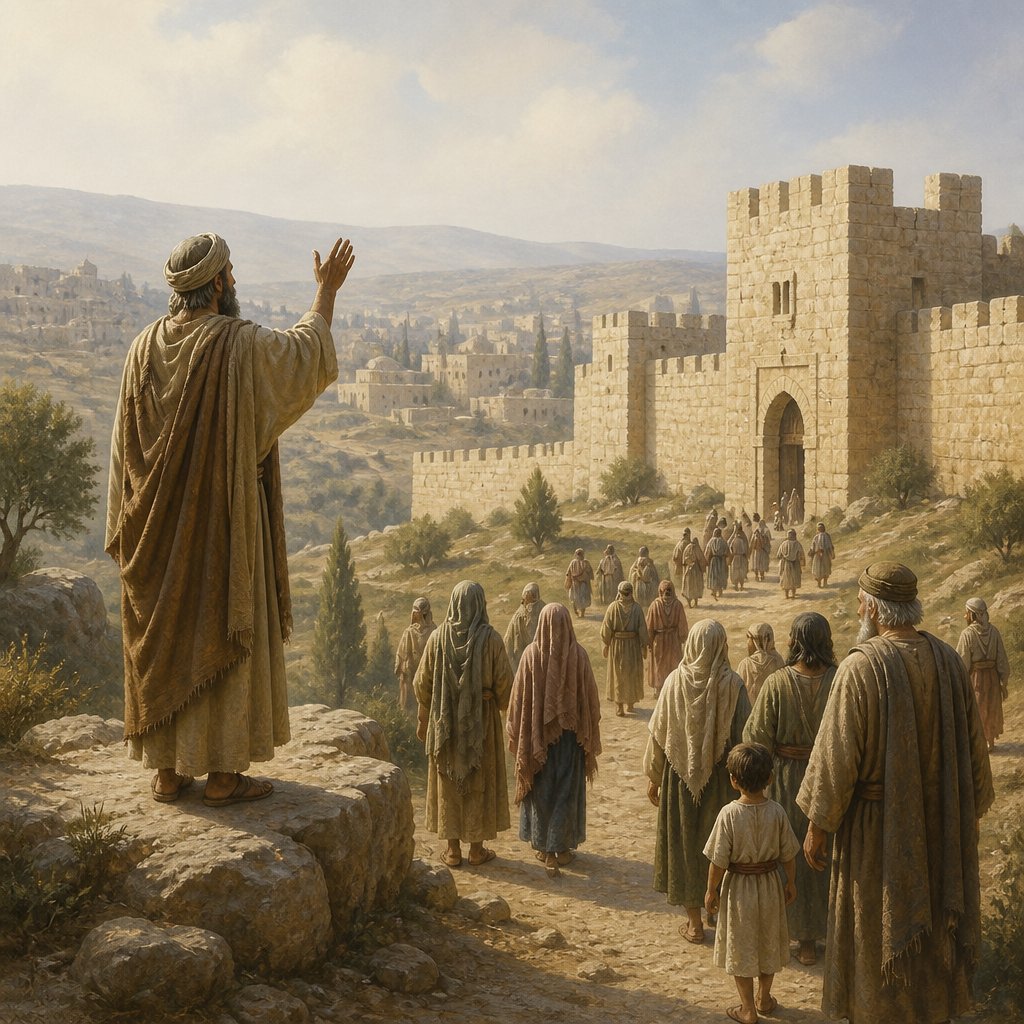
"Ezra 10:7 (KJV): And they made proclamation throughout Judah and Jerusalem unto all the children of the captivity, that they should gather themselves together unto Jerusalem."
The book of Ezra is set in the time period after the Babylonian exile, when the Jews were allowed to return to Jerusalem by the Persian King Cyrus. The book is primarily concerned with the process of rebuilding the temple and restoring the spiritual life of the Jewish people. The verse above comes from a moment in the narrative when the people have gathered in Jerusalem, and are preparing to address the issue of intermarriage, which has been a significant concern for the community.
The verse focuses on the act of proclamation made by the leaders of Judah and Jerusalem. The leaders are calling the people to gather themselves together in Jerusalem. This act of proclamation is significant because it signifies a rallying cry for the people to come together for a specific purpose.
In the larger context of the book of Ezra, this verse is a turning point in the narrative. The proclamation made in this verse is the first step in addressing the issue of intermarriage, which has been a source of spiritual contamination and disunity among the people. The leaders are calling for a collective response, a gathering of the people in a unified effort to address the issue at hand.
The theme of unity and community is central to this verse. The leaders recognize the importance of gathering the people together in order to address the challenges they are facing. This act of gathering is not just a logistical exercise, but a spiritual and symbolic act of coming together as a community to face the challenges as one body.
The proclamation in this verse also speaks to the theme of leadership and responsibility. The leaders of Judah and Jerusalem are taking a proactive role in addressing the concerns of the community. Their call to gather the people together is an act of leadership, demonstrating a clear sense of purpose and direction for the community.
The symbolism in this verse is also worth noting. The act of gathering the people in Jerusalem has both practical and symbolic significance. Jerusalem was the spiritual and political center of the Jewish people, and gathering there would have carried a sense of returning to their spiritual roots. This act of gathering is a symbolic recentering of the community around their faith and heritage, a realization of their identity as God's chosen people.
In a broader sense, this verse can also be seen as a call to spiritual renewal and rededication. The gathering in Jerusalem represents a turning point for the people, a chance to address the issues that have been dividing them and move towards a renewed commitment to their faith and community.
In conclusion, Ezra 10:7 (KJV) is a verse that carries a deep message about the importance of unity, leadership, and spiritual renewal. The act of proclamation and gathering described in this verse is a pivotal moment in the narrative of the book of Ezra, representing a turning point for the people as they come together to address the challenges they are facing. It is a call to spiritual and communal renewal, a reminder of the importance of coming together as a community to face the challenges of life and faith.
Get our apps


Artwork for Ezra 10:7

Ezra 10:7 - "And they made proclamation throughout Judah and Jerusalem unto all the children of the captivity, that they should gather themselves together unto Jerusalem;"
"And they made proclamation throughout Judah and Jerusalem unto all the children of the captivity, that they should gather themselves together unto Jerusalem;" - Ezra 10:7

Ezra 7:10 - "For Ezra had prepared his heart to seek the law of the LORD, and to do it, and to teach in Israel statutes and judgments."

"For Ezra had prepared his heart to seek the law of the LORD, and to do it, and to teach in Israel statutes and judgments." - Ezra 7:10

Ezra 10:10-12

Ezra 10:10 - "And Ezra the priest stood up, and said unto them, Ye have transgressed, and have taken strange wives, to increase the trespass of Israel."

Ezra 10:3

Ezra 3:10

Ezra 10:3

Ezra 7:12 - "Artaxerxes, king of kings, unto Ezra the priest, a scribe of the law of the God of heaven, perfect peace, and at such a time."

Ezra 10:5 - "Then arose Ezra, and made the chief priests, the Levites, and all Israel, to swear that they should do according to this word. And they sware."

Ezra 10:38 - "And Bani, and Binnui, Shimei,"

Ezra 10:37 - "Mattaniah, Mattenai, and Jaasau,"

Ezra 10:40 - "Machnadebai, Shashai, Sharai,"

Ezra 10:32 - "Benjamin, Malluch, and Shemariah."

Ezra 7:1 - "Now after these things, in the reign of Artaxerxes king of Persia, Ezra the son of Seraiah, the son of Azariah, the son of Hilkiah,"

Ezra 10:35 - "Benaiah, Bedeiah, Chelluh,"

Ezra 10:41 - "Azareel, and Shelemiah, Shemariah,"

Ezra 10:36 - "Vaniah, Meremoth, Eliashib,"

Ezra 10:42 - "Shallum, Amariah, and Joseph."

Ezra 10:39 - "And Shelemiah, and Nathan, and Adaiah,"

Ezra 10:20 - "And of the sons of Immer; Hanani, and Zebadiah."

Ezra 10:34 - "Of the sons of Bani; Maadai, Amram, and Uel,"

Ezra 7:11 - "¶ Now this is the copy of the letter that the king Artaxerxes gave unto Ezra the priest, the scribe, even a scribe of the words of the commandments of the LORD, and of his statutes to Israel."

Ezra 7:2 - "The son of Shallum, the son of Zadok, the son of Ahitub,"

Ezra 7:4 - "The son of Zerahiah, the son of Uzzi, the son of Bukki,"

Ezra 2:10 - "The children of Bani, six hundred forty and two."

Ezra 10:24 - "Of the singers also; Eliashib: and of the porters; Shallum, and Telem, and Uri."

Ezra 10:21 - "And of the sons of Harim; Maaseiah, and Elijah, and Shemaiah, and Jehiel, and Uzziah."

Ezra 10:31 - "And of the sons of Harim; Eliezer, Ishijah, Malchiah, Shemaiah, Shimeon,"