What does Ezra 10:18 mean?
“And among the sons of the priests there were found that had taken strange wives: namely, of the sons of Jeshua the son of Jozadak, and his brethren; Maaseiah, and Eliezer, and Jarib, and Gedaliah.” — Ezra 10:18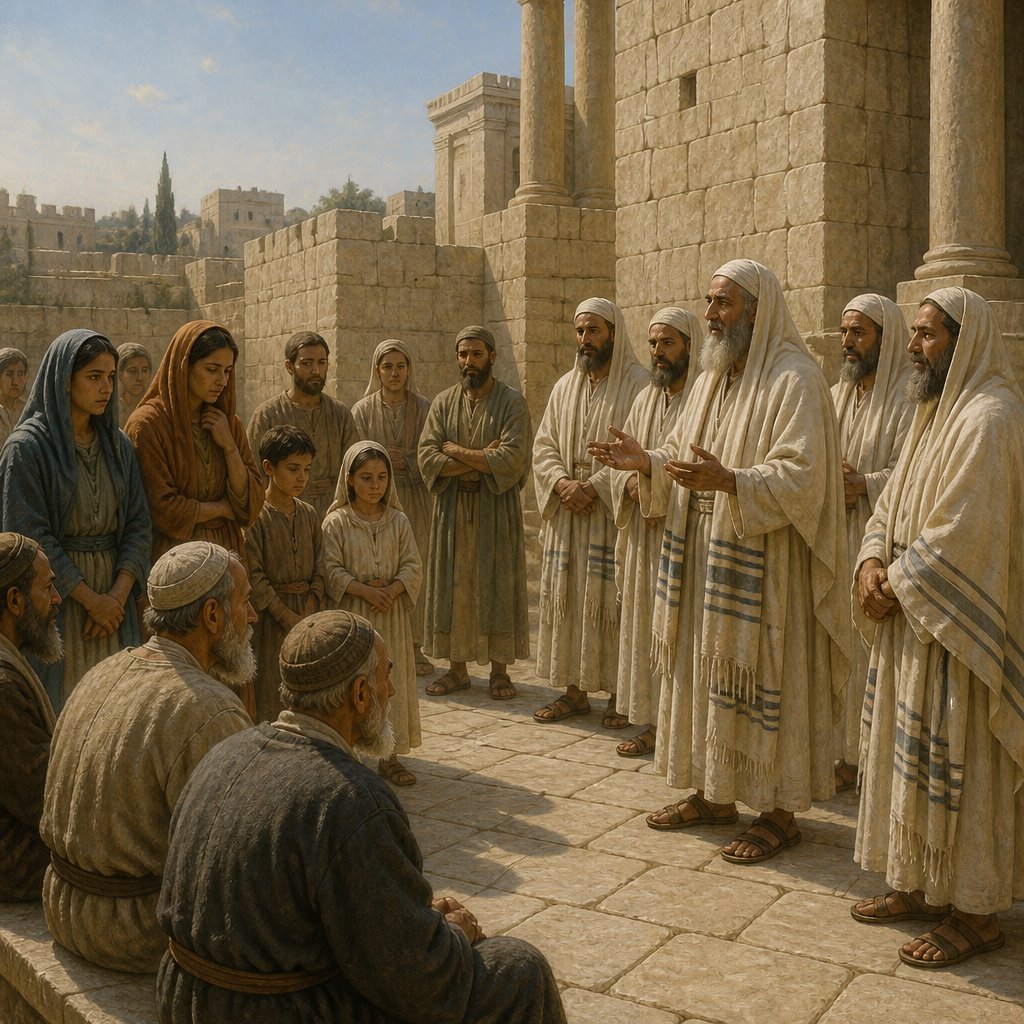
Ezra 10:18 in the King James Version reads, "And among the sons of the priests there were found that had taken strange wives: namely, of the sons of Jeshua the son of Jozadak, and his brethren; Maaseiah, and Eliezer, and Jarib, and Gedaliah." This verse is part of the story of the Israelites' return from exile in Babylon, specifically the account of the people confessing their sins and purifying themselves by putting away their foreign wives.
The book of Ezra is set during the time of the Israelites' return from the Babylonian exile. The Jewish people had been taken into captivity because of their disobedience to God, but now, under the reign of King Cyrus of Persia, they were allowed to return to their homeland and rebuild the temple in Jerusalem. However, when the people returned, they found that some of the Israelite men had married foreign women, a direct violation of God's commandments. This was a serious issue because intermarriage with the surrounding nations often led to the adoption of their idolatrous practices.
In this verse, among the sons of the priests, there were individuals who had taken foreign wives. Their names are recorded, including Jeshua the son of Jozadak, Maaseiah, Eliezer, Jarib, and Gedaliah. The fact that these men are specifically named underscores the seriousness of the transgression. These were not just anonymous individuals, but individuals with prestigious lineage.
The theme of obedience to God's commands is prominent in this verse. The law of Moses explicitly forbade the Israelites from marrying women from the surrounding nations (Deuteronomy 7:3-4). This prohibition was not based on racial purity, but rather on the potential for foreign wives to lead their husbands into idolatry and away from the worship of Yahweh. The act of marrying foreign women was seen as a betrayal of the covenant between God and his people, and a compromise of their unique identity as a holy nation.
The context of this verse is the broader theme of repentance and restoration in the book of Ezra. Upon discovering the widespread problem of intermarriage, the people were grieved and a sense of national repentance and confession of sin followed. The leaders of the community, including Ezra the priest, recognized the seriousness of the situation and took decisive action to address it. This involved a public assembly where the people were exhorted to confess their sin and separate themselves from their foreign wives and the children born to them. This purification process was a difficult, but necessary step in renewing their covenant relationship with God.
The symbolism in this verse lies in the idea of spiritual purity and faithfulness to God. The marriage relationship is used throughout the Bible as a metaphor for the relationship between God and his people. In the Old Testament, the theme of spiritual adultery is used to describe the unfaithfulness of Israel when they turned to idolatry. By marrying foreign women, the Israelite men were demonstrating a lack of loyalty to God and were in danger of compromising their spiritual integrity.
In this verse, the sons of the priests, who were expected to be examples of holiness and devotion to God, were found to be in violation of God's commands. This serves as a reminder that even those who hold positions of spiritual leadership are not immune to sin and are held accountable to a higher standard. It also highlights the importance of personal responsibility in upholding God's standards, regardless of one's familial or social status.
In conclusion, Ezra 10:18 serves as a sobering reminder of the necessity of obedience to God's commands and the serious consequences of compromise and spiritual unfaithfulness. It also underscores the themes of repentance, restoration, and the ongoing struggle to remain faithful to God in a world full of competing influences. It challenges us to examine our own lives and relationships, and to prioritize our commitment to God above all else.
Get our apps


Artwork for Ezra 10:18

Ezra 10:18 - "¶ And among the sons of the priests there were found that had taken strange wives: namely, of the sons of Jeshua the son of Jozadak, and his brethren; Maaseiah, and Eliezer, and Jarib, and Gedaliah."
"¶ And among the sons of the priests there were found that had taken strange wives: namely, of the sons of Jeshua the son of Jozadak, and his brethren; Maaseiah, and Eliezer, and Jarib, and Gedaliah." - Ezra 10:18

Ezra 10:10-12

Ezra 10:10 - "And Ezra the priest stood up, and said unto them, Ye have transgressed, and have taken strange wives, to increase the trespass of Israel."
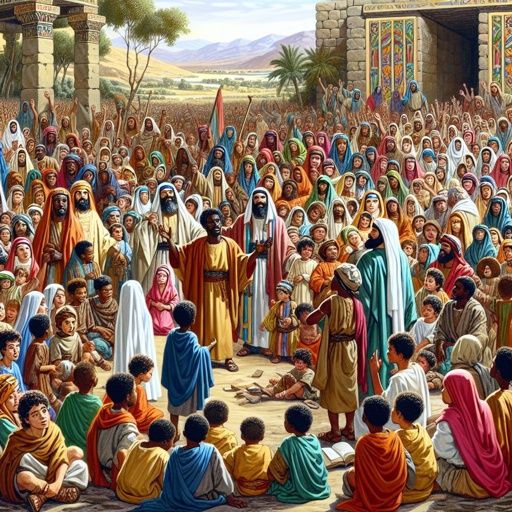
Ezra 2:18 - "The children of Jorah, an hundred and twelve."

Ezra 10:3

Ezra 3:10

Ezra 10:3

Ezra 10:5 - "Then arose Ezra, and made the chief priests, the Levites, and all Israel, to swear that they should do according to this word. And they sware."

Ezra 7:10 - "For Ezra had prepared his heart to seek the law of the LORD, and to do it, and to teach in Israel statutes and judgments."

Ezra 10:38 - "And Bani, and Binnui, Shimei,"

Ezra 10:37 - "Mattaniah, Mattenai, and Jaasau,"

Ezra 10:40 - "Machnadebai, Shashai, Sharai,"

Ezra 10:32 - "Benjamin, Malluch, and Shemariah."

Ezra 10:36 - "Vaniah, Meremoth, Eliashib,"

Ezra 10:35 - "Benaiah, Bedeiah, Chelluh,"

Ezra 10:42 - "Shallum, Amariah, and Joseph."

Ezra 10:41 - "Azareel, and Shelemiah, Shemariah,"

Ezra 10:39 - "And Shelemiah, and Nathan, and Adaiah,"

Ezra 10:20 - "And of the sons of Immer; Hanani, and Zebadiah."

Ezra 10:34 - "Of the sons of Bani; Maadai, Amram, and Uel,"
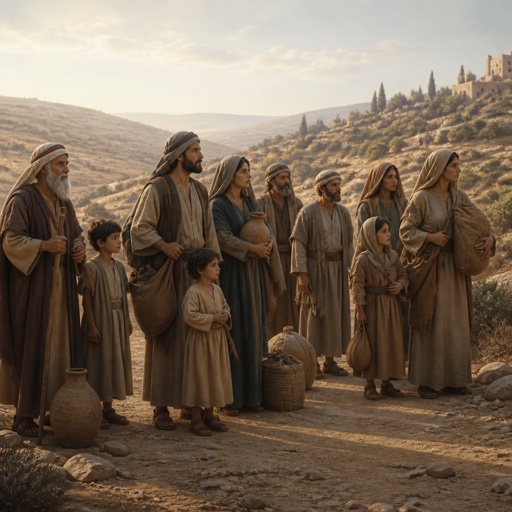
"The children of Jorah, an hundred and twelve." - Ezra 2:18

Ezra 2:10 - "The children of Bani, six hundred forty and two."

Ezra 10:21 - "And of the sons of Harim; Maaseiah, and Elijah, and Shemaiah, and Jehiel, and Uzziah."

Ezra 10:24 - "Of the singers also; Eliashib: and of the porters; Shallum, and Telem, and Uri."

Ezra 10:28 - "Of the sons also of Bebai; Jehohanan, Hananiah, Zabbai, and Athlai."

Ezra 10:31 - "And of the sons of Harim; Eliezer, Ishijah, Malchiah, Shemaiah, Shimeon,"

"Azareel, and Shelemiah, Shemariah," - Ezra 10:41

"And Bani, and Binnui, Shimei," - Ezra 10:38

"And Shelemiah, and Nathan, and Adaiah," - Ezra 10:39