What does Ezra 2:36 mean?
“The priests: the children of Jedaiah, of the house of Jeshua, nine hundred seventy and three.” — Ezra 2:36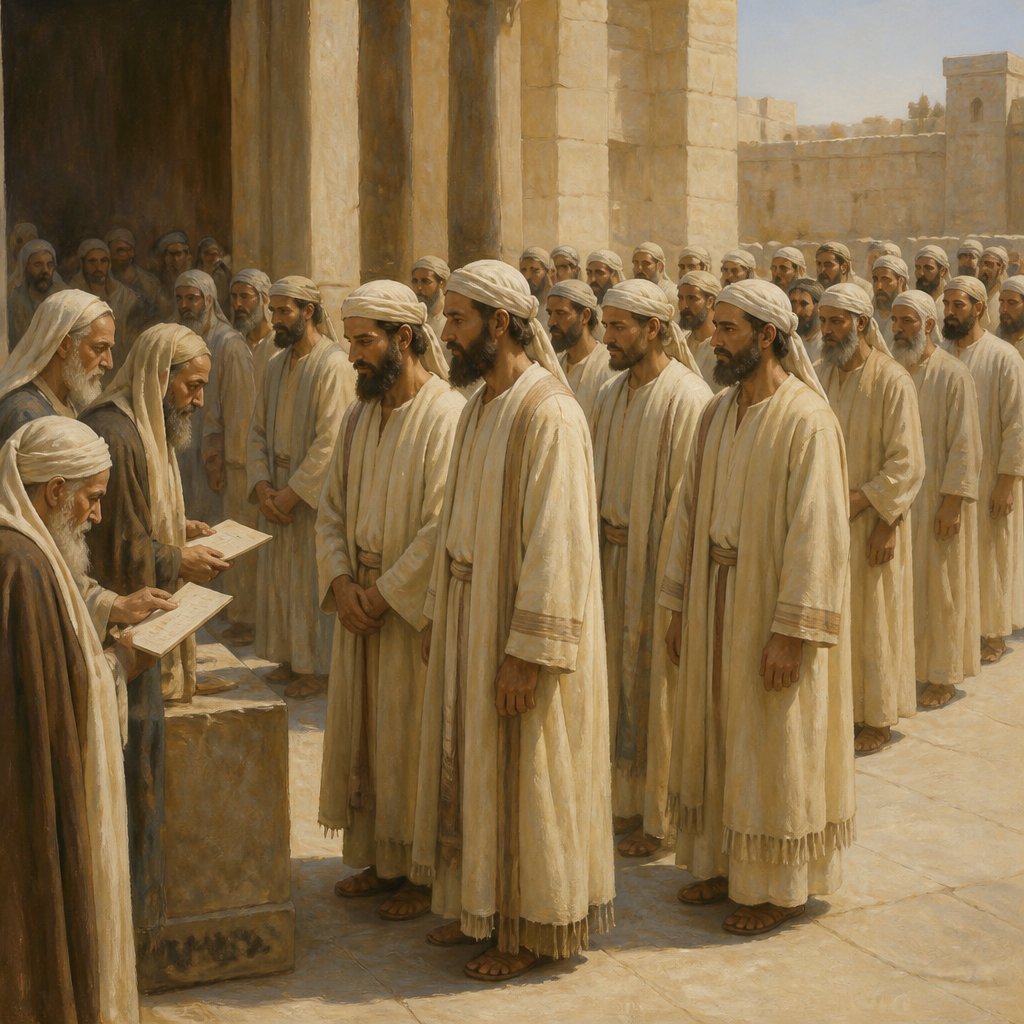
Ezra 2:36 in the King James Version of the Bible reads, "The children of Jericho, three hundred forty and five." This is a short and seemingly straightforward verse, but it contains important historical and symbolic significance within the broader context of the book of Ezra and the Bible as a whole.
The book of Ezra is a historical and narrative book in the Old Testament that chronicles the events surrounding the return of the Israelites from their exile in Babylon to Jerusalem. The focus is on the efforts to rebuild the temple in Jerusalem and restore the religious practices of the Jewish people. This verse comes from a list of the heads of families who were among those who returned from exile. The specificity of the number of people from Jericho serves as a testament to the meticulous record-keeping of the Israelites and their commitment to preserving their heritage and lineage.
From a historical perspective, the mention of Jericho is significant because it was an ancient city in the land of Canaan with great significance in the biblical narrative. The Israelites, under the leadership of Joshua, famously conquered Jericho as they entered the Promised Land. The mention of the children of Jericho returning from exile serves as a symbol of the restoration and continuity of the Israelite community. It represents a tangible link to their ancient past and the fulfillment of God's promise to return them to their land.
The number "three hundred forty and five" also holds symbolic significance in the biblical tradition. Numbers are often used symbolically in the Bible, and the number 345 is no exception. In biblical numerology, the number three represents divine perfection and completeness, while the number five is associated with God's grace and favor. Therefore, the number 345 can be seen as a symbol of the divine favor and completeness of God's plan in the restoration of the Israelites. It serves as a reminder that God's faithfulness and blessing are evident in the very numbers that make up the community of Jericho.
Furthermore, the mention of the children of Jericho in the context of the broader narrative of the return from exile carries a message of hope and renewal. The Israelites had experienced a period of displacement and hardship, but through their return to their homeland, they found a sense of renewal and the opportunity to rebuild their community and religious identity.
This verse, like many others in the Bible, can also be interpreted allegorically. Jericho, as a city that was conquered and later restored, can be seen as a metaphor for the human experience of triumph over adversity and the potential for spiritual renewal. The return of the children of Jericho can then be seen as a symbol of the redemption and restoration that is available to all people through God's grace and faithfulness.
In conclusion, while Ezra 2:36 may seem like a simple listing of numbers, it contains layers of historical, symbolic, and allegorical meaning. It serves as a testament to the historical continuity of the Israelite community, a symbol of God's faithfulness and favor, and a message of hope and renewal for all who read it. This verse is a reminder that even in the midst of difficulty and displacement, God's plan for restoration and completeness is at work.
Get our apps


Artwork for Ezra 2:36

Ezra 2:36 - "¶ The priests: the children of Jedaiah, of the house of Jeshua, nine hundred seventy and three."

"¶ The priests: the children of Jedaiah, of the house of Jeshua, nine hundred seventy and three." - Ezra 2:36

Ezra 10:36 - "Vaniah, Meremoth, Eliashib,"

"Vaniah, Meremoth, Eliashib," - Ezra 10:36

Ezra 8:36 - "¶ And they delivered the king's commissions unto the king's lieutenants, and to the governors on this side the river: and they furthered the people, and the house of God."

Nehemiah 12:36 - "And his brethren, Shemaiah, and Azarael, Milalai, Gilalai, Maai, Nethaneel, and Judah, Hanani, with the musical instruments of David the man of God, and Ezra the scribe before them."

Ezra 3:2

Ezra 3:2

Ezra 3:2

Ezra 3:2

Ezra 3:2

Ezra 9:1-2

Zerubbabel in Ezra chapter 2

Ezra 2:22 - "The men of Netophah, fifty and six."
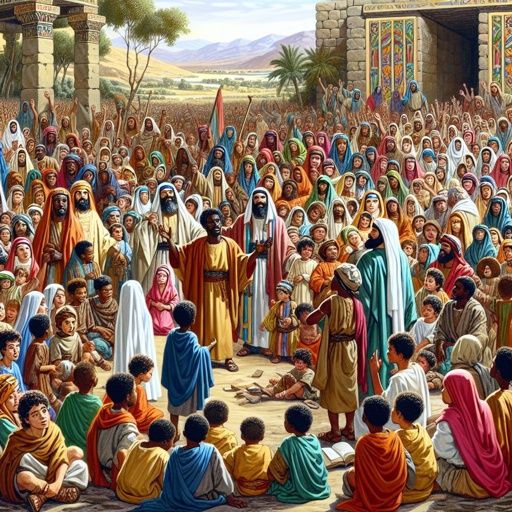
Ezra 2:18 - "The children of Jorah, an hundred and twelve."

Ezra 2:54 - "The children of Neziah, the children of Hatipha."

Ezra 2:20 - "The children of Gibbar, ninety and five."

Ezra 2:24 - "The children of Azmaveth, forty and two."

Ezra 2:39 - "The children of Harim, a thousand and seventeen."

Ezra 9:1-2
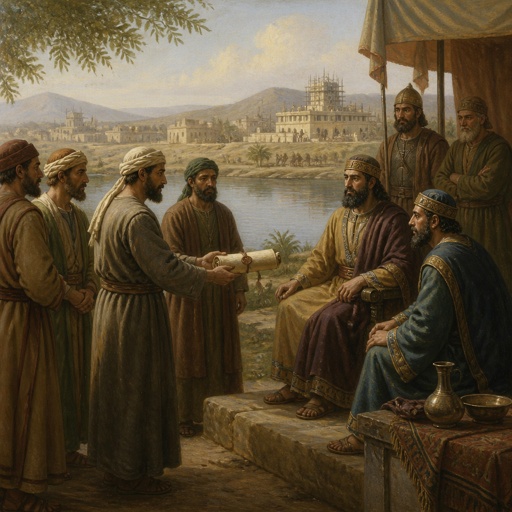
"¶ And they delivered the king's commissions unto the king's lieutenants, and to the governors on this side the river: and they furthered the people, and the house of God." - Ezra 8:36

Ezra 2:9 - "The children of Zaccai, seven hundred and threescore."

Ezra 2:27 - "The men of Michmas, an hundred twenty and two."

Ezra 2:29 - "The children of Nebo, fifty and two."

Ezra 2:56 - "The children of Jaalah, the children of Darkon, the children of Giddel,"

Ezra 2:11 - "The children of Bebai, six hundred twenty and three."

Ezra 2:53 - "The children of Barkos, the children of Sisera, the children of Thamah,"

Ezra 2:45 - "The children of Lebanah, the children of Hagabah, the children of Akkub,"

Ezra 2:48 - "The children of Rezin, the children of Nekoda, the children of Gazzam,"

Ezra 2:15 - "The children of Adin, four hundred fifty and four."