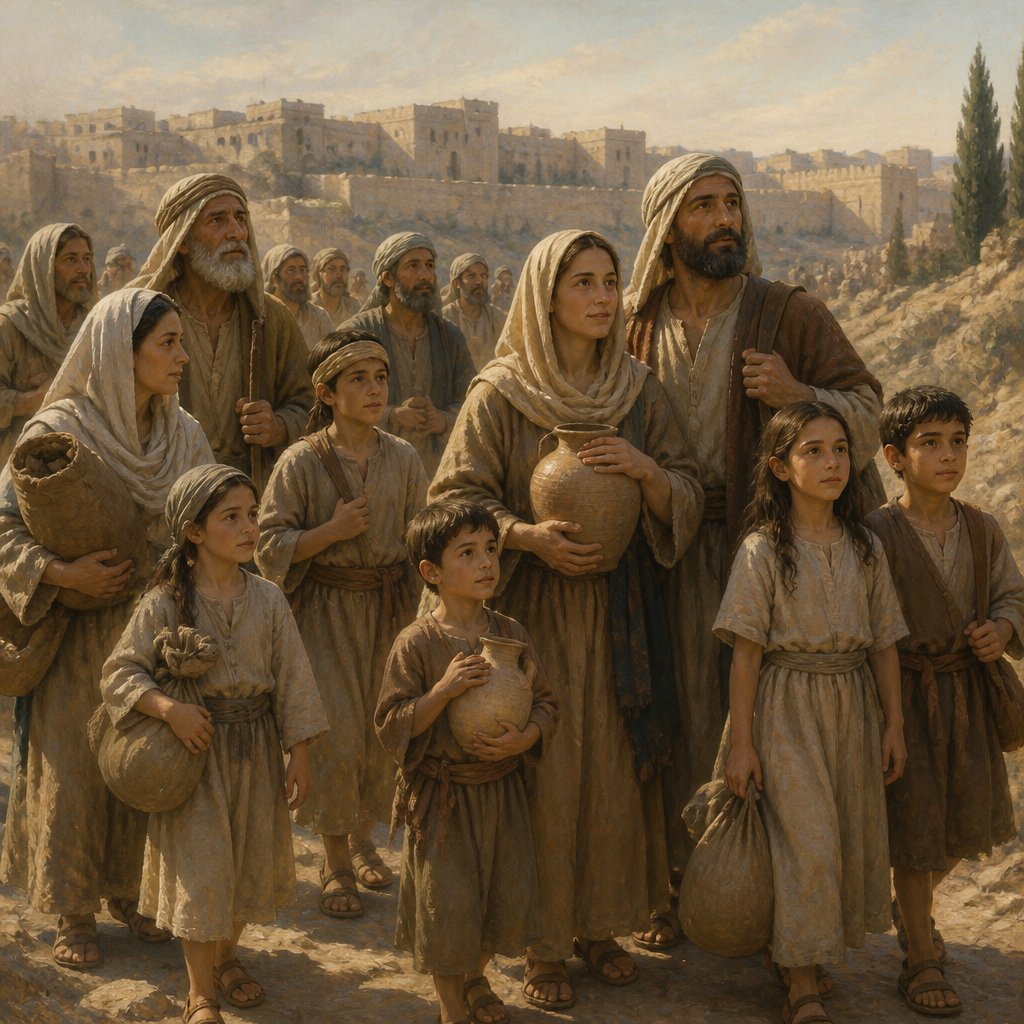
Ezra 2:54 in the King James Version (KJV) reads, "The children of Solomon's servants: the children of Sotai, the children of Sophereth, the children of Perida." While this verse may seem simple and straightforward at first glance, it is embedded in a larger context that holds deep meaning and significance for those who study and interpret the Bible.
The book of Ezra is a historical and theological account of the return of the Israelites from exile in Babylon to Jerusalem, as well as the rebuilding of the temple. In the larger context of Ezra 2, this verse is part of a comprehensive list of the heads of households who returned to Jerusalem from their exile, along with a record of the number of people in each family. This detailed list serves as a testament to the faithfulness and fulfillment of God's promises to restore His people to their land.
One potential theme in this verse is the continuity of the priesthood and the preservation of the Levitical lineage. The mention of the "children of Solomon's servants" indicates that these individuals were part of the priestly or Levitical class, possibly serving in the temple. For the Israelites, their identity and relationship with God were closely tied to their lineage and their roles in the religious rites and rituals. By including the names of specific families, the verse highlights the continuity of the priestly lineage and the importance of preserving the traditions and practices of the faith.
Another theme that can be drawn from this verse is the idea of servanthood and humility. The mention of "Solomon's servants" suggests a sense of duty and service, as well as a recognition of their role within the larger community. This theme of servanthood aligns with the broader biblical narrative of humility and obedience to God. Throughout the Bible, there is a recurring emphasis on the value of serving others and prioritizing the needs of the community above one's own interests. This verse serves as a reminder of the importance of humility and the fulfillment that comes from serving others.
Additionally, the inclusion of these specific names in Ezra 2:54 may carry symbolic significance within the larger narrative of the Bible. In biblical literature, names often hold deep symbolic meaning and reflect the character or destiny of the individuals. The mention of "Sotai," "Sophereth," and "Perida" may carry symbolic or historical significance that is not explicitly stated in the text. Through further study and interpretation, scholars and theologians can seek to uncover the potential symbolism or historical context behind these names and the families they represent.
In conclusion, while Ezra 2:54 may appear to be a simple record of names, it holds deeper meaning within the larger context of the book of Ezra and the broader themes of the Bible. Through its themes of continuity, servanthood, and potential symbolism, this verse invites readers to reflect on the significance of lineage, service, and the preservation of faith traditions. It serves as a testament to the faithfulness of God in restoring His people and the importance of community and humility in the practice of the faith.
Get our apps


Artwork for Ezra 2:54

Ezra 2:54 - "The children of Neziah, the children of Hatipha."
"The children of Neziah, the children of Hatipha." - Ezra 2:54

Psalms 54:2 - "Hear my prayer, O God; give ear to the words of my mouth."

1 Chronicles 2:54 - "The sons of Salma; Beth-lehem, and the Netophathites, Ataroth, the house of Joab, and half of the Manahethites, the Zorites."

Ezra 3:2

Ezra 3:2

Ezra 3:2

Ezra 3:2

Ezra 3:2

Ezra 9:1-2

Zerubbabel in Ezra chapter 2

Ezra 2:22 - "The men of Netophah, fifty and six."
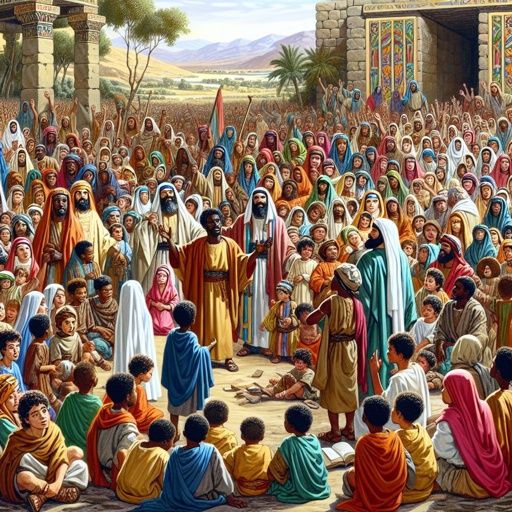
Ezra 2:18 - "The children of Jorah, an hundred and twelve."

Ezra 2:20 - "The children of Gibbar, ninety and five."

Ezra 2:24 - "The children of Azmaveth, forty and two."

Ezra 2:39 - "The children of Harim, a thousand and seventeen."

Ezra 9:1-2

Ezra 2:9 - "The children of Zaccai, seven hundred and threescore."

Ezra 2:27 - "The men of Michmas, an hundred twenty and two."

Ezra 2:29 - "The children of Nebo, fifty and two."

Isaiah 54:2 - "Enlarge the place of thy tent, and let them stretch forth the curtains of thine habitations: spare not, lengthen thy cords, and strengthen thy stakes;"

Ezra 2:56 - "The children of Jaalah, the children of Darkon, the children of Giddel,"

Ezra 2:11 - "The children of Bebai, six hundred twenty and three."

Ezra 2:53 - "The children of Barkos, the children of Sisera, the children of Thamah,"

Ezra 2:48 - "The children of Rezin, the children of Nekoda, the children of Gazzam,"

Ezra 2:15 - "The children of Adin, four hundred fifty and four."

Ezra 7:2 - "The son of Shallum, the son of Zadok, the son of Ahitub,"

Ezra 2:21 - "The children of Beth-lehem, an hundred twenty and three."

Ezra 2:45 - "The children of Lebanah, the children of Hagabah, the children of Akkub,"

Ezra 2:49 - "The children of Uzza, the children of Paseah, the children of Besai,"