What does Ezra 3:5 mean?
“And afterward offered the continual burnt offering, both of the new moons, and of all the set feasts of the LORD that were consecrated, and of every one that willingly offered a freewill offering unto the LORD.” — Ezra 3:5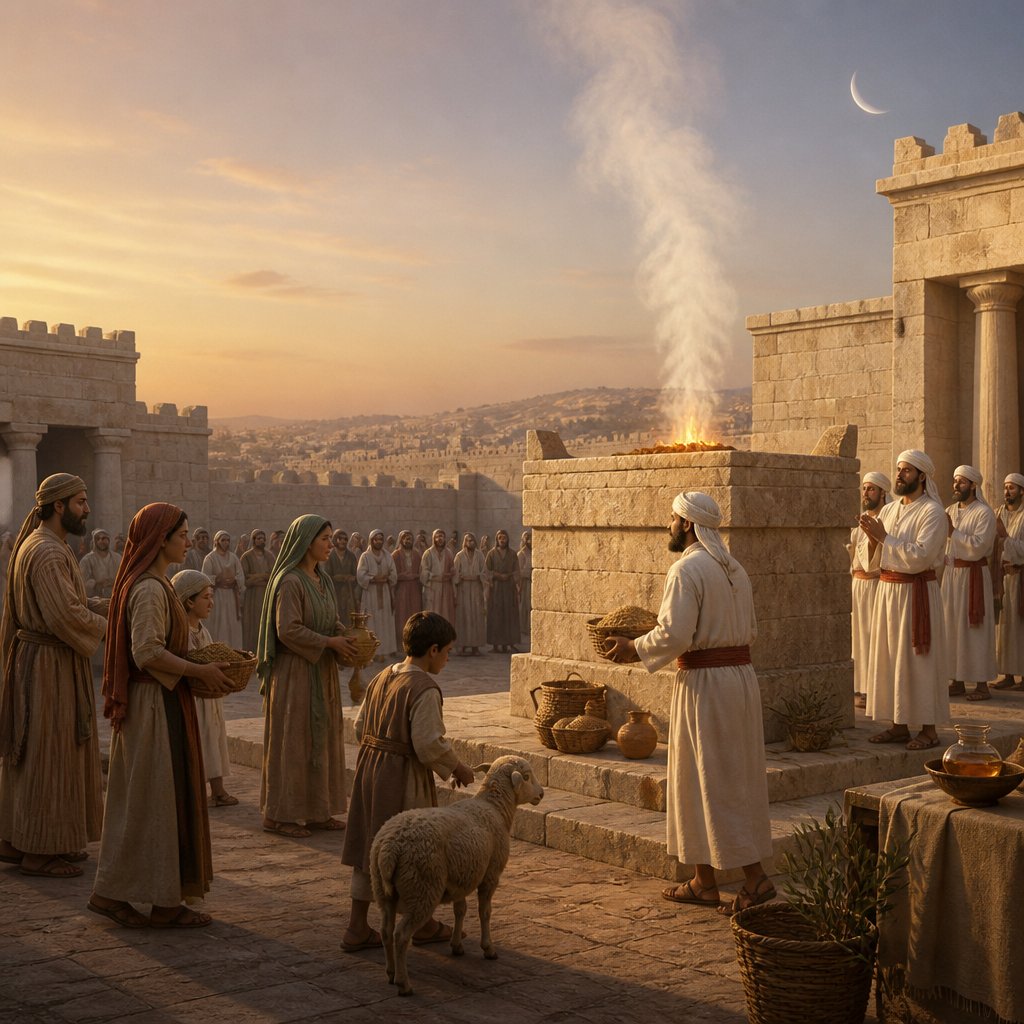
Ezra 3:5 (KJV) states, "And afterward offered the continual burnt offering, both of the new moons, and of all the set feasts of the Lord that were consecrated, and of every one that willingly offered a freewill offering unto the Lord."
The book of Ezra is a historical and religious account of the Jewish people returning from Babylonian exile to rebuild the temple in Jerusalem. This verse takes place shortly after the Jewish exiles have returned to Jerusalem and begun to rebuild the altar. The offerings mentioned in this verse are essential elements of the community's religious practices, demonstrating their commitment to following the Mosaic law and worshiping God.
The continual burnt offering mentioned in this verse was a sacrifice that represented the people's atonement for sin and dedication to God. It was offered every morning and evening, symbolizing the ongoing commitment and faithfulness of the people to God. The new moons and set feasts referenced in the verse were specific times throughout the Jewish calendar when the people came together to worship and offer sacrifices to God. These feasts, such as Passover and the Feast of Weeks, were established by God as times of celebration and remembrance, reinforcing the importance of honoring and obeying God's commands.
The mention of freewill offerings in this verse is significant in that it demonstrates the people's voluntary and generous contributions to the service of the Lord. These of their own accord chose to offer gifts of gratitude and devotion, reflecting their desire to participate in the building of the temple and the worship of God. This act of giving freely and willingly also speaks to the sincerity of the people's faith and their understanding of the importance of sacrificial giving in their relationship with God.
The themes present in Ezra 3:5 encompass obedience to God's commands, the continuity of religious practices, and the willingness of the people to offer themselves and their resources to God. The context of this verse is pivotal as it marks the beginning of the restoration of the Jewish community's religious life after years of exile and separation from their homeland. The act of offering continual burnt offerings and freewill offerings was a tangible expression of the people's dedication to God and their desire to establish a renewed and vibrant relationship with Him.
Symbolically, the continual burnt offering and the freewill offerings also point to the ultimate sacrifice of Jesus Christ on the cross. In the New Testament, Jesus is referred to as the "Lamb of God," whose sacrifice atones for the sins of humanity once and for all. The offerings in Ezra 3:5 foreshadow the coming of Christ and point to the centrality of sacrifice and atonement in the Judeo-Christian faith.
In conclusion, Ezra 3:5 (KJV) captures the essence of the Jewish community's commitment to restoring their religious practices and worshiping God according to the Mosaic law. The offerings mentioned in this verse serve as a powerful testament to the people's faithfulness and their deep desire to honor and obey God. The themes of obedience, continuity, and generosity resonate throughout the verse, providing a profound insight into the spiritual and cultural significance of the Jewish faith. Moreover, the symbolic value of the offerings in foreshadowing the sacrifice of Jesus Christ underscores the timeless and universal relevance of this verse for believers of all generations.
Get our apps


Artwork for Ezra 3:5

Ezra 3:5 - "And afterward offered the continual burnt offering, both of the new moons, and of all the set feasts of the LORD that were consecrated, and of every one that willingly offered a freewill offering unto the LORD."
"And afterward offered the continual burnt offering, both of the new moons, and of all the set feasts of the LORD that were consecrated, and of every one that willingly offered a freewill offering unto the LORD." - Ezra 3:5

Ezra 5:3 - "¶ At the same time came to them Tatnai, governor on this side the river, and Shethar-boznai, and their companions, and said thus unto them, Who hath commanded you to build this house, and to make up this wall?"

Ezra 10:5 - "Then arose Ezra, and made the chief priests, the Levites, and all Israel, to swear that they should do according to this word. And they sware."

Ezra 3:2

Ezra 10:3

Ezra 3:2

Ezra 3:10

Ezra 3:9

Ezra 3:2

Zerubbabel in Ezra chapter 5

Ezra 9:3

Ezra 3:2

Ezra 3:2

Ezra 10:3

Zerubbabel in Ezra chapter 3

Altar rebuilt in Jerusalem. Ezra 3:1-3

Ezra 2:5 - "The children of Arah, seven hundred seventy and five."

Zerubbabel in Ezra chapter 5 but zerubbabel is not a priest

Ezra 7:3 - "The son of Amariah, the son of Azariah, the son of Meraioth,"

Ezra 8:5 - "Of the sons of Shechaniah; the son of Jahaziel, and with him three hundred males."

Ezra 2:3 - "The children of Parosh, two thousand an hundred seventy and two."

Ezra 7:5 - "The son of Abishua, the son of Phinehas, the son of Eleazar, the son of Aaron the chief priest:"

Ezra 5:5 - "But the eye of their God was upon the elders of the Jews, that they could not cause them to cease, till the matter came to Darius: and then they returned answer by letter concerning this matter."

Pagan women leave with their children ezra 10:3

Ezra 5:4 - "Then said we unto them after this manner, What are the names of the men that make this building?"

Pagan women leave with their children ezra 10:3

Ezra 5:13 - "But in the first year of Cyrus the king of Babylon the same king Cyrus made a decree to build this house of God."

"Then arose Ezra, and made the chief priests, the Levites, and all Israel, to swear that they should do according to this word. And they sware." - Ezra 10:5

Ezra 5:7 - "They sent a letter unto him, wherein was written thus; Unto Darius the king, all peace."