What does Ezra 3:13 mean?
“So that the people could not discern the noise of the shout of joy from the noise of the weeping of the people: for the people shouted with a loud shout, and the noise was heard afar off.” — Ezra 3:13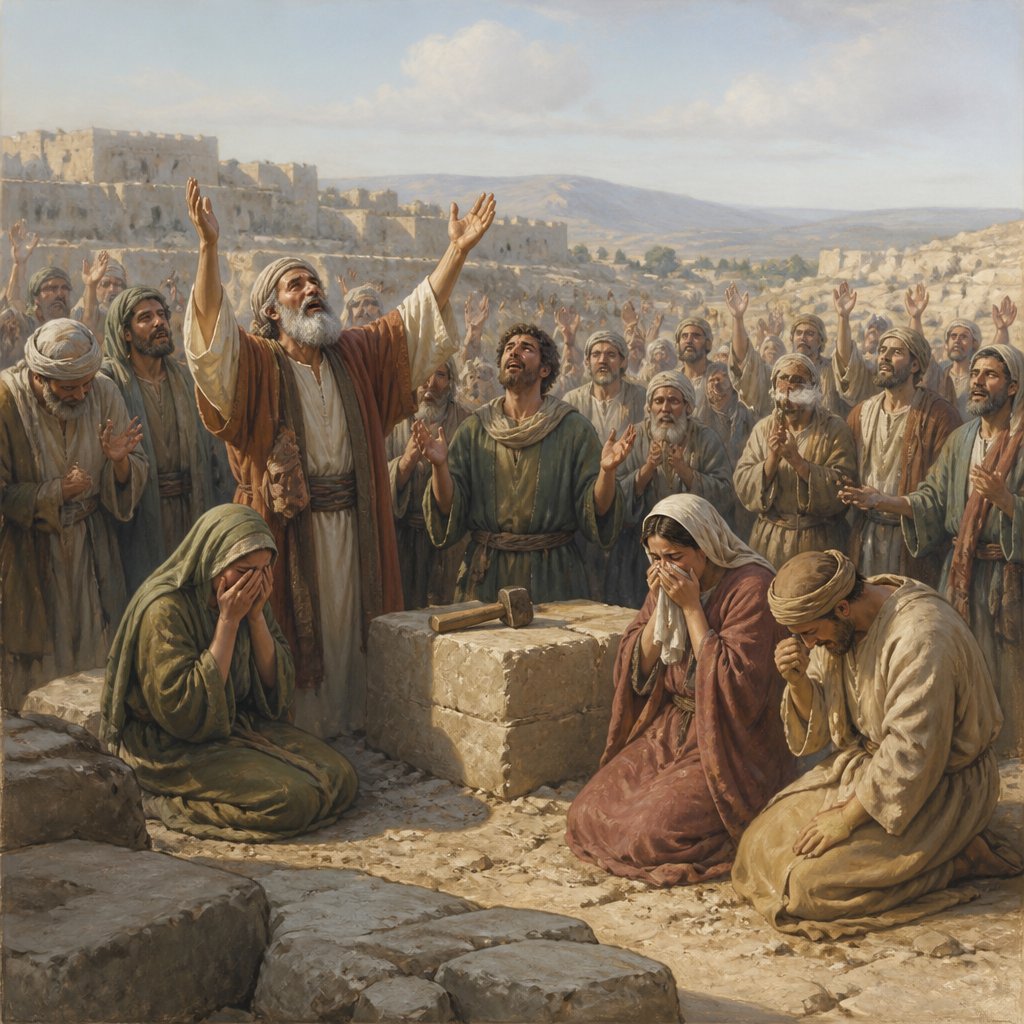
Ezra 3:13 in the King James Version reads: "so that the people could not discern the noise of the shout of joy from the noise of the weeping of the people: for the people shouted with a loud shout, and the noise was heard afar off."
This verse comes from the Book of Ezra in the Old Testament, which tells the story of the Israelites returning from exile in Babylon and rebuilding the temple in Jerusalem. This particular verse is found in a section describing the laying of the foundation for the new temple. As the foundation is laid, the people's reaction is a mix of joy and sorrow, with some shouting and others weeping. The noise of the two emotions mingled together becomes indistinguishable.
The context of this verse is crucial to understanding its deeper meaning. The Israelites had been in exile in Babylon for many years, and the temple in Jerusalem had been destroyed. Now, they were finally back in their homeland, and they were laying the foundation for a new temple. This was a significant moment for them, as the temple held great religious and cultural importance. The emotions of the people were understandably complex - they were overjoyed at the prospect of rebuilding their temple and restoring their religious practices, but they were also mourning the loss and destruction they had experienced in exile.
The theme of restoration is central to this passage. The laying of the foundation for the new temple symbolizes a fresh start and a return to their religious roots. The people's mixed emotions also reflect the complexity of the restoration process - it was not simply a joyful occasion, but one that also involved confronting and processing the pain and trauma of their past. This theme of restoration is one that resonates throughout the Old Testament, as the Israelites continually grapple with their history and strive to renew their covenant with God.
The symbolism in this verse is rich and multi-layered. The temple itself is a symbol of God's presence among the Israelites, and the act of rebuilding it represents their renewed relationship with God. The mingling of joy and sorrow in the people's reactions speaks to the complex nature of human emotions and the resilience of the human spirit. It also serves as a reminder that restoration and healing often involve a mix of emotions, including both joy and sorrow.
The imagery of the noise being heard from afar off further underscores the significance of this moment. It suggests that the people's emotional outpouring was not confined to the immediate vicinity of the temple, but reverberated throughout the land. This illustrates the deep spiritual and cultural impact of the rebuilding of the temple, not just for the Israelites themselves, but for all those who heard the noise from afar.
In summary, Ezra 3:13 captures a pivotal moment in the history of the Israelites, as they lay the foundation for a new temple after returning from exile. The verse highlights the complex emotions of the people, their joy at the prospect of restoration, and their sorrow at the pain of their past. It also symbolizes the themes of restoration, resilience, and the enduring impact of spiritual renewal. This verse serves as a poignant reminder of the human experience and the profound significance of restoration and hope in the face of adversity.
Get our apps


Artwork for Ezra 3:13

Ezra 3:13 - "So that the people could not discern the noise of the shout of joy from the noise of the weeping of the people: for the people shouted with a loud shout, and the noise was heard afar off."
"So that the people could not discern the noise of the shout of joy from the noise of the weeping of the people: for the people shouted with a loud shout, and the noise was heard afar off." - Ezra 3:13

Altar rebuilt in Jerusalem. Ezra 3:1-3

Ezra 9:13-15

Ezra 3:2

Ezra 10:3

Ezra 3:2

Ezra 3:10

Ezra 3:9

Ezra 3:2

Nehemiah 12:13 - "Of Ezra, Meshullam; of Amariah, Jehohanan;"

Ezra 9:3

Ezra 3:2

Ezra 3:2

Ezra 10:3

Zerubbabel in Ezra chapter 3
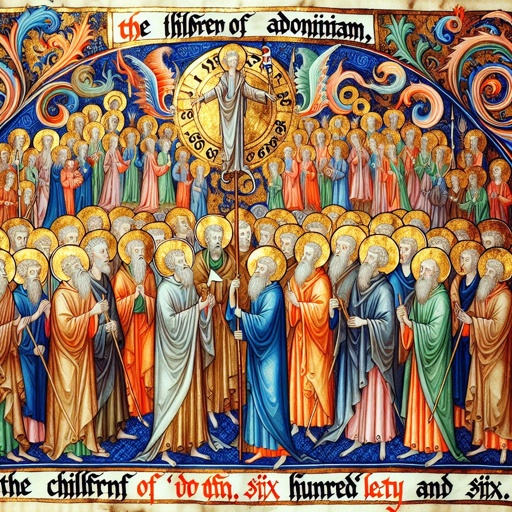
Ezra 2:13 - "The children of Adonikam, six hundred sixty and six."

"Of Ezra, Meshullam; of Amariah, Jehohanan;" - Nehemiah 12:13

Ezra 7:3 - "The son of Amariah, the son of Azariah, the son of Meraioth,"

Ezra 8:13 - "And of the last sons of Adonikam, whose names are these, Eliphelet, Jeiel, and Shemaiah, and with them threescore males."

Ezra 2:3 - "The children of Parosh, two thousand an hundred seventy and two."

Ezra 5:13 - "But in the first year of Cyrus the king of Babylon the same king Cyrus made a decree to build this house of God."

Pagan women leave with their children ezra 10:3

Pagan women leave with their children ezra 10:3
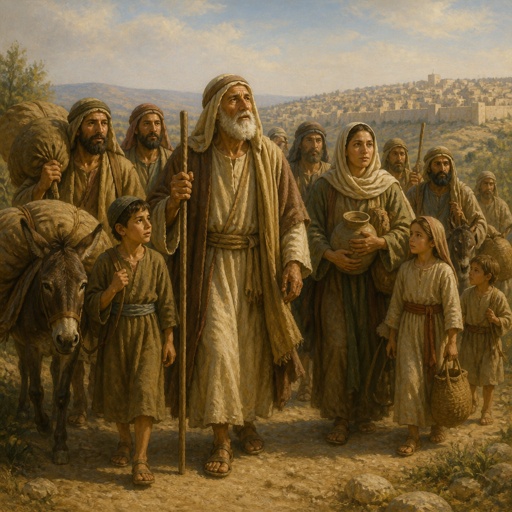
"The children of Adonikam, six hundred sixty and six." - Ezra 2:13

Ezra 8:3 - "Of the sons of Shechaniah, of the sons of Pharosh; Zechariah: and with him were reckoned by genealogy of the males an hundred and fifty."

Ezra 3:11 – "With praise and thanksgiving they sang to the Lord: 'He is good; his love toward Israel endures forever.'"

Ezra 6:13 - "¶ Then Tatnai, governor on this side the river, Shethar-boznai, and their companions, according to that which Darius the king had sent, so they did speedily."

"The son of Amariah, the son of Azariah, the son of Meraioth," - Ezra 7:3

Ezra 3:3 - "And they set the altar upon his bases; for fear was upon them because of the people of those countries: and they offered burnt offerings thereon unto the LORD, even burnt offerings morning and evening."