What does Ezra 3:6 mean?
“From the first day of the seventh month began they to offer burnt offerings unto the LORD. But the foundation of the temple of the LORD was not yet laid.” — Ezra 3:6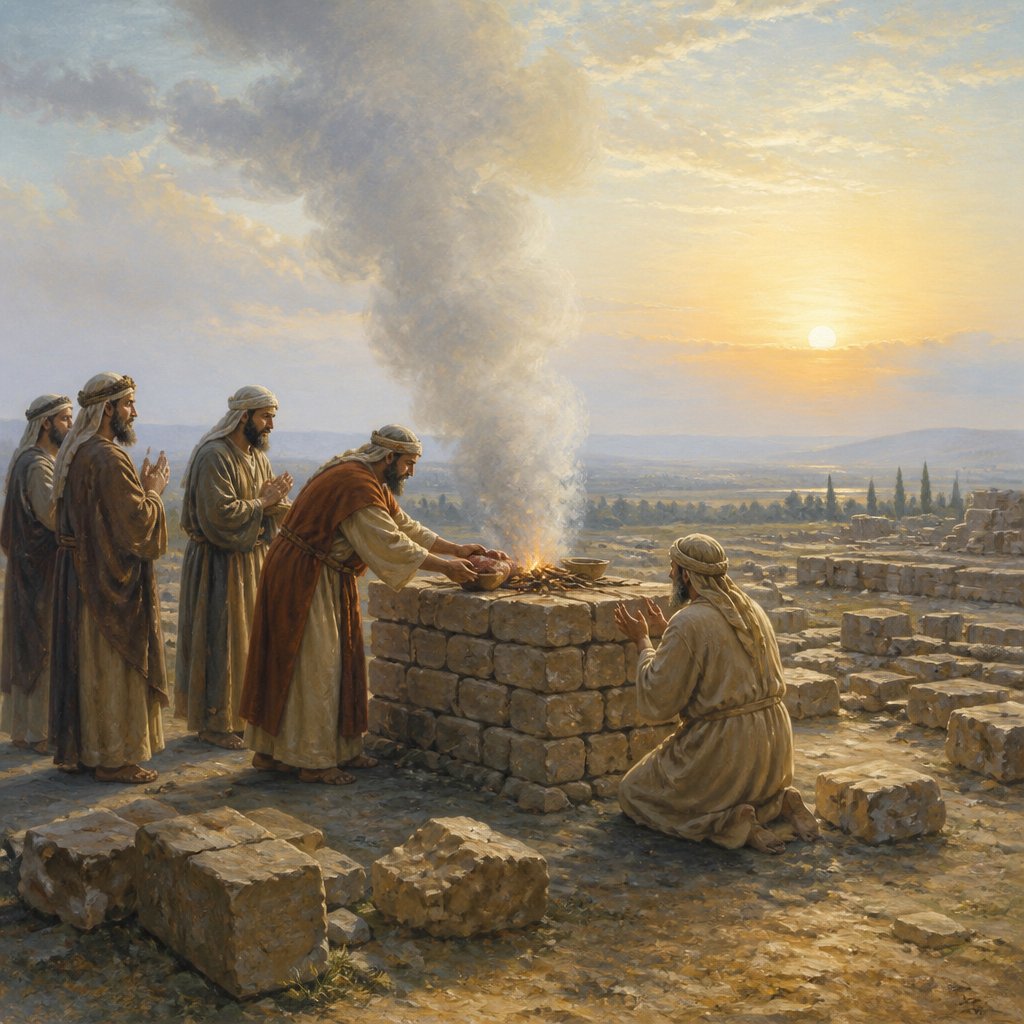
Ezra 3:6 in the King James Version of the Bible states, "From the first day of the seventh month began they to offer burnt offerings unto the LORD. But the foundation of the temple of the LORD was not yet laid."
This verse comes from the book of Ezra in the Old Testament, which chronicles the events surrounding the return of the Israelites from exile in Babylon and the rebuilding of the temple in Jerusalem. The verse marks the beginning of the construction of the temple, a significant event in the history of Israel.
The context of this verse is crucial in understanding its significance. After the Israelites had been exiled in Babylon for 70 years, King Cyrus of Persia issued a decree allowing them to return to Jerusalem and rebuild the temple. As they returned to their homeland, they faced challenges and opposition from the neighboring Samaritans, who offered to help rebuild the temple but were rejected by the Israelites.
Despite the difficulties, the Israelites were determined to restore their worship at the temple. The verse in question indicates that they began offering burnt offerings to the Lord on the first day of the seventh month before the foundation of the temple had even been laid. This demonstrates their commitment to worship and their faith in God's promises to restore them as a nation.
The themes present in this verse are faithfulness, obedience, and perseverance. The Israelites remained faithful to God's commandments by offering burnt offerings, even before the temple had been rebuilt. This act of obedience reflects their unwavering trust in God's promises and their determination to worship Him in the midst of adversity. It also exemplifies their perseverance in the face of opposition and obstacles, as they continued to honor God despite the unfinished state of the temple.
Additionally, the verse highlights the importance of worship and sacrifice in the life of the Israelites. The burnt offerings were a central part of their worship, symbolizing their desire to dedicate themselves completely to God. Even without a physical temple, they were determined to maintain their spiritual connection with God through acts of worship and sacrifice.
The symbolism in this verse is profound, as it represents the spiritual and emotional journey of the Israelites. The offering of burnt offerings signifies their desire to seek reconciliation with God and to express their gratitude for His faithfulness. The act of worship also serves as a symbol of their hope for restoration and renewal as a nation.
Furthermore, the unfinished state of the temple can be interpreted as a metaphor for the Israelites' own spiritual journey. Despite the external challenges and the lack of a physical structure, they continued to cultivate their faith and demonstrate their commitment to God. This serves as a powerful reminder that true worship is not confined to a specific location or circumstance, but emanates from the heart's genuine devotion and obedience to God.
In conclusion, Ezra 3:6 is a testament to the Israelites' unwavering faith and commitment to God, even in the midst of adversity. It serves as a reminder of the importance of worship, sacrifice, and perseverance in the face of obstacles. The verse also symbolizes the Israelites' spiritual journey and their dedication to rebuilding their relationship with God. This verse stands as a timeless reminder of the enduring power of faith and the significance of worshipping God with a steadfast heart.
Get our apps


Artwork for Ezra 3:6

Ezra 3:6 - "From the first day of the seventh month began they to offer burnt offerings unto the LORD. But the foundation of the temple of the LORD was not yet laid."
"From the first day of the seventh month began they to offer burnt offerings unto the LORD. But the foundation of the temple of the LORD was not yet laid." - Ezra 3:6

Ezra 9:6

Ezra 6:16

Ezra 3:2

Ezra 10:3

Ezra 3:2

Ezra 3:10

Ezra 3:9

Ezra 3:2

Zerubbabel in Ezra chapter 6

Ezra 6:1-12

Ezra 9:3

Ezra 3:2

Ezra 3:2

Ezra 10:3

Ezra 6:15-16

Ezra 6:15-16

Zerubbabel in Ezra chapter 3

Altar rebuilt in Jerusalem. Ezra 3:1-3

Ezra 6:3 - "In the first year of Cyrus the king the same Cyrus the king made a decree concerning the house of God at Jerusalem, Let the house be builded, the place where they offered sacrifices, and let the foundations thereof be strongly laid; the height thereof threescore cubits, and the breadth thereof threescore cubits;"

Ezra 7:3 - "The son of Amariah, the son of Azariah, the son of Meraioth,"

Ezra 6:19 - "And the children of the captivity kept the passover upon the fourteenth day of the first month."

Ezra 8:6 - "Of the sons also of Adin; Ebed the son of Jonathan, and with him fifty males."

Ezra 2:3 - "The children of Parosh, two thousand an hundred seventy and two."

Ezra 6:6 - "Now therefore, Tatnai, governor beyond the river, Shethar-boznai, and your companions the Apharsachites, which are beyond the river, be ye far from thence:"

Ezra 6:2 - "And there was found at Achmetha, in the palace that is in the province of the Medes, a roll, and therein was a record thus written:"

Ezra 2:6 - "The children of Pahath-moab, of the children of Jeshua and Joab, two thousand eight hundred and twelve."

Pagan women leave with their children ezra 10:3

Ezra 7:6 - "This Ezra went up from Babylon; and he was a ready scribe in the law of Moses, which the LORD God of Israel had given: and the king granted him all his request, according to the hand of the LORD his God upon him."