What does Ezra 4:16 mean?
“We certify the king that, if this city be builded again, and the walls thereof set up, by this means thou shalt have no portion on this side the river.” — Ezra 4:16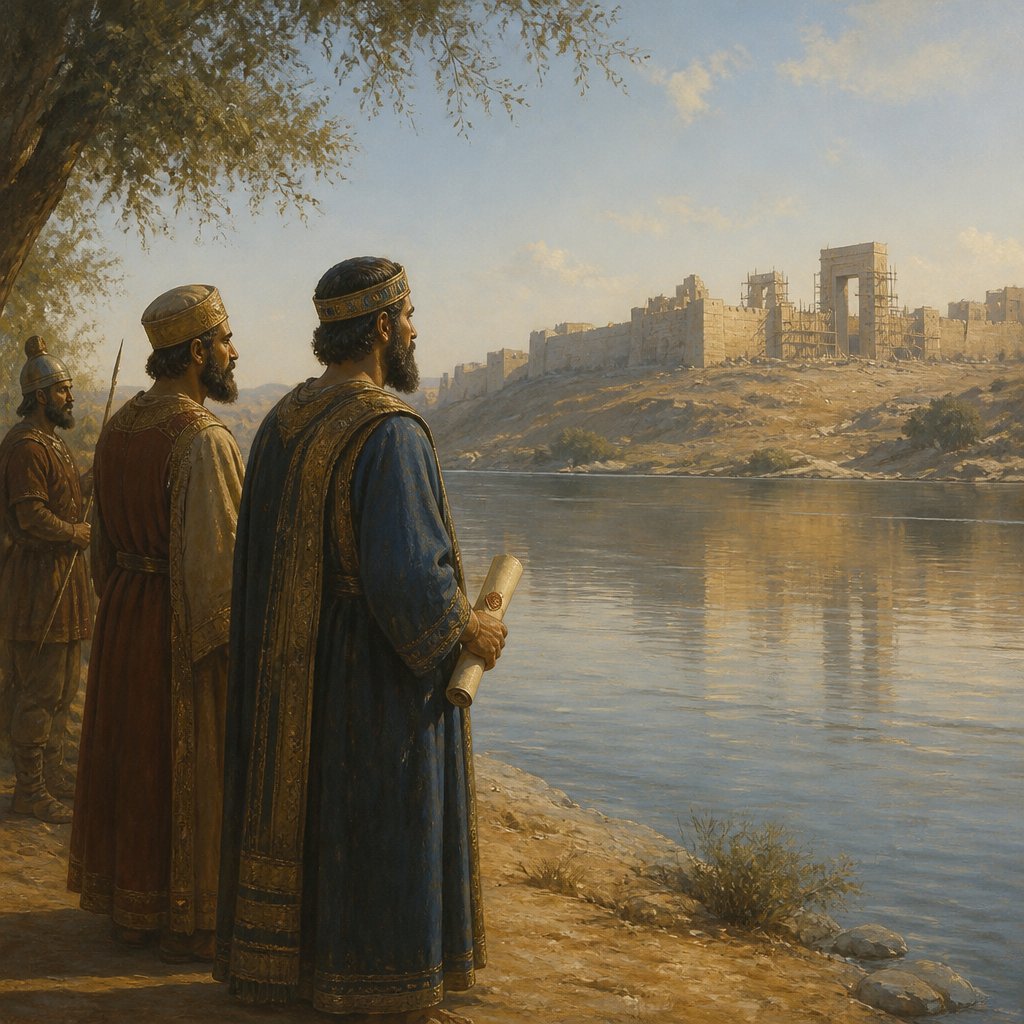
Ezra 4:16 in the King James Version (KJV) of the Bible reads:
"We certify the king that, if this city be builded again, and the walls thereof set up, by this means thou shalt have no portion on this side the river."
This verse is part of a letter written by the adversaries of Judah and Benjamin to King Artaxerxes, the king of Persia, in an attempt to stop the rebuilding of the city of Jerusalem. To understand the full meaning and commentary of this verse, it is important to consider the historical context and the themes of opposition and perseverance.
The book of Ezra is set during the time of the Jewish exile in Babylon and the subsequent return to Jerusalem. The Jewish people were permitted to return to their homeland and rebuild the temple under the decree of King Cyrus of Persia. However, as the rebuilding of the city of Jerusalem progressed, the adversaries of Judah and Benjamin, who were inhabitants of the land during the exile, opposed the reconstruction.
The adversaries of Judah and Benjamin sought to undermine the efforts of the Jewish people by sending a letter to King Artaxerxes, expressing their concerns about the rebuilding of the city walls. They claimed that if the city were to be rebuilt and its walls set up, the king would have no portion on that side of the river, implying that the city's fortifications would pose a threat to the authority and sovereignty of the Persian Empire.
In the broader context of the book of Ezra, this verse represents the ongoing opposition and persecution faced by the Jewish people as they attempted to rebuild and establish their homeland. Despite the initial permission and support from the Persian rulers, the adversaries of Judah and Benjamin were determined to thwart the efforts of the Jewish exiles in rebuilding the city of Jerusalem.
The themes present in Ezra 4:16 include opposition, perseverance, and faith. The Jewish people encountered opposition from both external adversaries and internal struggles as they sought to restore their homeland. The adversaries' letter to King Artaxerxes exemplifies the challenges and obstacles that the Jewish people faced in their attempt to rebuild Jerusalem.
Furthermore, this verse highlights the resilience and determination of the Jewish people to overcome adversity and fulfill their calling to restore their nation. Despite the opposition they faced, the Jewish exiles continued to persevere in their efforts to rebuild the city of Jerusalem, demonstrating their unwavering faith and commitment to their heritage and God-given mission.
Symbolically, the rebuilding of the city of Jerusalem and its walls represents the restoration and renewal of the Jewish people's identity and faith. The city walls were a symbol of protection and security, and the adversaries' attempt to prevent their reconstruction reflects the spiritual and physical battles faced by the Jewish exiles in their quest to reclaim their homeland and religious heritage.
In conclusion, Ezra 4:16 in the King James Version of the Bible serves as a powerful reminder of the perseverance and faith of the Jewish people in the face of opposition and persecution. The verse captures the ongoing struggle of the Jewish exiles to rebuild their homeland and reestablish their identity, and it conveys the timeless themes of resilience, determination, and unwavering faith in the face of adversity.
Get our apps


Artwork for Ezra 4:16

Ezra 4:16 - "We certify the king that, if this city be builded again, and the walls thereof set up, by this means thou shalt have no portion on this side the river."
"We certify the king that, if this city be builded again, and the walls thereof set up, by this means thou shalt have no portion on this side the river." - Ezra 4:16

Ezra 6:16

Ezra 4:4

Ezra 4:4

Ezra 6:15-16

Ezra 6:15-16

Ezra 2:16 - "The children of Ater of Hezekiah, ninety and eight."

Zerubbabel in Ezra chapter 4

Zerubbabel in Ezra chapter 4

Ezra 4:4 - "Then the people of the land weakened the hands of the people of Judah, and troubled them in building,"

Letter to the king in Ezra chapter 4

Ezra 7:4 - "The son of Zerahiah, the son of Uzzi, the son of Bukki,"

Ezra 10:16 - "And the children of the captivity did so. And Ezra the priest, with certain chief of the fathers, after the house of their fathers, and all of them by their names, were separated, and sat down in the first day of the tenth month to examine the matter."

Ezra 2:4 - "The children of Shephatiah, three hundred seventy and two."

"The children of Ater of Hezekiah, ninety and eight." - Ezra 2:16

Ezra 6:16 - "¶ And the children of Israel, the priests, and the Levites, and the rest of the children of the captivity, kept the dedication of this house of God with joy,"

Ezra 8:4 - "Of the sons of Pahath-moab; Elihoenai the son of Zerahiah, and with him two hundred males."

Ezra 4:22 - "Take heed now that ye fail not to do this: why should damage grow to the hurt of the kings?"

Ezra 5:4 - "Then said we unto them after this manner, What are the names of the men that make this building?"

Ezra 4:8 - "Rehum the chancellor and Shimshai the scribe wrote a letter against Jerusalem to Artaxerxes the king in this sort:"

Ezra 10:4 - "Arise; for this matter belongeth unto thee: we also will be with thee: be of good courage, and do it."

"Then the people of the land weakened the hands of the people of Judah, and troubled them in building," - Ezra 4:4

Ezra 4:18 - "The letter which ye sent unto us hath been plainly read before me."

"The son of Zerahiah, the son of Uzzi, the son of Bukki," - Ezra 7:4

Ezra 4:6 - "And in the reign of Ahasuerus, in the beginning of his reign, wrote they unto him an accusation against the inhabitants of Judah and Jerusalem."

Ezra 6:4 - "With three rows of great stones, and a row of new timber: and let the expenses be given out of the king's house:"

Ezra 8:16 - "Then sent I for Eliezer, for Ariel, for Shemaiah, and for Elnathan, and for Jarib, and for Elnathan, and for Nathan, and for Zechariah, and for Meshullam, chief men; also for Joiarib, and for Elnathan, men of understanding."

Ezra 4:10 - "And the rest of the nations whom the great and noble Asnappar brought over, and set in the cities of Samaria, and the rest that are on this side the river, and at such a time."

Ezra 4:24 - "Then ceased the work of the house of God which is at Jerusalem. So it ceased unto the second year of the reign of Darius king of Persia."