What does Ezra 4:7 mean?
“And in the days of Artaxerxes wrote Bishlam, Mithredath, Tabeel, and the rest of their companions, unto Artaxerxes king of Persia; and the writing of the letter was written in the Syrian tongue, and interpreted in the Syrian tongue.” — Ezra 4:7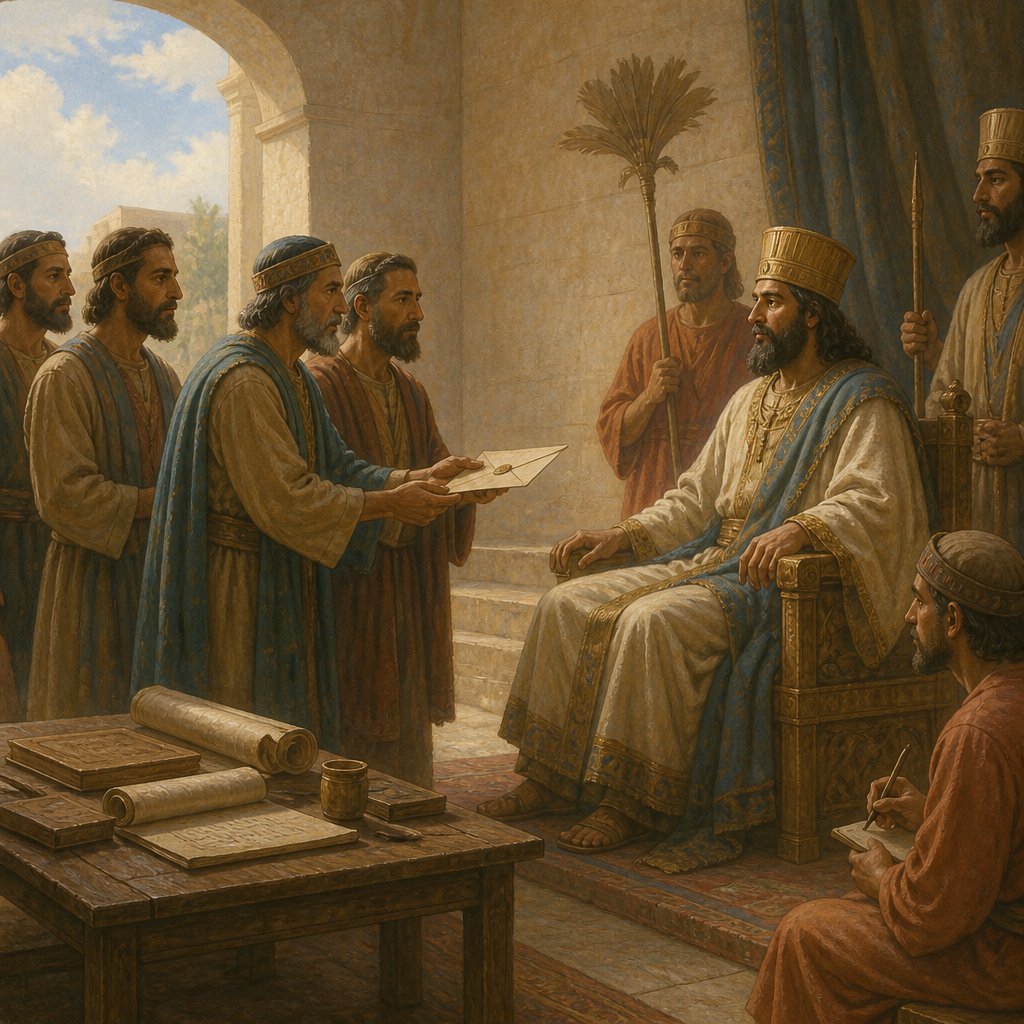
Ezra 4:7 (KJV) states: "And in the days of Artaxerxes wrote Bishlam, Mithredath, Tabeel, and the rest of their companions, unto Artaxerxes king of Persia; and the writing of the letter was written in the Syrian tongue, and interpreted in the Syrian tongue."
This verse is a seemingly simple historical record from the book of Ezra, which is a book in the Old Testament that chronicles the events surrounding the return of the Israelites from exile in Babylon and the rebuilding of the temple in Jerusalem. However, upon closer examination, there are several deeper layers of meaning and significance that can be gleaned from this verse.
First, it's important to understand the historical context in which this verse was written. The book of Ezra takes place in the Persian Empire during the reign of King Artaxerxes I, who ruled from 465-424 BC. During this time, the Jewish people were allowed to return to Jerusalem and rebuild the temple, but they faced opposition from the surrounding nations, including the Samaritans, who are mentioned in this verse. The letter mentioned in this verse was likely a complaint to King Artaxerxes about the rebuilding of the temple, as the Samaritans did not want the Jewish people to regain their power and influence in the region.
The themes that can be derived from this verse include the ongoing struggle of the Jewish people to maintain their faith and identity in the face of opposition from other nations, as well as the importance of seeking the favor and protection of the ruling authorities. Additionally, the language used in the letter, "the Syrian tongue", may symbolize the barriers and differences that existed between the Jewish people and their neighbors, highlighting the challenges of communication and understanding in a diverse and divided world.
In terms of symbolism, the names of the individuals mentioned in this verse can also be significant. Bishlam, Mithredath, and Tabeel can all be interpreted as representing the forces of opposition and resistance that the Jewish people faced during their efforts to rebuild the temple. Their names may also symbolize the various forms of opposition and challenges that believers continue to encounter in their own lives and journeys of faith.
Moreover, the fact that the letter was written in the Syrian tongue and interpreted in the same language indicates the importance of clear and effective communication, as well as the need for translators and mediators in bridging the gaps between different cultures and languages. This can serve as a reminder of the importance of understanding and empathy in our interactions with others who may be different from us, as well as the role of language and interpretation in conveying our intentions and messages accurately.
Overall, Ezra 4:7 contains many layers of meaning and significance, reflecting the historical, thematic, and symbolic dimensions of the biblical text. Through a deeper examination of this verse, we can gain a greater understanding of the challenges and complexities of the human experience, and the enduring relevance of the biblical narrative for our lives today.
Get our apps


Artwork for Ezra 4:7

Ezra 4:7 - "¶ And in the days of Artaxerxes wrote Bishlam, Mithredath, Tabeel, and the rest of their companions, unto Artaxerxes king of Persia; and the writing of the letter was written in the Syrian tongue, and interpreted in the Syrian tongue."
"¶ And in the days of Artaxerxes wrote Bishlam, Mithredath, Tabeel, and the rest of their companions, unto Artaxerxes king of Persia; and the writing of the letter was written in the Syrian tongue, and interpreted in the Syrian tongue." - Ezra 4:7

Ezra 7:4 - "The son of Zerahiah, the son of Uzzi, the son of Bukki,"

"The son of Zerahiah, the son of Uzzi, the son of Bukki," - Ezra 7:4

Ezra 4:4

Ezra 4:4

Ezra 7:12 - "Artaxerxes, king of kings, unto Ezra the priest, a scribe of the law of the God of heaven, perfect peace, and at such a time."

Ezra 7:10 - "For Ezra had prepared his heart to seek the law of the LORD, and to do it, and to teach in Israel statutes and judgments."

Ezra 7:1 - "Now after these things, in the reign of Artaxerxes king of Persia, Ezra the son of Seraiah, the son of Azariah, the son of Hilkiah,"

Zerubbabel in Ezra chapter 4

Zerubbabel in Ezra chapter 4

Ezra 4:4 - "Then the people of the land weakened the hands of the people of Judah, and troubled them in building,"

Ezra 7:11 - "¶ Now this is the copy of the letter that the king Artaxerxes gave unto Ezra the priest, the scribe, even a scribe of the words of the commandments of the LORD, and of his statutes to Israel."

Ezra 7:2 - "The son of Shallum, the son of Zadok, the son of Ahitub,"

Letter to the king in Ezra chapter 4

Ezra 7:3 - "The son of Amariah, the son of Azariah, the son of Meraioth,"

Ezra 2:7 - "The children of Elam, a thousand two hundred fifty and four."
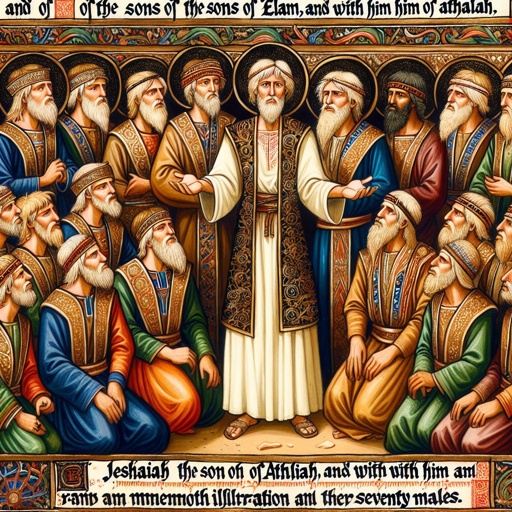
Ezra 8:7 - "And of the sons of Elam; Jeshaiah the son of Athaliah, and with him seventy males."

Ezra 2:4 - "The children of Shephatiah, three hundred seventy and two."

Ezra 7:8 - "And he came to Jerusalem in the fifth month, which was in the seventh year of the king."

Ezra 7:21 - "And I, even I Artaxerxes the king, do make a decree to all the treasurers which are beyond the river, that whatsoever Ezra the priest, the scribe of the law of the God of heaven, shall require of you, it be done speedily,"

Ezra 7:7 - "And there went up some of the children of Israel, and of the priests, and the Levites, and the singers, and the porters, and the Nethinims, unto Jerusalem, in the seventh year of Artaxerxes the king."

Ezra 7:5 - "The son of Abishua, the son of Phinehas, the son of Eleazar, the son of Aaron the chief priest:"

Ezra 8:4 - "Of the sons of Pahath-moab; Elihoenai the son of Zerahiah, and with him two hundred males."

Ezra 7:6 - "This Ezra went up from Babylon; and he was a ready scribe in the law of Moses, which the LORD God of Israel had given: and the king granted him all his request, according to the hand of the LORD his God upon him."

Ezra 7:25 - "And thou, Ezra, after the wisdom of thy God, that is in thine hand, set magistrates and judges, which may judge all the people that are beyond the river, all such as know the laws of thy God; and teach ye them that know them not."

"Artaxerxes, king of kings, unto Ezra the priest, a scribe of the law of the God of heaven, perfect peace, and at such a time." - Ezra 7:12

"For Ezra had prepared his heart to seek the law of the LORD, and to do it, and to teach in Israel statutes and judgments." - Ezra 7:10

Ezra 5:7 - "They sent a letter unto him, wherein was written thus; Unto Darius the king, all peace."

"Now after these things, in the reign of Artaxerxes king of Persia, Ezra the son of Seraiah, the son of Azariah, the son of Hilkiah," - Ezra 7:1