What does Ezra 5:3 mean?
“At the same time came to them Tatnai, governor on this side the river, and Shethar-boznai, and their companions, and said thus unto them, Who hath commanded you to build this house, and to make up this wall?” — Ezra 5:3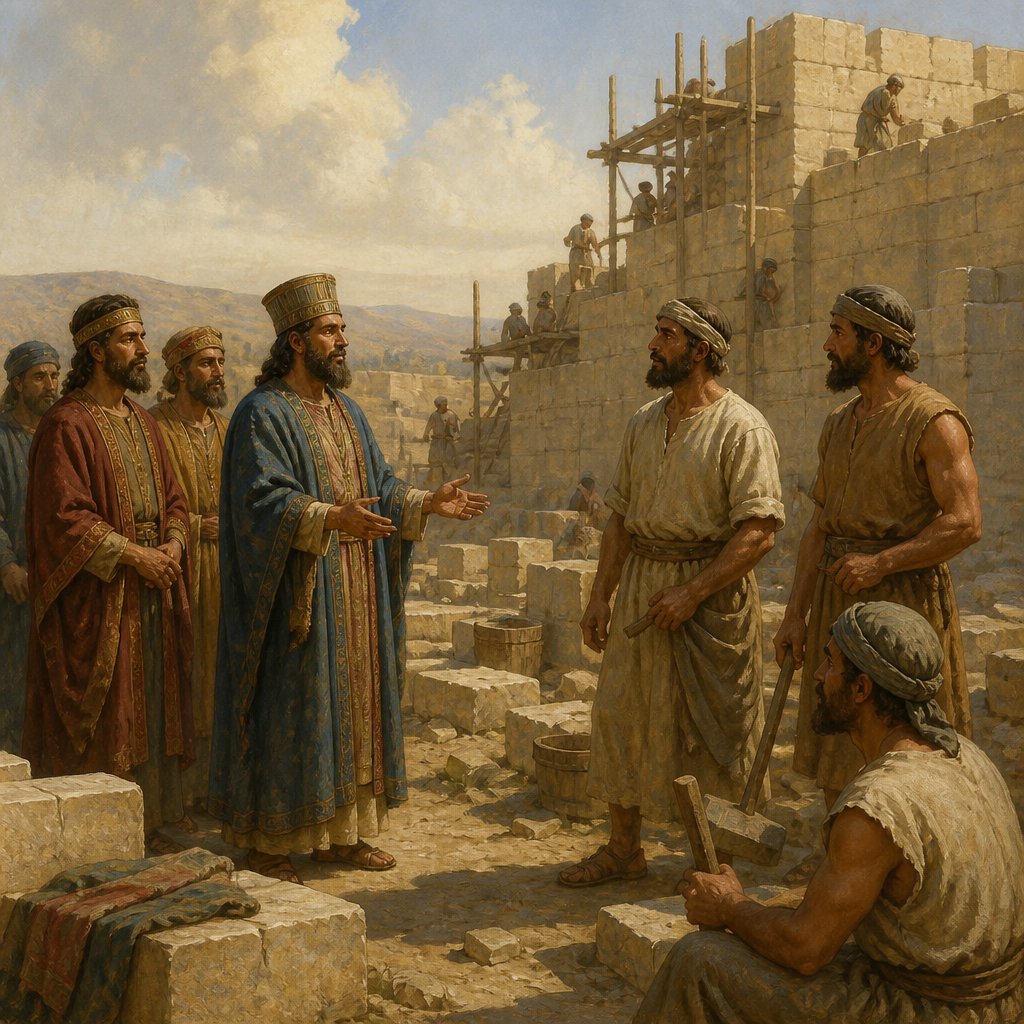
Ezra 5:3 (KJV) says, "At the same time came to them Tatnai, governor on this side the river, and Shetharboznai and their companions, and said thus unto them, Who hath commanded you to build this house, and to make up this wall?"
This verse comes from the Book of Ezra in the Old Testament of the Bible and is part of the story of the Israelites who had been exiled to Babylon but were later allowed to return to Jerusalem to rebuild the temple. The verse specifically describes a confrontation between the Jewish leaders who were working on the temple and their adversaries.
The context of this verse is crucial for understanding its meaning. The Israelites, after being exiled from their land for seventy years, were permitted to return to Jerusalem by the decree of King Cyrus of Persia. Upon their return, they began to rebuild the temple that had been destroyed by the Babylonians. However, they faced opposition from the surrounding nations, including the governor Tatnai and his companions, who questioned the authority and permission of the Israelites to carry out this work.
In this verse, Tatnai and his companions confront the Jewish leaders, questioning their authority to rebuild the temple. This sets the stage for a period of intense opposition and struggle as the Israelites seek to complete this important task. However, it also serves as a testament to their faith and determination to carry out the will of God despite the challenges they faced.
One of the key themes present in this verse is the idea of opposition and resistance to the work of God. The Israelites faced not only physical obstacles in their efforts to rebuild the temple but also opposition from those who sought to undermine their efforts. This theme of opposition is a recurring one throughout the Bible, as believers often face resistance and persecution when seeking to carry out God's will. However, it also serves as a reminder of the strength and perseverance of the faithful in the face of adversity.
Another important theme present in this verse is the idea of divine authority and permission. Tatnai and his companions question the authority of the Israelites to rebuild the temple, raising the question of who has commanded them to carry out this work. This theme highlights the importance of seeking God's guidance and permission in all that we do, especially when facing opposition and challenges. It also serves as a reminder that the work of God is not to be taken lightly and should be carried out with a firm understanding of His will and purpose.
The symbolism in this verse lies in the struggle between the physical and spiritual realms. The rebuilding of the temple represents the physical restoration of a sacred place, while the opposition faced by the Israelites represents the spiritual battles that believers often encounter. The physical and spiritual are intertwined in this verse, highlighting the complex nature of faith and the challenges that believers face in carrying out God's work.
In conclusion, Ezra 5:3 (KJV) offers a profound insight into the struggles and opposition faced by the Israelites as they sought to rebuild the temple in Jerusalem. It highlights important themes such as opposition, divine authority, and the intertwining of the physical and spiritual realms. This verse serves as a powerful reminder of the strength and perseverance of the faithful in the face of adversity and the importance of seeking God's guidance in all that we do.
Get our apps


Artwork for Ezra 5:3

Ezra 5:3 - "¶ At the same time came to them Tatnai, governor on this side the river, and Shethar-boznai, and their companions, and said thus unto them, Who hath commanded you to build this house, and to make up this wall?"
"¶ At the same time came to them Tatnai, governor on this side the river, and Shethar-boznai, and their companions, and said thus unto them, Who hath commanded you to build this house, and to make up this wall?" - Ezra 5:3

Ezra 3:5 - "And afterward offered the continual burnt offering, both of the new moons, and of all the set feasts of the LORD that were consecrated, and of every one that willingly offered a freewill offering unto the LORD."

Ezra 10:5 - "Then arose Ezra, and made the chief priests, the Levites, and all Israel, to swear that they should do according to this word. And they sware."

Ezra 10:3

Ezra 3:10

Ezra 3:2

Ezra 3:2

Ezra 3:9

Ezra 3:2

Zerubbabel in Ezra chapter 5

Ezra 9:3

Ezra 3:2

Ezra 3:2

Ezra 10:3

Zerubbabel in Ezra chapter 3

Altar rebuilt in Jerusalem. Ezra 3:1-3

Ezra 2:5 - "The children of Arah, seven hundred seventy and five."

Zerubbabel in Ezra chapter 5 but zerubbabel is not a priest

Ezra 7:3 - "The son of Amariah, the son of Azariah, the son of Meraioth,"

Ezra 8:5 - "Of the sons of Shechaniah; the son of Jahaziel, and with him three hundred males."

Ezra 2:3 - "The children of Parosh, two thousand an hundred seventy and two."

Ezra 7:5 - "The son of Abishua, the son of Phinehas, the son of Eleazar, the son of Aaron the chief priest:"

Ezra 5:5 - "But the eye of their God was upon the elders of the Jews, that they could not cause them to cease, till the matter came to Darius: and then they returned answer by letter concerning this matter."

Pagan women leave with their children ezra 10:3

Ezra 5:4 - "Then said we unto them after this manner, What are the names of the men that make this building?"

Pagan women leave with their children ezra 10:3

Ezra 5:13 - "But in the first year of Cyrus the king of Babylon the same king Cyrus made a decree to build this house of God."

"Then arose Ezra, and made the chief priests, the Levites, and all Israel, to swear that they should do according to this word. And they sware." - Ezra 10:5

Ezra 5:7 - "They sent a letter unto him, wherein was written thus; Unto Darius the king, all peace."