What does Ezra 6:2 mean?
“And there was found at Achmetha, in the palace that is in the province of the Medes, a roll, and therein was a record thus written:” — Ezra 6:2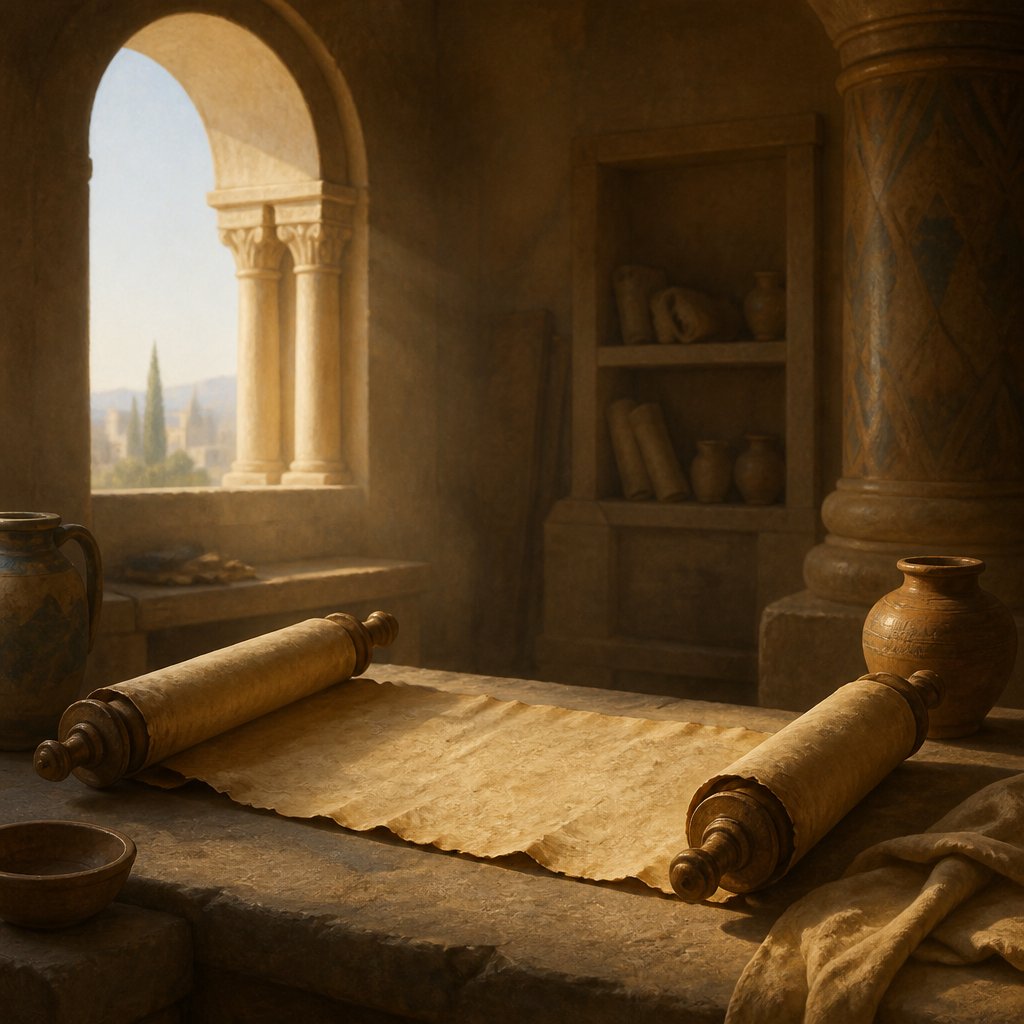
Ezra 6:2 (KJV) - "And there was found at Achmetha, in the palace that is in the province of the Medes, a roll, and therein was a record thus written."
The book of Ezra in the Old Testament contains the narrative of the return of the exiled Israelites from Babylon, the rebuilding of the temple in Jerusalem, and the reestablishment of the Jewish community in the Promised Land. In chapter 6, we find the story of how the construction of the temple was halted for a time, but then resumed and completed under the decree of King Darius of Persia.
The verse at hand, Ezra 6:2, discusses the discovery of a scroll in the city of Achmetha, in the province of Media. This scroll was a record of King Cyrus' decree to rebuild the temple in Jerusalem, and it played a crucial role in the fulfillment of that decree. The significance of this discovery lies in the fact that it led to the confirmation and support of the original decree, ultimately resulting in the temple's completion.
The context of this verse is essential for understanding its full meaning. At the time of this event, the Israelites had returned to their homeland and begun the work of rebuilding the temple. However, they faced opposition from the surrounding nations, which led to a halt in the construction. It was not until the reign of King Darius that the situation changed. The discovery of the scroll in Achmetha led to a search through the royal archives, where King Darius found Cyrus' original decree and issued a new decree in support of the temple's reconstruction.
One of the central themes of this passage is the sovereignty of God. Despite the hindrances and opposition faced by the Israelites, God's plan for the restoration of His temple and His people could not be thwarted. The discovery of the scroll, the intervention of King Darius, and the eventual completion of the temple all point to the divine providence at work in human history.
Additionally, the verse serves as a reminder of the importance of documentation and record-keeping. The scroll found in Achmetha contained a written record of King Cyrus' decree, which was crucial in proving the legitimacy and validity of the Israelites' actions. This highlights the significance of written records in preserving history and ensuring justice.
Symbolically, the discovery of the scroll can also be seen as a metaphor for the uncovering of truth and the restoration of hope. Just as the scroll was found in a distant city and played a pivotal role in the fulfillment of God's plan, so too can the truth be revealed in unexpected places and lead to the realization of divine purposes.
In conclusion, Ezra 6:2 speaks to the faithfulness of God in fulfilling His promises, the importance of written records in preserving history and ensuring justice, and the symbolic significance of the discovery of truth. It serves as a powerful testament to the sovereignty of God and the ultimate triumph of His will.
Get our apps


Artwork for Ezra 6:2

Ezra 6:2 - "And there was found at Achmetha, in the palace that is in the province of the Medes, a roll, and therein was a record thus written:"
"And there was found at Achmetha, in the palace that is in the province of the Medes, a roll, and therein was a record thus written:" - Ezra 6:2

Ezra 2:6 - "The children of Pahath-moab, of the children of Jeshua and Joab, two thousand eight hundred and twelve."

Ezra 9:6

Ezra 6:16

Zerubbabel in Ezra chapter 6

Ezra 6:1-12

Ezra 6:15-16

Ezra 6:15-16
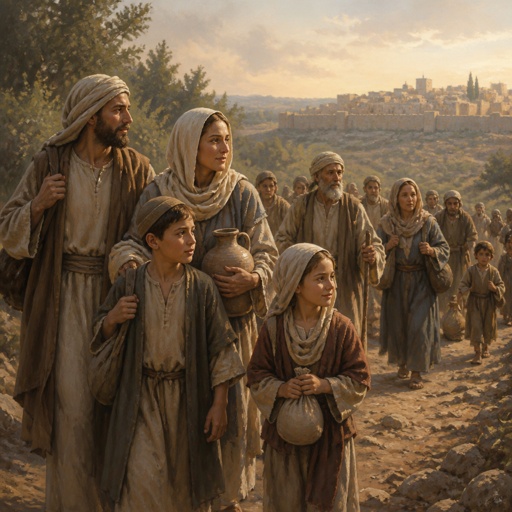
"The children of Pahath-moab, of the children of Jeshua and Joab, two thousand eight hundred and twelve." - Ezra 2:6

Ezra 3:2

Ezra 3:2

Ezra 3:2

Ezra 6:19 - "And the children of the captivity kept the passover upon the fourteenth day of the first month."

Ezra 8:6 - "Of the sons also of Adin; Ebed the son of Jonathan, and with him fifty males."

Ezra 3:2

Ezra 3:2

Ezra 6:6 - "Now therefore, Tatnai, governor beyond the river, Shethar-boznai, and your companions the Apharsachites, which are beyond the river, be ye far from thence:"

Ezra 9:1-2

Zerubbabel in Ezra chapter 2

Ezra 2:22 - "The men of Netophah, fifty and six."
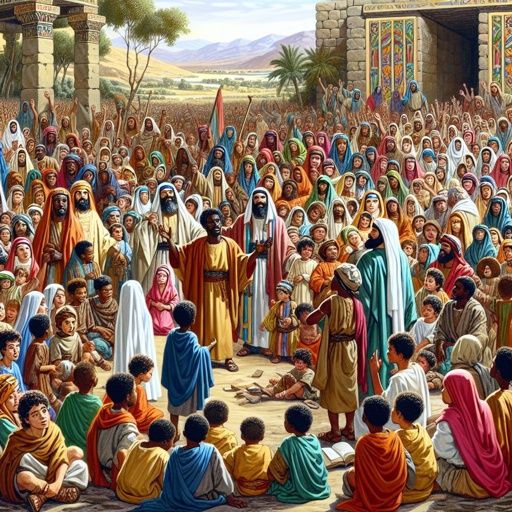
Ezra 2:18 - "The children of Jorah, an hundred and twelve."

Ezra 2:54 - "The children of Neziah, the children of Hatipha."

Ezra 2:20 - "The children of Gibbar, ninety and five."

Ezra 2:24 - "The children of Azmaveth, forty and two."

Ezra 2:39 - "The children of Harim, a thousand and seventeen."

Ezra 7:6 - "This Ezra went up from Babylon; and he was a ready scribe in the law of Moses, which the LORD God of Israel had given: and the king granted him all his request, according to the hand of the LORD his God upon him."

Ezra 9:1-2

Ezra 2:9 - "The children of Zaccai, seven hundred and threescore."

Ezra 2:27 - "The men of Michmas, an hundred twenty and two."