What does Ezra 7:3 mean?
“The son of Amariah, the son of Azariah, the son of Meraioth,” — Ezra 7:3
Ezra 7:3 in the King James Version of the Bible reads, "son of Seraiah, the son of Azariah, the son of Hilkiah." This may seem like a simple genealogical list, but it holds a deep and significant meaning within the context of the book of Ezra and the Bible as a whole.
The book of Ezra is a historical account of the Jewish people who had been exiled from their homeland and were now returning to rebuild the temple in Jerusalem. This verse comes at the beginning of the book when Ezra, a descendant of Aaron the high priest, is introduced. The genealogy mentioned here serves several purposes in the overall narrative.
First, the genealogy establishes Ezra's connection to the priesthood and his authority within the religious community. By tracing his lineage back to Aaron, the brother of Moses and the original high priest, Ezra's legitimacy and credibility as a religious leader are affirmed. This is important in the context of the book, as Ezra plays a central role in the religious and spiritual restoration of the Jewish people.
Second, the genealogy serves as a reminder of God's faithfulness and His covenant with the people of Israel. Throughout the Old Testament, genealogies are used to trace the lineage of God's chosen people and to emphasize the continuity of God's promises across generations. By mentioning the specific ancestors of Ezra, the verse reinforces the idea that God's plan for the redemption and restoration of His people has been unfolding since ancient times.
In a broader sense, this verse also reflects the theme of heritage and legacy that runs throughout the Bible. The importance of ancestry and lineage is a recurring motif in the Old Testament, as it underscores the idea of continuity and inheritance within the community of believers. By acknowledging Ezra's lineage, the verse highlights the value of tradition and the passing down of faith from one generation to the next.
Symbolically, the names mentioned in the genealogy also carry significance. Seraiah, Azariah, and Hilkiah were all prominent figures in Israel's history. Seraiah was a high priest during the time of King Zedekiah and was executed by the Babylonians (2 Kings 25:18-21). Azariah was a high priest during the reign of King Solomon and was known for his faithfulness to God (2 Chronicles 26:17-20). Hilkiah was the high priest who discovered the Book of the Law during the reign of King Josiah, sparking a spiritual revival in Judah (2 Kings 22:8-20).
The inclusion of these names in Ezra's genealogy serves to connect him to the legacy of his forebears and to highlight the continuity of God's work through the generations. It also foreshadows the role that Ezra will play in leading a spiritual reformation and in upholding the teachings of the Law, as Hilkiah did.
In conclusion, Ezra 7:3 may seem like a small and insignificant verse, but within the broader context of the book of Ezra and the themes of the Bible, it holds great significance. It establishes Ezra's authority as a religious leader, reaffirms God's faithfulness to His people, and symbolically connects him to the rich heritage of Israel's spiritual leaders. As believers today, we can also draw inspiration from this verse to appreciate the legacy of faith that has been passed down to us and to recognize our place within the ongoing story of God's work in the world.
Get our apps


Artwork for Ezra 7:3

Ezra 7:3 - "The son of Amariah, the son of Azariah, the son of Meraioth,"

"The son of Amariah, the son of Azariah, the son of Meraioth," - Ezra 7:3

Ezra 7:12 - "Artaxerxes, king of kings, unto Ezra the priest, a scribe of the law of the God of heaven, perfect peace, and at such a time."

Ezra 7:10 - "For Ezra had prepared his heart to seek the law of the LORD, and to do it, and to teach in Israel statutes and judgments."

Ezra 3:2

Ezra 10:3

Ezra 3:2

Ezra 3:10

Ezra 3:9

Ezra 3:2

Ezra 7:1 - "Now after these things, in the reign of Artaxerxes king of Persia, Ezra the son of Seraiah, the son of Azariah, the son of Hilkiah,"

Ezra 9:3

Ezra 3:2

Ezra 3:2

Ezra 10:3

Ezra 3:7 - "They gave money also unto the masons, and to the carpenters; and meat, and drink, and oil, unto them of Zidon, and to them of Tyre, to bring cedar trees from Lebanon to the sea of Joppa, according to the grant that they had of Cyrus king of Persia."

Zerubbabel in Ezra chapter 3

Altar rebuilt in Jerusalem. Ezra 3:1-3

Ezra 7:11 - "¶ Now this is the copy of the letter that the king Artaxerxes gave unto Ezra the priest, the scribe, even a scribe of the words of the commandments of the LORD, and of his statutes to Israel."

Ezra 7:2 - "The son of Shallum, the son of Zadok, the son of Ahitub,"

Ezra 7:4 - "The son of Zerahiah, the son of Uzzi, the son of Bukki,"

Ezra 2:7 - "The children of Elam, a thousand two hundred fifty and four."
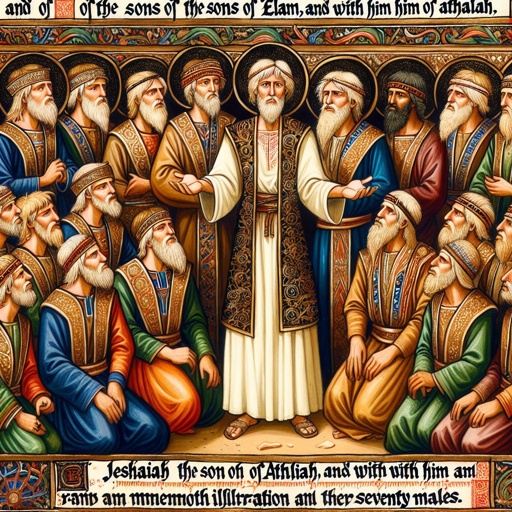
Ezra 8:7 - "And of the sons of Elam; Jeshaiah the son of Athaliah, and with him seventy males."

Ezra 7:8 - "And he came to Jerusalem in the fifth month, which was in the seventh year of the king."

Ezra 7:21 - "And I, even I Artaxerxes the king, do make a decree to all the treasurers which are beyond the river, that whatsoever Ezra the priest, the scribe of the law of the God of heaven, shall require of you, it be done speedily,"

Ezra 7:7 - "And there went up some of the children of Israel, and of the priests, and the Levites, and the singers, and the porters, and the Nethinims, unto Jerusalem, in the seventh year of Artaxerxes the king."

Ezra 2:3 - "The children of Parosh, two thousand an hundred seventy and two."

Ezra 7:5 - "The son of Abishua, the son of Phinehas, the son of Eleazar, the son of Aaron the chief priest:"

Pagan women leave with their children ezra 10:3

Ezra 7:6 - "This Ezra went up from Babylon; and he was a ready scribe in the law of Moses, which the LORD God of Israel had given: and the king granted him all his request, according to the hand of the LORD his God upon him."