What does Ezra 9:14 mean?
“Should we again break thy commandments, and join in affinity with the people of these abominations? wouldest not thou be angry with us till thou hadst consumed us, so that there should be no remnant nor escaping?” — Ezra 9:14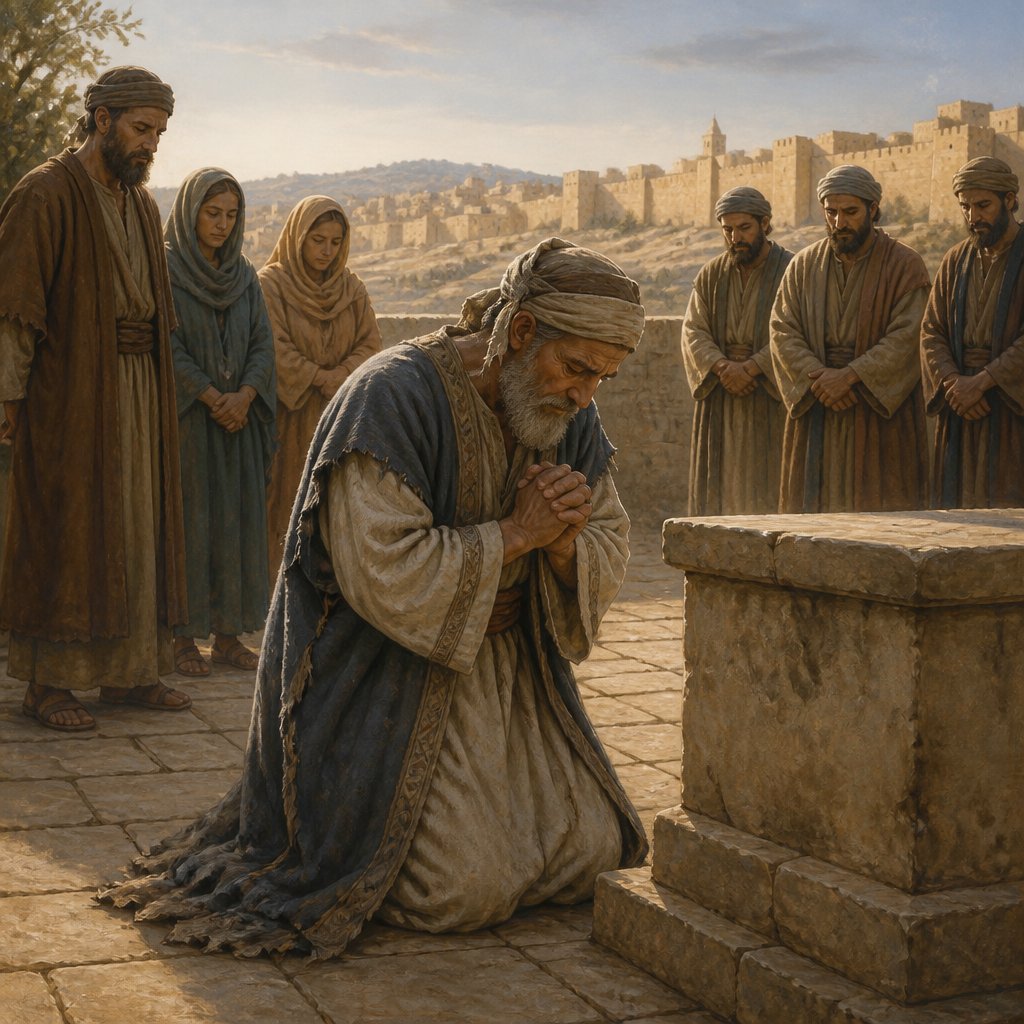
Ezra 9:14 in the King James Version (KJV) of the Bible states:
"Should we again break thy commandments, and join in affinity with the people of these abominations? wouldest not thou be angry with us till thou hadst consumed us, so that there should be no remnant nor escaping?"
This verse is part of a prayer of confession and repentance that Ezra directs towards God on behalf of the Israelites. The context of this verse is important to understand its meaning and significance. The book of Ezra recounts the return of Jews from their Babylonian exile to Jerusalem, and the efforts to rebuild the temple and restore their worship of God. As the people settled back into their homeland, they began to intermarry with the surrounding nations, which the Israelites were specifically commanded not to do in the Mosaic Law.
The verse emphasizes the serious nature of the Israelites' transgressions and the potential consequences of their disobedience. It speaks to the fear and reverence of God, acknowledging His righteous anger and the destructive potential of their actions. The language used here is dramatic and vivid, conveying the urgency and gravity of the situation.
A key theme in this verse is the concept of obedience to God's commandments. The Israelites are recognizing their failure to uphold the covenant they made with God, and the dire implications of their disobedience. The verse conveys a sense of accountability and accountability to God for their actions, highlighting the importance of remaining faithful and obedient to God's laws.
Another important theme in this verse is the holiness of God and the need for the Israelites to remain separate from the practices of the surrounding nations. The term "abominations" refers to the detestable practices and idolatry of the neighboring peoples. The Israelites are acknowledging that they have compromised their own holiness by aligning themselves with these practices, and are seeking forgiveness and restoration.
Also, the verse demonstrates the Israelites' understanding of God's sovereignty and judgment. They recognize that God has the power to consume them in His anger and leave no remnant or escape. This reflects a deep reverence and awe for God's authority and the consequences of defying Him.
Symbolically, this verse represents the struggle of the Israelites to maintain their faithfulness and purity in the midst of a pagan environment. It serves as a reminder of the constant need for repentance and renewal, as well as the consequences of straying from God's commandments.
In conclusion, Ezra 9:14 from the King James Version of the Bible conveys the themes of obedience, holiness, reverence for God, and the consequences of disobedience. It serves as a powerful expression of confession and repentance, and a reminder of the need to remain faithful to God's commandments. The verse holds relevance for believers today, as it encourages reflection on our own obedience and commitment to God, and the importance of seeking forgiveness and restoration when we fall short.
Get our apps


Artwork for Ezra 9:14
Ezra 9:14 - "Should we again break thy commandments, and join in affinity with the people of these abominations? wouldest not thou be angry with us till thou hadst consumed us, so that there should be no remnant nor escaping?"
"Should we again break thy commandments, and join in affinity with the people of these abominations? wouldest not thou be angry with us till thou hadst consumed us, so that there should be no remnant nor escaping?" - Ezra 9:14

Ezra 9:6

Ezra 3:9

Ezra 9:3

Ezra 9:1

Ezra 9:1

Ezra 9:1

Ezra 9:1-2

Ezra 9:13-15

Ezra 9:1-2

Ezra 2:9 - "The children of Zaccai, seven hundred and threescore."

Ezra 2:14 - "The children of Bigvai, two thousand fifty and six."

Ezra 8:14 - "Of the sons also of Bigvai; Uthai, and Zabbud, and with them seventy males."

Ezra 8:9 - "Of the sons of Joab; Obadiah the son of Jehiel, and with him two hundred and eighteen males."

Ezra 1:9 - "And this is the number of them: thirty chargers of gold, a thousand chargers of silver, nine and twenty knives,"

"The children of Zaccai, seven hundred and threescore." - Ezra 2:9

"The children of Bigvai, two thousand fifty and six." - Ezra 2:14

Ezra 9:10 - "And now, O our God, what shall we say after this? for we have forsaken thy commandments,"

Ezra 5:9 - "Then asked we those elders, and said unto them thus, Who commanded you to build this house, and to make up these walls?"

Ezra 4:9 - "Then wrote Rehum the chancellor, and Shimshai the scribe, and the rest of their companions; the Dinaites, the Apharsathchites, the Tarpelites, the Apharsites, the Archevites, the Babylonians, the Susanchites, the Dehavites, and the Elamites,"

Ezra 4:14 - "Now because we have maintenance from the king's palace, and it was not meet for us to see the king's dishonour, therefore have we sent and certified the king;"

"Of the sons also of Bigvai; Uthai, and Zabbud, and with them seventy males." - Ezra 8:14

Ezra 7:14 - "Forasmuch as thou art sent of the king, and of his seven counsellors, to enquire concerning Judah and Jerusalem, according to the law of thy God which is in thine hand;"

Ezra 9:3 - "And when I heard this thing, I rent my garment and my mantle, and plucked off the hair of my head and of my beard, and sat down astonied."

Ezra 9:9 - "For we were bondmen; yet our God hath not forsaken us in our bondage, but hath extended mercy unto us in the sight of the kings of Persia, to give us a reviving, to set up the house of our God, and to repair the desolations thereof, and to give us a wall in Judah and in Jerusalem."

"Of the sons of Joab; Obadiah the son of Jehiel, and with him two hundred and eighteen males." - Ezra 8:9

Ezra 6:14 - "And the elders of the Jews builded, and they prospered through the prophesying of Haggai the prophet and Zechariah the son of Iddo. And they builded, and finished it, according to the commandment of the God of Israel, and according to the commandment of Cyrus, and Darius, and Artaxerxes king of Persia."

Ezra 3:9 - "Then stood Jeshua with his sons and his brethren, Kadmiel and his sons, the sons of Judah, together, to set forward the workmen in the house of God: the sons of Henadad, with their sons and their brethren the Levites."

Ezra 9:2 - "For they have taken of their daughters for themselves, and for their sons: so that the holy seed have mingled themselves with the people of those lands: yea, the hand of the princes and rulers hath been chief in this trespass."