What does Ezra 9:5 mean?
“And at the evening sacrifice I arose up from my heaviness; and having rent my garment and my mantle, I fell upon my knees, and spread out my hands unto the LORD my God,” — Ezra 9:5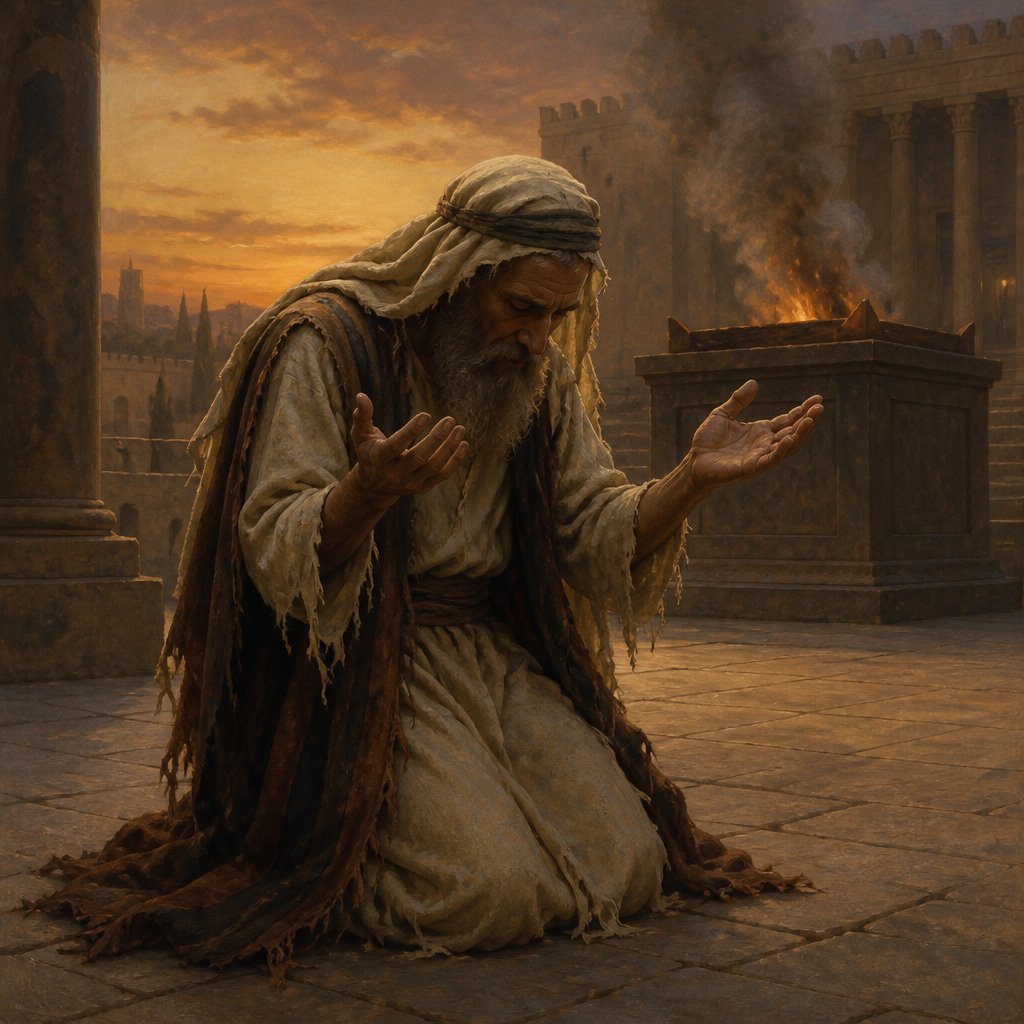
Ezra 9:5 in the King James Version of the Bible reads, "And at the evening sacrifice I arose up from my heaviness; and having rent my garment and my mantle, I fell upon my knees, and spread out my hands unto the Lord my God." This verse is a powerful and emotional expression of repentance, sorrow, and humility before God.
To provide context, the book of Ezra is set during the time of the Israelites' return from exile in Babylon. The people have returned to their homeland to rebuild the temple and reestablish their covenant with God. However, Ezra discovers that the Israelites have intermarried with the surrounding pagan nations, a clear violation of God's commandments. This verse comes at a crucial moment when Ezra is recounting his own response to this revelation.
The theme of repentance and atonement is central to this verse. The act of arising from heaviness and tearing one's garments was a common ritual of mourning and repentance in ancient Israel. By doing so, Ezra publicly and visibly expresses his grief and remorse over the sins of the people. This act of tearing his garments and mantle symbolizes the tearing of his own heart in repentance before God. It is a physical demonstration of the deep sorrow and contrition he feels for the people's disobedience.
The mention of the evening sacrifice is significant as well. The evening sacrifice was a time when the people would gather to offer their prayers and sacrifices to God. In this context, Ezra's act of repentance takes place within the framework of the sacrificial system. His repentance is not merely a private matter but a communal one, as he stands in solidarity with the people before God.
The physical posture of falling upon his knees and spreading out his hands further emphasizes the depth of Ezra's repentance and humility. By humbling himself before God in this manner, Ezra acknowledges the righteousness and sovereignty of God and submits himself to God's will.
This verse also speaks to the theme of intercession. As a priest and leader of the people, Ezra stands as an intercessor before God, pleading for mercy and forgiveness on behalf of the nation. His actions exemplify the role of a spiritual leader in taking responsibility for the sins of the community and seeking reconciliation with God.
Symbolically, the tearing of garments and falling upon his knees represent a breaking down of the old self and a submission to God's will. It is a gesture of surrender and openness to God's transformative work. By spreading out his hands, Ezra symbolizes his readiness to receive God's grace and mercy.
Overall, Ezra 9:5 is a poignant expression of repentance, intercession, and surrender before God. It serves as a powerful reminder of the importance of acknowledging and taking responsibility for our sins, seeking reconciliation with God, and humbling ourselves before His presence. This verse challenges us to examine our own hearts, to be honest about our failings, and to approach God with contrition and humility. It also underscores the significance of communal repentance and the role of spiritual leaders in guiding the people towards reconciliation with God.
Get our apps


Artwork for Ezra 9:5

Ezra 9:5 - "¶ And at the evening sacrifice I arose up from my heaviness; and having rent my garment and my mantle, I fell upon my knees, and spread out my hands unto the LORD my God,"
"¶ And at the evening sacrifice I arose up from my heaviness; and having rent my garment and my mantle, I fell upon my knees, and spread out my hands unto the LORD my God," - Ezra 9:5

Ezra 5:9 - "Then asked we those elders, and said unto them thus, Who commanded you to build this house, and to make up these walls?"

Ezra 9:6

Ezra 3:9

Ezra 9:3

Ezra 9:1

Ezra 9:1

Ezra 9:1

Ezra 10:5 - "Then arose Ezra, and made the chief priests, the Levites, and all Israel, to swear that they should do according to this word. And they sware."

Ezra 9:1-2

Ezra 9:13-15

Zerubbabel in Ezra chapter 5

Ezra 9:1-2

Ezra 2:9 - "The children of Zaccai, seven hundred and threescore."

Ezra 2:5 - "The children of Arah, seven hundred seventy and five."

"Then asked we those elders, and said unto them thus, Who commanded you to build this house, and to make up these walls?" - Ezra 5:9

Zerubbabel in Ezra chapter 5 but zerubbabel is not a priest

Ezra 8:5 - "Of the sons of Shechaniah; the son of Jahaziel, and with him three hundred males."

Ezra 7:5 - "The son of Abishua, the son of Phinehas, the son of Eleazar, the son of Aaron the chief priest:"

Ezra 8:9 - "Of the sons of Joab; Obadiah the son of Jehiel, and with him two hundred and eighteen males."

Ezra 1:9 - "And this is the number of them: thirty chargers of gold, a thousand chargers of silver, nine and twenty knives,"

Ezra 5:5 - "But the eye of their God was upon the elders of the Jews, that they could not cause them to cease, till the matter came to Darius: and then they returned answer by letter concerning this matter."

"The children of Zaccai, seven hundred and threescore." - Ezra 2:9

Ezra 5:4 - "Then said we unto them after this manner, What are the names of the men that make this building?"

Ezra 5:13 - "But in the first year of Cyrus the king of Babylon the same king Cyrus made a decree to build this house of God."

"Then arose Ezra, and made the chief priests, the Levites, and all Israel, to swear that they should do according to this word. And they sware." - Ezra 10:5

Ezra 5:7 - "They sent a letter unto him, wherein was written thus; Unto Darius the king, all peace."

Ezra 9:10 - "And now, O our God, what shall we say after this? for we have forsaken thy commandments,"

Ezra 5:10 - "We asked their names also, to certify thee, that we might write the names of the men that were the chief of them."