What does Galatians 4:21 mean?
“Tell me, ye that desire to be under the law, do ye not hear the law?” — Galatians 4:21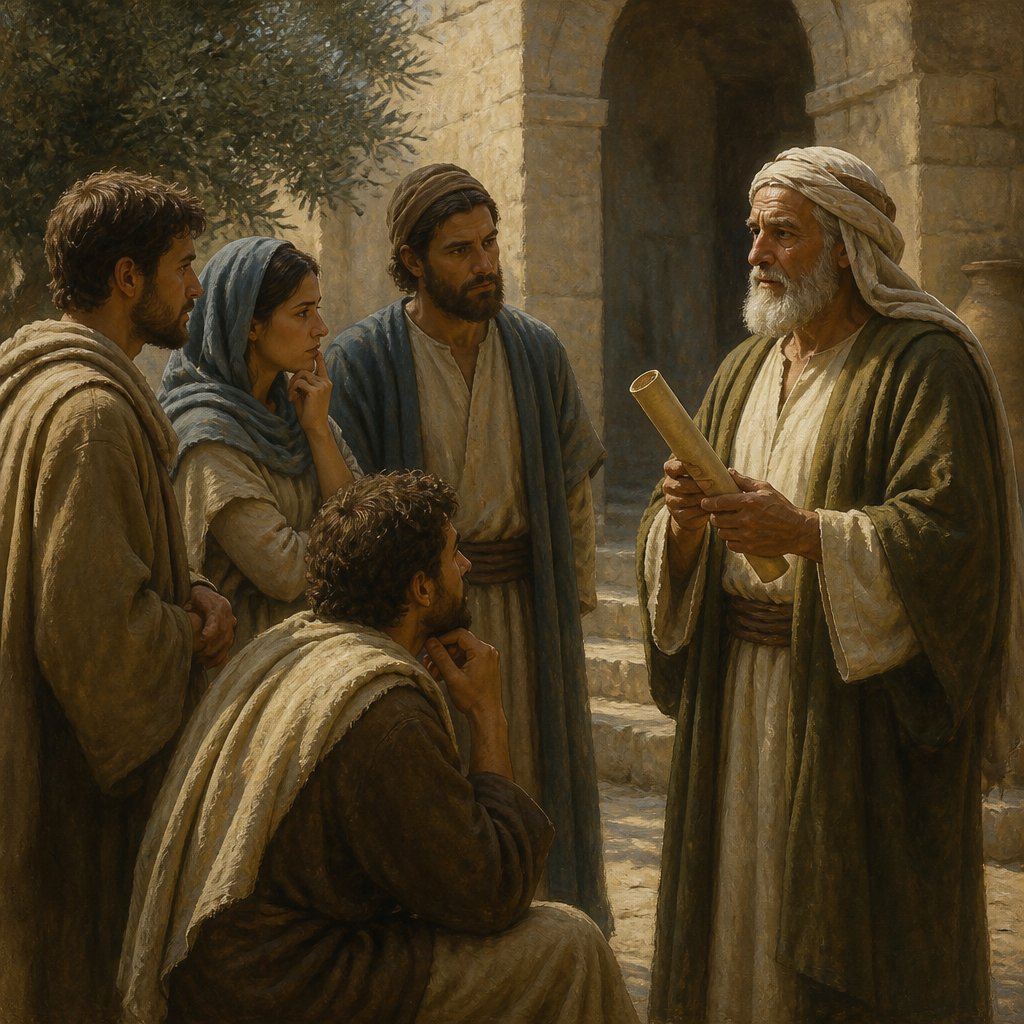
Galatians 4:21 in the King James Version of the Bible states, "Tell me, ye that desire to be under the law, do ye not hear the law?" This verse raises a thought-provoking question that delves into the nature of the law and its relationship to humanity. The book of Galatians, written by the apostle Paul, addresses the concept of Christian freedom and the role of the law in the lives of believers. This particular verse is part of Paul's argument against the Galatians' desire to return to the legalistic observance of the Mosaic law, and it serves as a pivotal point in his discussion on the significance of faith in Christ.
To understand the depth and meaning of this verse, it is essential to consider the historical and cultural context in which it was written. The Galatian churches were comprised mainly of converted Gentiles who had embraced the Christian faith. However, they were being influenced by Judaizers, who insisted that Gentile believers must also adhere to Jewish laws and customs, including circumcision and dietary restrictions, in order to be truly righteous before God. This legalistic approach to faith was a source of contention in the early Christian community and led to division and confusion among believers.
In his letter to the Galatians, Paul passionately argues for the freedom that comes through faith in Christ, as opposed to bondage to the law. He uses the allegory of Abraham's two sons, Ishmael and Isaac, to illustrate the contrast between living under the law and living by faith. In Galatians 4:21, Paul directly addresses those who are eager to subject themselves to the demands of the law, challenging them to consider the implications of their decision.
The phrase "ye that desire to be under the law" reflects Paul's awareness of the Galatians' misguided yearning for legalism. He confronts their desire and confronts it with a rhetorical question, "do ye not hear the law?" This question calls attention to the futility of seeking justification through the law, as the law itself proclaims the inability of humans to fully and flawlessly adhere to its demands. Paul is essentially asking the Galatians to reflect on the true nature and purpose of the law, as well as the inherent limitations of human effort to fulfill its requirements.
The deeper meaning behind this verse extends beyond the specific issue of the Galatians' adherence to the Mosaic law. It encompasses the broader theological theme of the relationship between law and grace, and the contrast between legalism and faith. Paul's message to the Galatians is a timeless reminder of the sufficiency of Christ's sacrifice and the liberation that comes through faith in Him. By engaging his audience in critical reflection, Paul challenges them to reevaluate their understanding of the law and encourages them to embrace the freedom that is found in Christ alone.
Symbolically, the law represents a system of rules and regulations that govern human behavior and morality. It is a reflection of God's holiness and righteousness, as well as a standard by which humanity is held accountable. However, the law also exposes the inherent sinfulness and inadequacy of humanity, highlighting the need for a savior. In contrast, faith in Christ represents a radical departure from reliance on human effort and a recognition of the all-sufficient work of Jesus on the cross. It embodies grace, mercy, and the unmerited favor of God extended to humanity through the sacrifice of His Son.
In conclusion, Galatians 4:21 serves as a compelling reminder of the importance of understanding the relationship between the law and grace. It challenges believers to reconsider the implications of seeking justification through religious observance and legalistic practices. The verse prompts introspection and calls for a reorientation towards a faith-centered perspective, rooted in the redemptive work of Christ. As contemporary readers, we are invited to heed Paul's exhortation and embrace the freedom and righteousness that are made available to us through faith in Jesus Christ.
Get our apps


Artwork for Galatians 4:21

Galatians 4:21 - "Tell me, ye that desire to be under the law, do ye not hear the law?"
"Tell me, ye that desire to be under the law, do ye not hear the law?" - Galatians 4:21

"Tell me, you who desire to be under the law, do you not listen to the law? For it is written that Abraham had two sons, one by a slave woman and one by a free woman. But the son of the slave was born according to the flesh, while the son of the free woman was born through promise. Now this may be interpreted allegorically: these women are two covenants. One is from Mount Sinai, bearing children for slavery; she is Hagar. Now Hagar is Mount Sinai in Arabia; she corresponds to the present Jerusalem, for she is in slavery with her children. But the Jerusalem above is free, and she is our mother. For it is written, “Rejoice, O barren one who does not bear; break forth and cry aloud, you who are not in labor! For the children of the desolate one will be more than those of the one who has a husband.” Now you, brothers, like Isaac, are children of promise. But just as at that time he who was born according to the flesh persecuted him who was born according to the Spirit, so also it is now. But what does the Scripture say? “Cast out the slave woman and her son, for the son of the slave woman shall not inherit with the son of the free woman.” So, brothers, we are not children of the slave but of the free woman." - Galatians 4:21-31

galatians 4:4

Galatians 6:4

Galatians 6:4

Galatians 6:4

Galatians 6:4

Galatians 6:4

Galatians 6:4

Galatians 4:13

Galatians 1:21 - "Afterwards I came into the regions of Syria and Cilicia;"

Galatians 4:24-27

Galatians 6:4

Galatians 4:13

Galatians 6:4

Galatians 6:4

Galatians 4:13

Galatians 6: 4-5

Galatians 6: 4-5

Galatians 6: 4-5

Galatians 2:21 - "I do not frustrate the grace of God: for if righteousness come by the law, then Christ is dead in vain."

Galatians 4:28 - "Now we, brethren, as Isaac was, are the children of promise."

Galatians 4:31 - "So then, brethren, we are not children of the bondwoman, but of the free."

Galatians 4:10 - "Ye observe days, and months, and times, and years."

Galatians 4:4 - "But when the fulness of the time was come, God sent forth his Son, made of a woman, made under the law,"

"Afterwards I came into the regions of Syria and Cilicia;" - Galatians 1:21

Galatians 4:26 - "But Jerusalem which is above is free, which is the mother of us all."

Galatians 4:2 - "But is under tutors and governors until the time appointed of the father."

Galatians 4:22 - "For it is written, that Abraham had two sons, the one by a bondmaid, the other by a freewoman."