What does Genesis 15:10 mean?
“And he took unto him all these, and divided them in the midst, and laid each piece one against another: but the birds divided he not.” — Genesis 15:10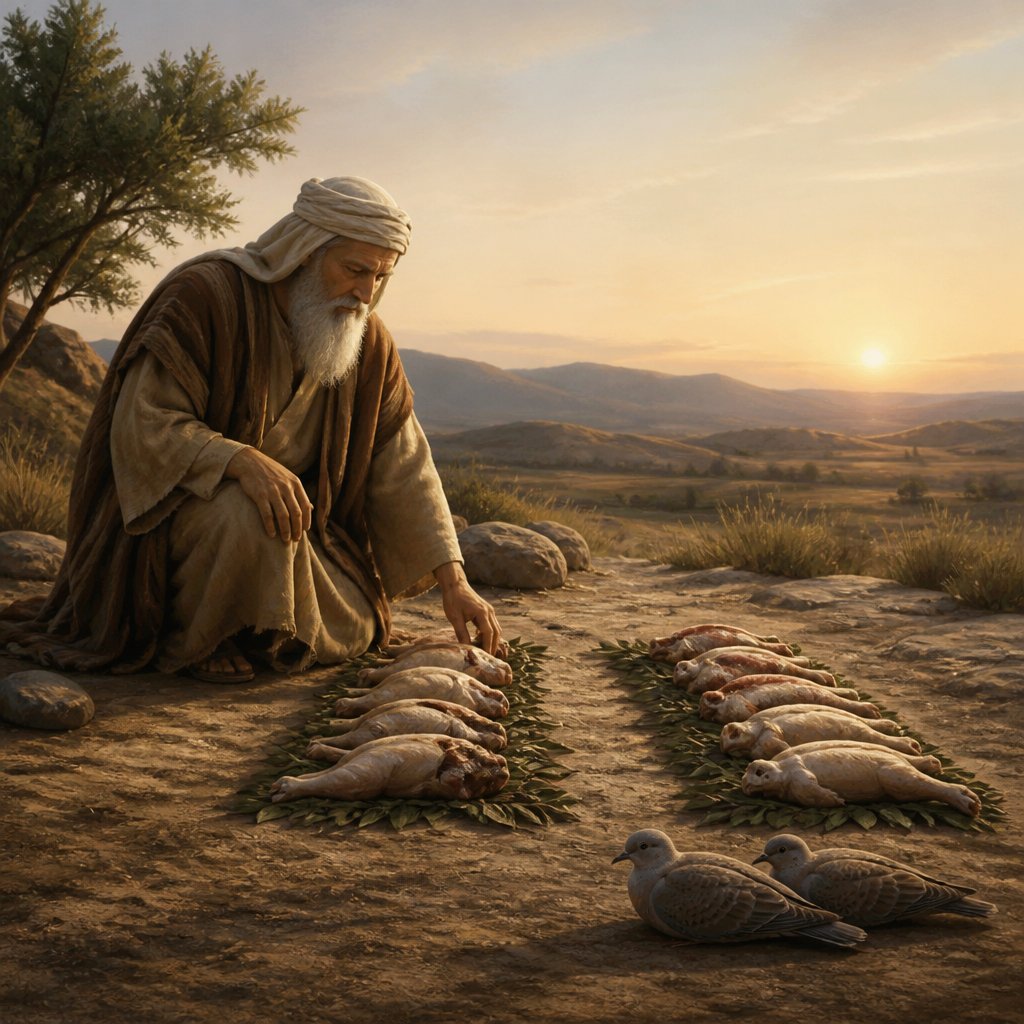
Genesis 15:10 (KJV) states: "And he took unto him all these, and divided them in the midst, and laid each piece one against another: but the birds divided he not."
This verse is part of a larger passage in the book of Genesis that tells the story of God's covenant with Abraham. In this passage, God promises to give Abraham descendants as numerous as the stars, as well as the land of Canaan as their inheritance. The covenant is sealed through a powerful and dramatic ritual, the significance of which is captured in the verse above.
The specific action described in this verse is the ritual of dividing animals. In ancient times, it was a common practice to enter into a covenant or agreement by performing a ritual involving the division of animals. The animals were cut in half, and the two parties making the covenant would then walk between the pieces as a way of symbolizing their commitment to fulfill their promises. This practice was a solemn and binding way of sealing important agreements.
In the case of Genesis 15, it is God who is making the covenant with Abraham. God instructs Abraham to take several animals, including a heifer, a goat, and a ram, to divide them in two, and to lay the pieces opposite each other. However, notably, Abraham does not divide the birds. This is an important detail which carries significant symbolism.
The division of the animals is a graphic and powerful symbol of the seriousness of the covenant being made. By dividing the animals, Abraham and God are essentially saying, "May this gruesome fate befall me if I do not uphold my end of the agreement." However, the fact that the birds are not divided suggests that there is a distinction between the fate of the animals and the fate of Abraham and his descendants. In other words, God's covenant with Abraham is not simply a transactional or conditional agreement. It is an unconditional promise of blessing and protection.
This passage also speaks to the faith and obedience of Abraham. The act of dividing the animals and setting up the covenant ritual required great faith on Abraham's part. He was taking God at His word and acting in obedience even though the fulfillment of God's promises seemed impossible at the time. In this way, Abraham's actions demonstrate the kind of faith and trust in God that is held up as an example throughout the Bible.
From a broader thematic perspective, this passage is about the unshakable faithfulness and the unfailing promises of God. The covenant made with Abraham is a foundational moment in the narrative of the Bible, and it is often cited as the basis for God's ongoing commitment to the people of Israel. It's a reminder that God is faithful to His promises, and that His plans will come to pass in His perfect timing.
In conclusion, Genesis 15:10 offers a glimpse into the significant covenant between God and Abraham. The ritual of dividing the animals serves as a powerful symbol of the solemn commitment being made, and the fact that the birds are not divided suggests that the covenant is one of unconditional blessing and protection. This passage ultimately points to the faithfulness of God and the example of faith and obedience demonstrated by Abraham. It sets the stage for the unfolding story of God's plan for redemption and restoration, and it continues to carry deep theological and symbolic significance for believers today.
Get our apps


Artwork for Genesis 15:10

Genesis 15:10

Genesis 15:10 - "And he took unto him all these, and divided them in the midst, and laid each piece one against another: but the birds divided he not."
"And he took unto him all these, and divided them in the midst, and laid each piece one against another: but the birds divided he not." - Genesis 15:10

Genesis 10:15 - "¶ And Canaan begat Sidon his firstborn, and Heth,"
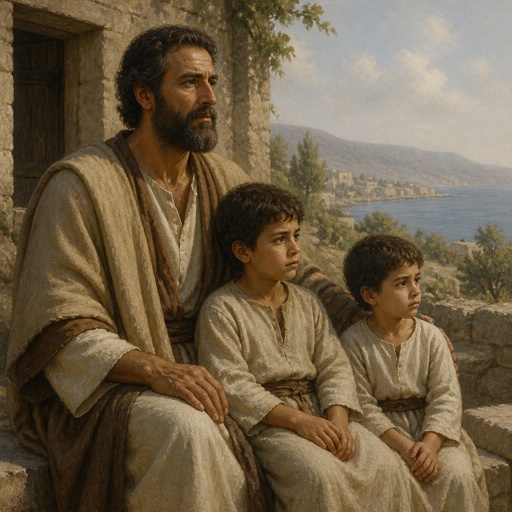
"¶ And Canaan begat Sidon his firstborn, and Heth," - Genesis 10:15

Genesis 10:15 And Canaan begat Sidon his firstborn, and Heth, illustrate the Canaanites in the land of Canaan

Genesis 15:15

Genesis 28-15

Genesis 17-15

Genesis 15:20

Genesis 22:15

Genesis 20-15

Genesis 15:14

Genesis 15:11

Genesis 16:15

Genesis 24-15

Genesis 19-15

Genesis 15:13

Genesis 25-15

Genesis 23-15

Genesis 18-15

Genesis 15:9

Genesis 21-15

Genesis 24:15

Genesis 15:19

Genesis 15:7

Genesis 15:16

Genesis 15:17
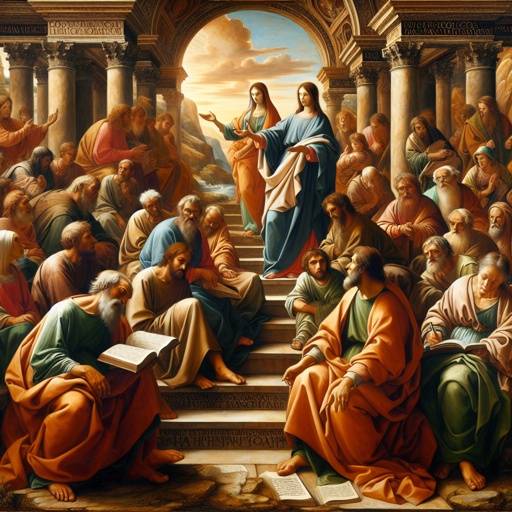
Genesis 15:18

Genesis 15:12