What does Genesis 21:32 mean?
“Thus they made a covenant at Beer-sheba: then Abimelech rose up, and Phichol the chief captain of his host, and they returned into the land of the Philistines.” — Genesis 21:32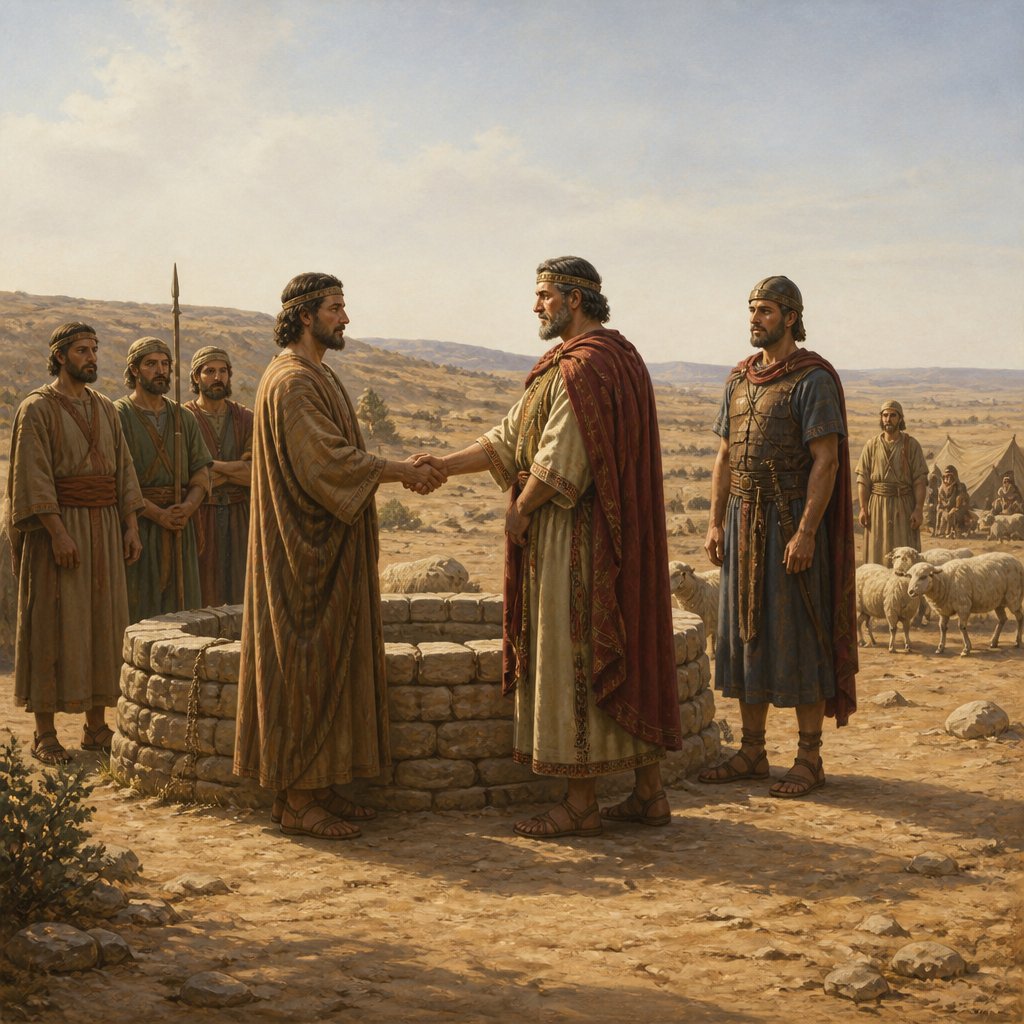
Genesis 21:32 (KJV) reads, "Thus they made a covenant at Beersheba: then Abimelech rose up, and Phichol the chief captain of his host, and they returned into the land of the Philistines."
This verse marks the culmination of an agreement between Abraham and King Abimelech of Gerar, solidifying a promise to live in harmony and mutual respect. To fully understand the significance and context of this verse, we must delve into the historical and narrative context of the book of Genesis, as well as explore the themes, symbolism, and parallels this verse carries.
The book of Genesis is the first book of the Bible and serves as the foundation of the entire biblical narrative. It records the origins of the world, the creation of humanity, the fall of man, and the establishment of God's covenant with His people. Within the larger narrative of Genesis, chapter 21 specifically details the birth of Isaac, the long-awaited son of Abraham and Sarah. Through miraculous intervention, Sarah conceived and bore Isaac in her old age, fulfilling God's promise to Abraham of a future heir.
In the verses leading up to Genesis 21:32, we see the tension between Abraham and Abimelech escalate due to a dispute over a well. Abraham had dug a well in Beersheba, and Abimelech's servants seized the well, prompting a confrontation. After resolving the conflict, both parties entered into a covenant, symbolizing a commitment to peaceful coexistence and non-aggression. The covenant was marked by the exchange of seven ewe lambs, signifying a ritual of oath-taking.
The significance of this covenant at Beersheba lies in its historical and symbolic implications. Beersheba, a prominent city in the Negev region of Israel, was a strategic location and a symbol of abundance and sustenance. The act of making a covenant in Beersheba represents the establishment of a lasting pact rooted in the idea of shared resources, access to water, and mutual well-being. In essence, the covenant at Beersheba embodies the principles of reconciliation, cooperation, and peaceful coexistence.
Moreover, the inclusion of Abimelech's chief captain, Phichol, in the covenant ceremony underscores the solemnity and significance of the agreement. It demonstrates that the covenant was not merely a casual arrangement between individuals but a formal, binding contract between two political entities.
Beyond its immediate context, Genesis 21:32 carries profound themes that resonate throughout the biblical narrative. The concept of covenant-making is central to God's interaction with humanity and serves as an overarching theme in the Bible. From the covenant with Noah, to the covenant with Abraham, to the covenant at Mount Sinai, the Bible is replete with examples of God establishing and fulfilling covenants with His people. The covenant at Beersheba reflects this larger theme of divine and human alliances, underscoring the importance of faithfulness, trust, and mutual obligations.
Symbolically, the covenant at Beersheba can also be interpreted as foreshadowing the enduring covenant between God and His people. It prefigures the ultimate covenant sealed through the sacrificial death of Jesus Christ, which extends God's promise of redemption and salvation to all who believe. The imagery of the exchanged ewe lambs, representing a sacrificial offering, echoes the notion of atonement and reconciliation, pointing to the redemptive work of Christ on the cross.
In conclusion, Genesis 21:32 encapsulates a pivotal moment in the narrative of Genesis, where two parties come together to establish a covenant of peace and cooperation. It encapsulates themes of reconciliation, cooperation, and the solemnity of oaths, while also foreshadowing the overarching theme of divine covenants throughout the Bible. This verse serves as a profound reminder of God's faithfulness and His desire for His people to live in harmony and unity, ultimately pointing towards the redemptive covenant fulfilled in Christ.
Get our apps


Artwork for Genesis 21:32
Genesis 21-32
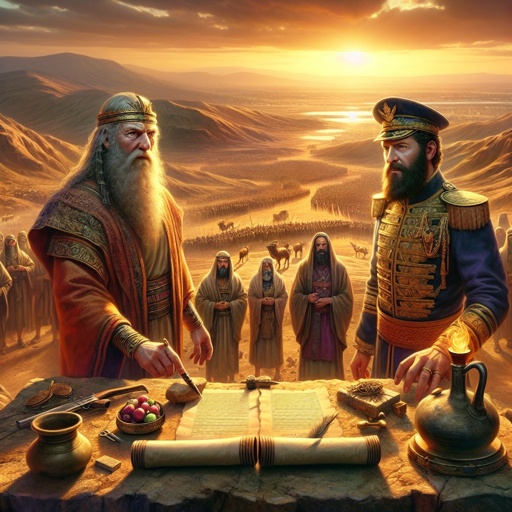
Genesis 21:32 - "Thus they made a covenant at Beer-sheba: then Abimelech rose up, and Phichol the chief captain of his host, and they returned into the land of the Philistines."
"Thus they made a covenant at Beer-sheba: then Abimelech rose up, and Phichol the chief captain of his host, and they returned into the land of the Philistines." - Genesis 21:32

Genesis 32:21 - "So went the present over before him: and himself lodged that night in the company."
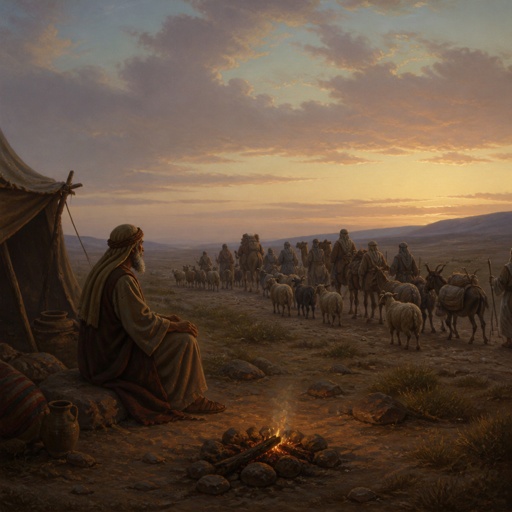
"So went the present over before him: and himself lodged that night in the company." - Genesis 32:21

Genesis 19-32

Genesis 27:32

Genesis 25-32

Genesis 18-32

Genesis 24-32
Matthew 21:28-32

Genesis 21-21

Genesis 49:32 - "The purchase of the field and of the cave that is therein was from the children of Heth."

Job 21:32 - "Yet shall he be brought to the grave, and shall remain in the tomb."

Genesis 32:1 - "And Jacob went on his way, and the angels of God met him."

Genesis 1:21

Genesis 1:21

Genesis 32:32 - "Therefore the children of Israel eat not of the sinew which shrank, which is upon the hollow of the thigh, unto this day: because he touched the hollow of Jacob's thigh in the sinew that shrank."

Genesis 36:32 - "And Bela the son of Beor reigned in Edom: and the name of his city was Dinhabah."

Genesis 32:24 - "¶ And Jacob was left alone; and there wrestled a man with him until the breaking of the day."

Genesis 11:32 - "And the days of Terah were two hundred and five years: and Terah died in Haran."

Genesis 32:27 - "And he said unto him, What is thy name? And he said, Jacob."

Genesis 5:32 - "And Noah was five hundred years old: and Noah begat Shem, Ham, and Japheth."

Genesis 21-20

Genesis 21-6

Genesis 21-13

Genesis 21-10

Genesis 21-34

Genesis 21-2

Genesis 21-7