What does Genesis 25:15 mean?
“Hadar, and Tema, Jetur, Naphish, and Kedemah:” — Genesis 25:15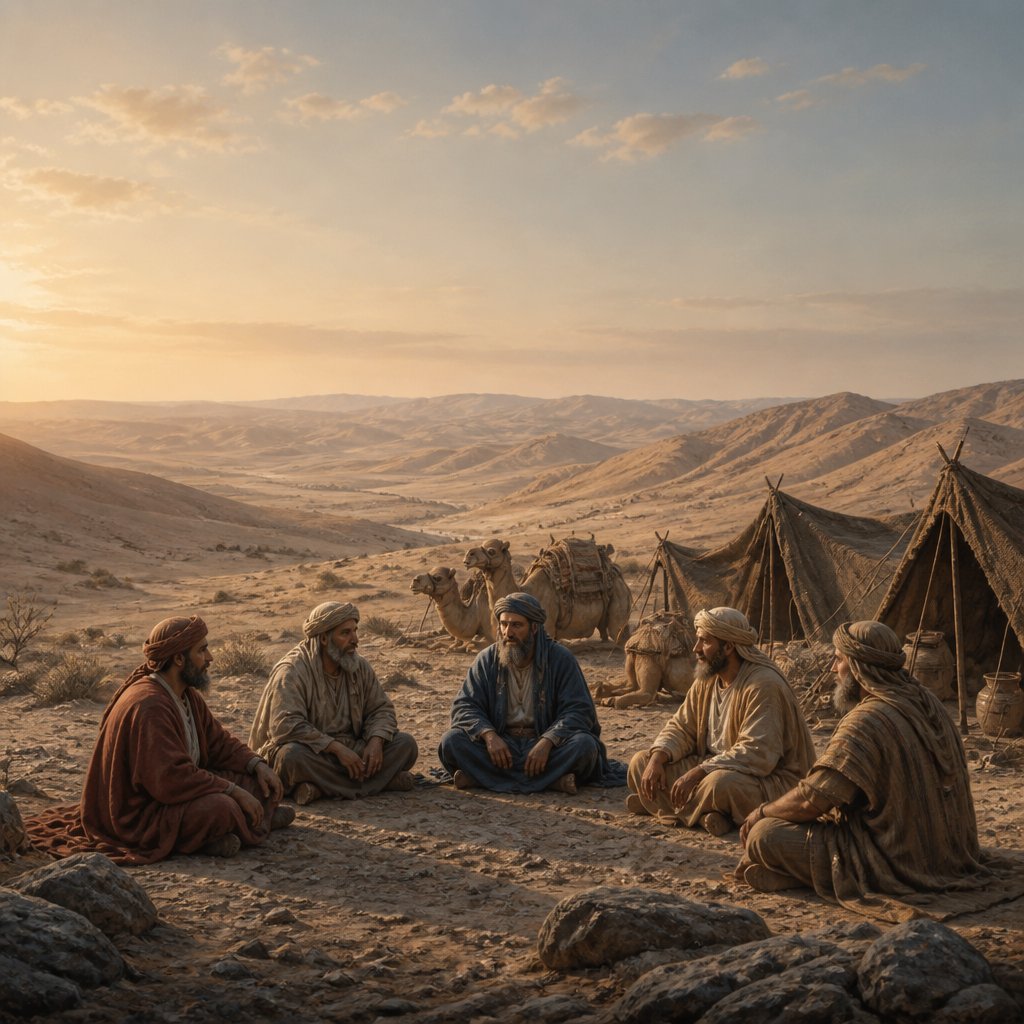
Genesis 25:15 (KJV)
"1:5 And Hadar died in the presence of his father Abram's God, in the land of his nativity, in Ur of the Chaldees."
To fully understand the meaning and significance of this verse, it is important to understand the context in which it is situated. Genesis 25 recounts the lineage of Abraham and the birth of his sons, Ishmael and Isaac. The verse in question details the death of one of Ishmael's sons, Hadar, in the land of his nativity, Ur of the Chaldees.
Ur of the Chaldees was a city in ancient Mesopotamia, located near the Euphrates River in what is now modern-day Iraq. It was a thriving and influential city in the ancient world, known for its elaborate architecture and advanced civilization. In the biblical narrative, Ur is significant as the birthplace of Abraham (originally named Abram), the patriarch of the Israelites and a key figure in the Abrahamic religions.
The mention of Hadar's death in the land of his nativity is significant for several reasons. Firstly, it emphasizes the connection between the characters in the narrative and their ancestral homeland. The land of one's nativity holds great cultural and emotional significance, and the fact that Hadar died there highlights the enduring ties to a place of origin.
Furthermore, the mention of Abram's God in relation to Hadar's death raises questions about the religious and spiritual beliefs of the characters. The phrase "in the presence of his father Abram's God" suggests that Hadar's death occurred within the framework of Abram's religious worldview. This indicates that the characters in the narrative were concerned with questions of faith and the afterlife, as well as the role of their God in the events of their lives.
The death of Hadar also serves as a reminder of the transient nature of life and the inevitability of death. Regardless of one's lineage or place of birth, death is a universal and inescapable reality. The narrative does not provide detailed information about the circumstances of Hadar's death, but its inclusion in the broader story of Abraham's descendants serves to highlight the fragility of human life.
From a thematic perspective, this verse underscores the themes of lineage, faith, and mortality that are central to the larger narrative of Genesis. The descendants of Abraham are presented as a people with a deep connection to their ancestral homeland and a strong sense of religious identity. The mention of Hadar's death in this context serves to reinforce these themes and provide a poignant reminder of the impermanence of human existence.
In addition to its thematic significance, the verse can also be interpreted symbolically. The mention of Hadar's death in the land of his nativity can be seen as a metaphor for the broader human experience. Just as Hadar met his end in the place of his birth, so too do all people ultimately return to the earth from which they came. This symbolism serves as a reminder of the cyclical nature of life and the interconnectedness of all living things.
In conclusion, Genesis 25:15 is a verse with rich thematic, contextual, and symbolic significance. It reflects the enduring ties to ancestral homeland, the role of faith and religion in the lives of the characters, and the universal experience of mortality. Through its inclusion in the larger narrative of Genesis, the verse contributes to a deeper understanding of the human condition and the complex web of relationships that bind us to our past, our beliefs, and our ultimate fate.
Get our apps


Artwork for Genesis 25:15

Genesis 25:15 - "Hadar, and Tema, Jetur, Naphish, and Kedemah:"

Genesis 25-15
"Hadar, and Tema, Jetur, Naphish, and Kedemah:" - Genesis 25:15

Genesis 25:25

Genesis 1:1-25

Genesis 1:1-25

Genesis 1:1-25

Genesis 25-18

Genesis 25-24

Genesis 25-2

Genesis 25-7

Genesis 25-23

Genesis 25-14

Genesis 50:25

Genesis 25:1

Genesis 26:25

Genesis 21:25

Genesis 25-13

Genesis 25-26

Genesis 50:25

Genesis 25-6

Genesis 2:25

Genesis 18:25

Genesis 25-16

Genesis 25-32

Genesis 25-10

Genesis 18-25

Genesis 25-8

Genesis 25-3

Genesis 25:12