What does Genesis 25:21 mean?
“And Isaac intreated the LORD for his wife, because she was barren: and the LORD was intreated of him, and Rebekah his wife conceived.” — Genesis 25:21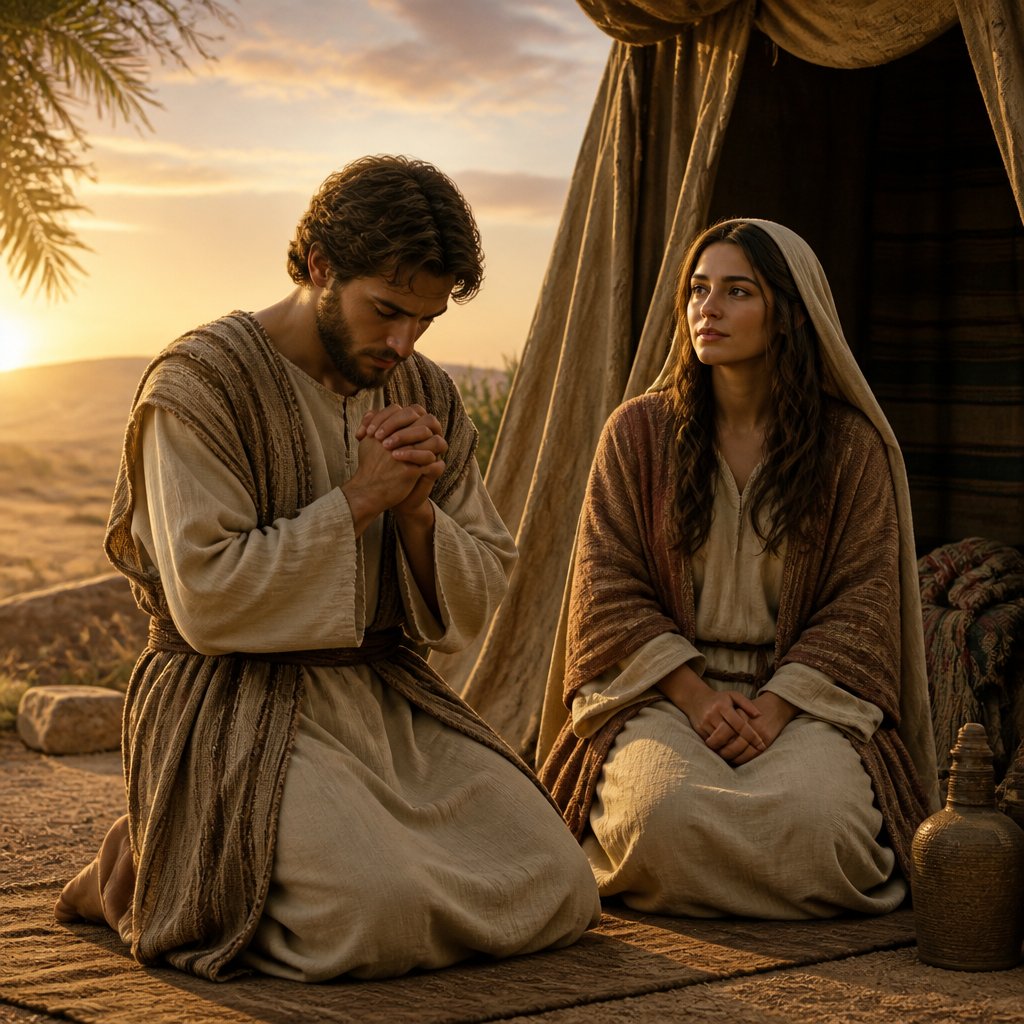
Genesis 25:21 (KJV) reads: "And Isaac intreated the Lord for his wife, because she was barren: and the Lord was intreated of him, and Rebekah his wife conceived."
This verse is a pivotal moment in the story of Isaac and Rebekah. The theme of faith and prayer is central to this verse, as it portrays Isaac's deep concern for his wife, who was unable to conceive. The story of Isaac and Rebekah is a profound narrative of God's faithfulness and the power of prayer.
The context of this verse is crucial to understanding its significance. Isaac, the son of Abraham and Sarah, was married to Rebekah. In ancient times, the ability to bear children was of utmost importance, and barrenness was considered a curse. Rebekah's inability to conceive was a cause of great distress for both her and Isaac. In their culture, having children was a sign of God's favor and blessing, and it was essential for the continuation of the family line.
Isaac's response to this situation is illuminating. Instead of seeking solutions through worldly means, Isaac turns to the Lord in prayer. This act demonstrates his deep faith and trust in God's ability to intervene in their circumstances. It also reveals his dependence on God for the fulfillment of his desires. Isaac's intercession for his wife is a powerful example of how husbands are called to love and support their wives, even in times of hardship.
The verse emphasizes the role of prayer in seeking God's intervention. Isaac's earnest and heartfelt prayer is shown to be effective, as the Lord hears his supplication and grants his request. This underscores the importance of persistent and fervent prayer in the face of difficulties. It is a reminder that God is attentive to the cries of His people and is responsive to their needs.
The miraculous conception of Rebekah is symbolic of God's sovereignty and power. It demonstrates His ability to overcome seemingly insurmountable obstacles and bring about His divine purposes. The birth of their twin sons, Esau and Jacob, is a testament to God's faithfulness in fulfilling His promises. It also establishes the continuation of the lineage of Abraham, through whom God had made a covenant to bless all nations.
Furthermore, this verse foreshadows the future struggles and conflicts that would arise within the family. The rivalry between Esau and Jacob, as well as the tension between Rebekah and her sons, is hinted at in this passage. It serves as a reminder of the complexities within human relationships and the consequences of human actions.
In conclusion, Genesis 25:21 (KJV) is a poignant example of the power of prayer, the faithfulness of God, and the complexities of human relationships. It invites readers to reflect on the significance of trusting in God's sovereignty and seeking His intervention through prayer. The verse also sets the stage for the unfolding of the larger narrative of God's redemptive plan for humanity. It is a timeless reminder of the enduring themes of faith, family, and divine providence that are woven throughout the biblical narrative.
Get our apps


Artwork for Genesis 25:21

Genesis 25:21 - "And Isaac intreated the LORD for his wife, because she was barren: and the LORD was intreated of him, and Rebekah his wife conceived."

"And Isaac intreated the LORD for his wife, because she was barren: and the LORD was intreated of him, and Rebekah his wife conceived." - Genesis 25:21

Genesis 21-25

Genesis 21:25

Genesis 21:25

Genesis 21:25 - "And Abraham reproved Abimelech because of a well of water, which Abimelech's servants had violently taken away."

Genesis 25:25

"And Abraham reproved Abimelech because of a well of water, which Abimelech's servants had violently taken away." - Genesis 21:25

Genesis 21-21

Genesis 1:1-25

Matthew 25:21

Matthew 25:21

Genesis 1:1-25

Genesis 1:1-25

John 21:25

Matthew 21:25

Genesis 25-2

Genesis 25-18

Genesis 25-24

Genesis 25-7

Genesis 25-23

Genesis 25-14

Genesis 26:25

Genesis 50:25

Genesis 25:1

Genesis 25-15

Genesis 25-26

Genesis 25-13

Genesis 50:25

Genesis 25-32