What does Genesis 25:32 mean?
“And Esau said, Behold, I am at the point to die: and what profit shall this birthright do to me?” — Genesis 25:32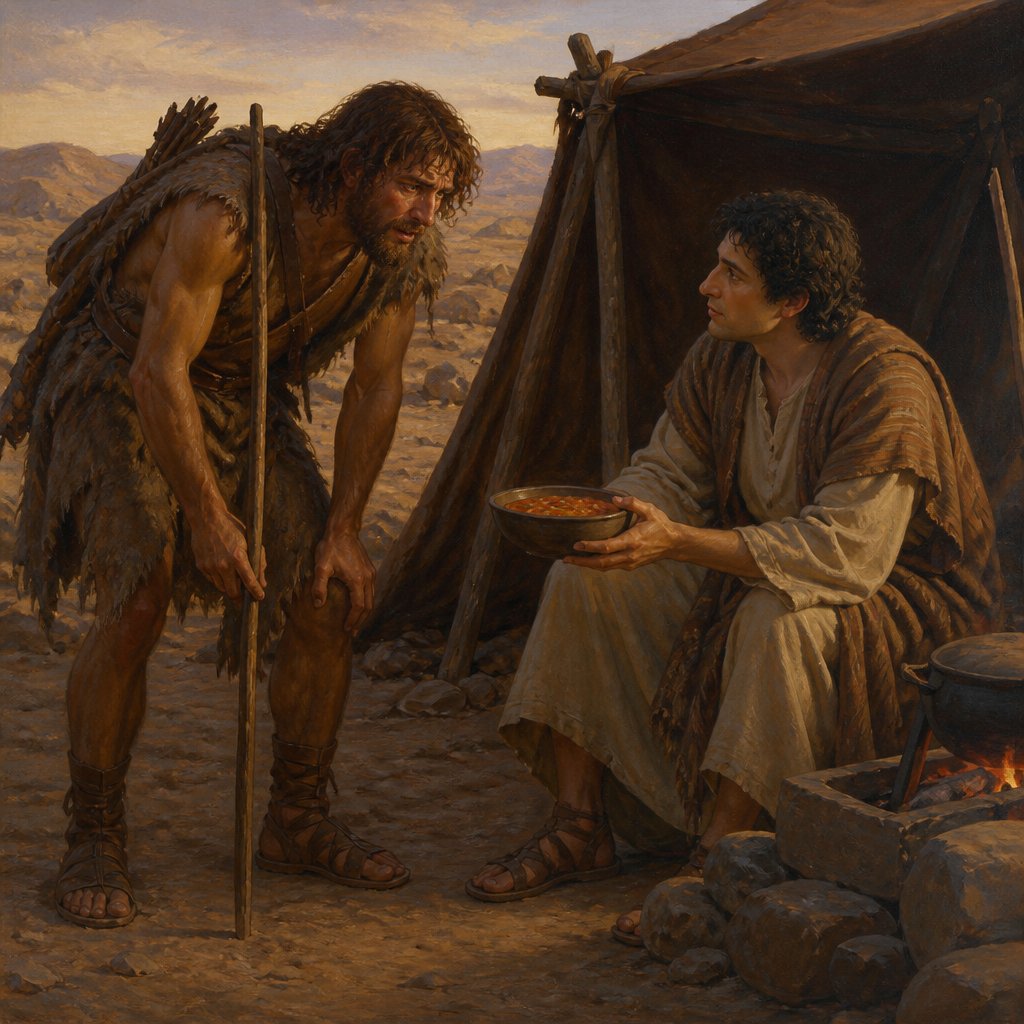
Genesis 25:32 (KJV) says, "And Esau said, Behold, I am at the point to die: and what profit shall this birthright do to me?"
This verse presents a significant moment in the biblical narrative, as it delves into the moral and ethical choices made by the characters, which have broader implications on their lives and the generations to come. The biblical passage is part of the story of Esau and Jacob, the twin sons of Isaac and Rebekah, who were the grandsons of Abraham.
At the heart of this verse is the issue of birthright, a concept that held great significance in ancient Hebrew culture. According to tradition, the birthright was the privilege given to the firstborn son, which included a double portion of the inheritance and the leadership role within the family. In this context, Esau, being the firstborn, possessed the birthright.
When Esau exclaims, "Behold, I am at the point to die," he is referring to his extreme hunger after returning from a hunting trip. This statement captures the immediacy and desperation of his physical condition. Esau is expressing his belief that his life is in imminent danger due to starvation, and he is willing to sacrifice his birthright in exchange for food.
The passage highlights Esau's shortsightedness and impulsiveness. Instead of valuing the long-term benefits and responsibilities associated with the birthright, he is solely focused on the immediate gratification of his physical needs. This impulsive decision ultimately leads to a pivotal moment in the biblical narrative, as Jacob takes advantage of Esau's vulnerability and persuades him to sell his birthright for a bowl of stew.
The themes of greed, impulsive behavior, and the consequences of one's choices are powerfully portrayed in this passage. Esau's actions serve as a cautionary tale, warning against the temptations of instant gratification and the importance of considering the long-term implications of one's decisions. The narrative also touches on the issue of justice, as Esau's recklessness leads to a profound sense of injustice, even though he willingly chose to relinquish his birthright.
Furthermore, the passage underscores the disparity between the physical and spiritual realms. While Esau is preoccupied with satisfying his physical hunger, he neglects the spiritual and sacred value of the birthright. This dichotomy serves as a reminder of the deeper significance of the birthright within the context of God's covenant and the divine plan for the future of the descendants of Abraham.
Symbolically, the sale of the birthright represents the exchange of the spiritual for the material, highlighting the transient nature of earthly possessions compared to the eternal promises of God. Esau's willingness to trade his birthright for a fleeting moment of gratification reveals the frailty of human desires and the potential for spiritual blindness in pursuing worldly pursuits.
The broader context of the Bible underscores the enduring consequences of Esau's decision. The repercussions of his impulsive choice reverberate throughout the biblical narrative, shaping the destinies of his descendants and setting the stage for the ongoing conflict between the descendants of Esau and Jacob.
In conclusion, Genesis 25:32 sheds light on the profound moral and ethical implications of Esau's decision to sell his birthright. The passage serves as a cautionary tale, emphasizing the importance of discernment, self-control, and the long-term consequences of one's choices. It also underscores the themes of justice, the disparity between the physical and spiritual realms, and the enduring consequences of impulsive behavior. The symbolism of the birthright as a spiritual inheritance further enriches the narrative, highlighting the eternal significance of God's promises in contrast to the fleeting allure of worldly desires.
Get our apps


Artwork for Genesis 25:32

Genesis 25-32

Genesis 25:32 - "And Esau said, Behold, I am at the point to die: and what profit shall this birthright do to me?"
"And Esau said, Behold, I am at the point to die: and what profit shall this birthright do to me?" - Genesis 25:32

Genesis 32:25 - "And when he saw that he prevailed not against him, he touched the hollow of his thigh; and the hollow of Jacob's thigh was out of joint, as he wrestled with him."

Romans 11:25-32

Genesis 25:25

Genesis 19-32

Genesis 27:32

Genesis 24-32

Genesis 18-32
Genesis 21-32

Genesis 1:1-25

Genesis 1:1-25

Genesis 1:1-25

Leviticus 25:32 - "Notwithstanding the cities of the Levites, and the houses of the cities of their possession, may the Levites redeem at any time."

Genesis 49:32 - "The purchase of the field and of the cave that is therein was from the children of Heth."

Genesis 25-18

Genesis 25-24

Genesis 25-2

Genesis 25-7

Genesis 25-23

Genesis 25-14

Genesis 50:25

Genesis 25:1

Genesis 26:25

Genesis 25-15

Genesis 21:25

Genesis 25-13

Genesis 25-26

Genesis 50:25