What does Genesis 25:34 mean?
“Then Jacob gave Esau bread and pottage of lentiles; and he did eat and drink, and rose up, and went his way: thus Esau despised his birthright.” — Genesis 25:34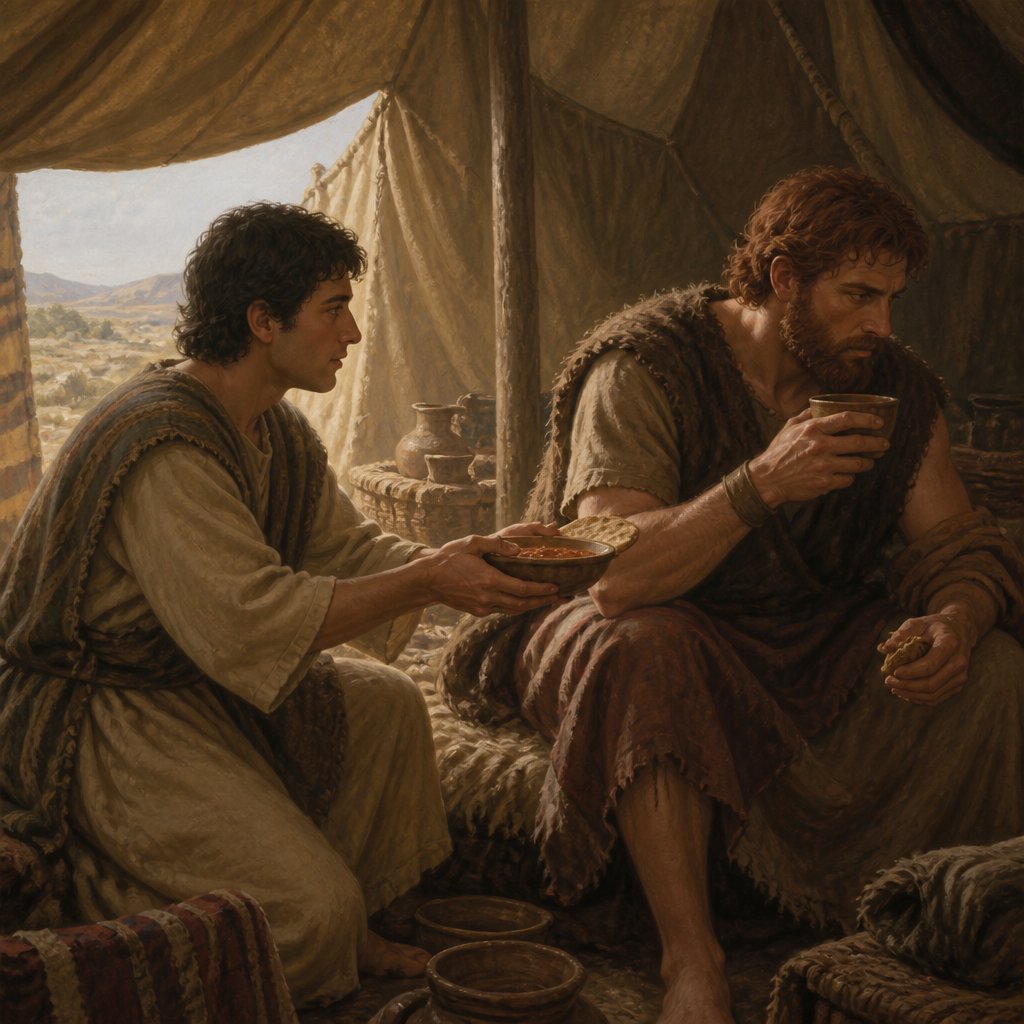
Genesis 25:34 in the King James Version (KJV) of the Bible reads, "Then Jacob gave Esau bread and pottage of lentils; and he did eat and drink, and rose up, and went his way: thus Esau despised his birthright."
This verse is part of the story of Esau and Jacob, twin brothers who were the sons of Isaac and Rebekah. Esau was the firstborn, and as such, he was entitled to receive the birthright, which was a double portion of the inheritance and the spiritual leadership of the family. However, this verse describes the moment when Esau traded his birthright for a single meal of bread and lentil stew that Jacob had made. This decision ultimately led to a significant conflict between the brothers and had lasting implications for their relationship and the future of their family.
The theme of the birthright is central to this verse. In ancient Near Eastern culture, the birthright was a powerful and valuable inheritance that carried significant rights and responsibilities. It was a privilege that was typically given to the firstborn son as a symbol of his status within the family. By giving up his birthright for a simple meal, Esau demonstrated his lack of appreciation for the significance and value of his position as the firstborn. This act of impulsivity and short-sightedness had profound consequences for Esau and his descendants.
The context of this verse is important for understanding its significance. In the preceding verses, Esau returns from hunting and is famished. He demands that Jacob give him some of the stew that he had made. Jacob seizes the opportunity to negotiate with his brother and offers to give him the stew in exchange for his birthright. Esau, driven by his immediate physical needs, agrees to the deal without considering the long-term consequences of his actions. This exchange reflects the tension and rivalry that existed between the two brothers, as well as the differences in their personalities and priorities.
Symbolism plays a key role in the interpretation of this verse. The lentil stew that Jacob prepares serves as a symbol of the temporary and fleeting nature of worldly pleasures. Esau's willingness to trade something as significant as his birthright for a momentary satisfaction highlights the contrast between spiritual and material values. This episode also symbolizes the theme of divine sovereignty and the fulfillment of God's plan, as the consequences of this exchange set the stage for the future struggles and conflicts within the family of Isaac and Rebekah.
Furthermore, the actions of Esau and Jacob in this passage foreshadow their respective destinies. Esau's decision to despise his birthright reflects a lack of spiritual discernment and a disregard for the divine blessings of his heritage. In contrast, Jacob's cunning and opportunistic behavior sets the stage for his eventual role as the ancestor of the twelve tribes of Israel and the recipient of God's covenant promises. The interplay of human agency and divine providence is a recurring theme throughout the book of Genesis, and this passage serves as an early example of how God works through the actions and choices of individuals to accomplish His purposes.
In conclusion, Genesis 25:34 is a verse with profound implications for the themes of family dynamics, inheritance, and divine providence. It provides insight into the character of Esau and Jacob, as well as the complexities of their relationship. The significance of the birthright as a symbol of spiritual and material blessings is underscored, and the consequences of Esau's impulsive decision reverberate throughout the narrative of the book of Genesis. This verse serves as a cautionary tale about the importance of discernment, wisdom, and a long-term perspective when making decisions that have far-reaching implications.
Get our apps


Artwork for Genesis 25:34

Genesis 25:34 - "Then Jacob gave Esau bread and pottage of lentiles; and he did eat and drink, and rose up, and went his way: thus Esau despised his birthright."
"Then Jacob gave Esau bread and pottage of lentiles; and he did eat and drink, and rose up, and went his way: thus Esau despised his birthright." - Genesis 25:34

Genesis 34:25 - "¶ And it came to pass on the third day, when they were sore, that two of the sons of Jacob, Simeon and Levi, Dinah's brethren, took each man his sword, and came upon the city boldly, and slew all the males."

Matthew 6:25 – 34

Genesis 21-34

Genesis 19-34

Genesis 24-34

Genesis 25:25

Leviticus 25:34 - "But the field of the suburbs of their cities may not be sold; for it is their perpetual possession."

Numbers 34:25 - "And the prince of the tribe of the children of Zebulun, Elizaphan the son of Parnach."

Job 34:25 - "Therefore he knoweth their works, and he overturneth them in the night, so that they are destroyed."

Genesis 21:34 - "And Abraham sojourned in the Philistines' land many days."

Genesis 24:34 - "And he said, I am Abraham's servant."

Genesis 34:18 - "And their words pleased Hamor, and Shechem Hamor's son."

Exodus 25:34 - "And in the candlestick shall be four bowls made like unto almonds, with their knops and their flowers."

Genesis 1:1-25

Genesis 1:1-25

Genesis 1:1-25

Genesis 34:31 - "And they said, Should he deal with our sister as with an harlot?"

Genesis 36:34 - "And Jobab died, and Husham of the land of Temani reigned in his stead."

Genesis 34:28 - "They took their sheep, and their oxen, and their asses, and that which was in the city, and that which was in the field,"

Genesis 25-2

Genesis 25-18

Genesis 25-24

Genesis 25-7

Genesis 25-23

Genesis 25-14

Genesis 26:25

Genesis 50:25

Genesis 25:1