What does Genesis 27:24 mean?
“And he said, Art thou my very son Esau? And he said, I am.” — Genesis 27:24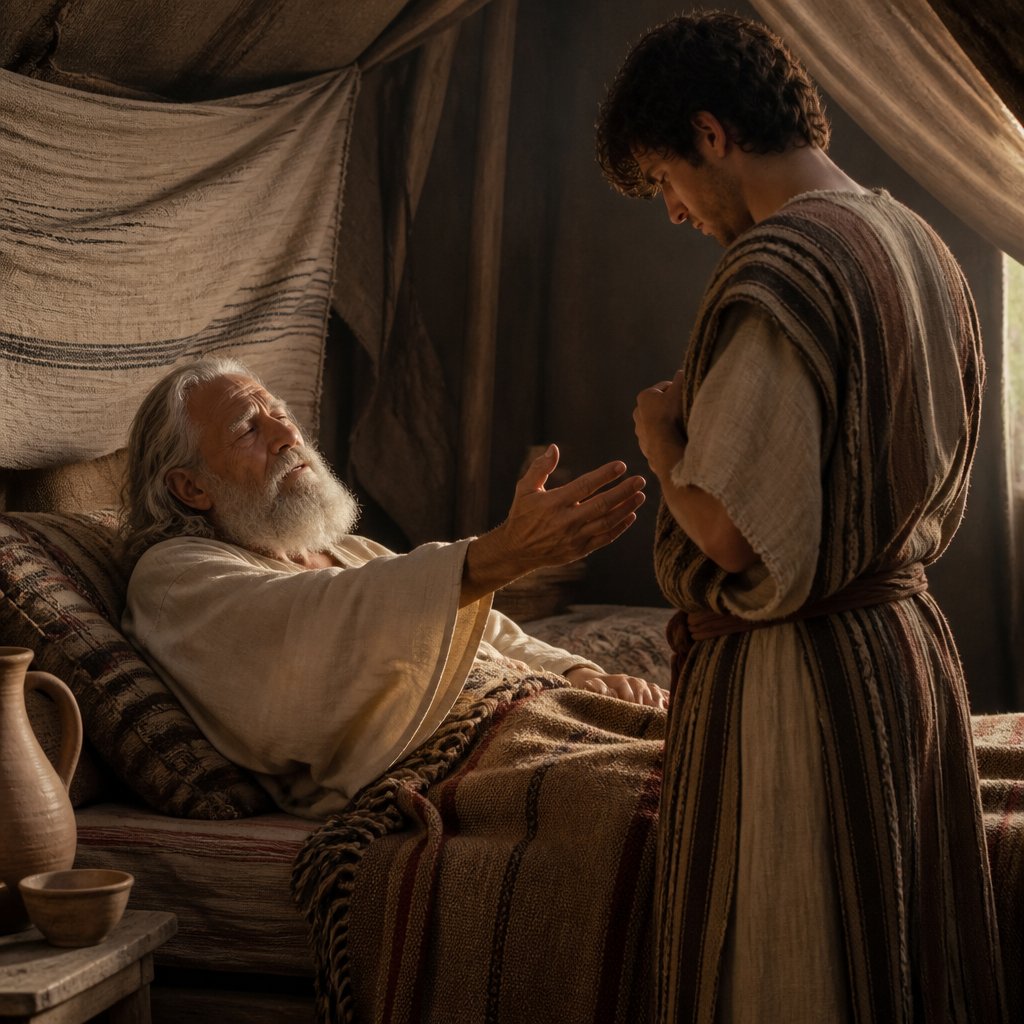
Genesis 27:24 (KJV): "And he said, Art thou my very son Esau? And he said, I am."
This verse is a part of the story of Jacob and Esau, two brothers who struggled with sibling rivalry and deceit. The entire passage spans from Genesis 27:18-29, and it tells the story of how Jacob, with the help of his mother Rebekah, deceived his blind and elderly father, Isaac, into giving him the blessing that rightfully belonged to Esau, the elder brother.
The context of this verse is crucial for understanding its significance. Esau, a skilled hunter, was the favorite son of his father Isaac, while Jacob was the favorite son of Rebekah. In Genesis 27, Rebekah devises a plan to deceive Isaac into giving the blessing to Jacob by disguising him as Esau. Isaac's poor eyesight prevents him from recognizing Jacob, and he is deceived into granting Jacob the blessing. This act of deception is a crucial turning point in the relationship between the two brothers, leading to a deep-seated animosity that reverberates throughout the biblical narrative.
The meaning of this verse is multi-layered and speaks to several significant themes. Firstly, it highlights the themes of deception and betrayal. Jacob's deceitful actions in claiming to be Esau to receive the blessing of his father are a violation of trust and integrity. This theme of betrayal sets the stage for the subsequent conflict between the two brothers and the consequences of their actions.
Secondly, the verse brings to light the theme of identity and self-identity. Jacob's willingness to deceive his father by impersonating his brother raises questions about his own sense of self and the lengths to which he is willing to go to fulfill his desires. The question "Art thou my very son Esau?" reflects the uncertainty and questioning of identity that underlies the entire deception. It prompts the reader to consider the implications of such a blatant misrepresentation, both for Jacob personally and for the broader narrative of the Bible.
The symbolism in this verse is also significant. The act of Jacob disguising himself as Esau carries symbolic meaning beyond the immediate narrative. It reflects a broader theme of coveting another's identity or blessings, and the lengths to which individuals may go to attain what they desire. This act of impersonation serves as a cautionary tale, underscoring the moral and ethical implications of striving for what is not rightfully ours.
Furthermore, this verse reflects the larger biblical theme of the consequences of sin. Jacob's deceitful actions have far-reaching consequences that reverberate throughout his life and relationships. The deception sets in motion a cycle of conflict, loss, and estrangement between the brothers, ultimately shaping the course of their lives and the destiny of their descendants.
In conclusion, Genesis 27:24 is a pivotal verse in the story of Jacob and Esau, resonating with profound themes of deception, betrayal, identity, and the consequences of sin. Its nuanced meaning and symbolism invite readers to reflect on the moral and ethical implications of the characters' actions, while also pointing to the broader narrative of the Bible and its timeless teachings.
Get our apps


Artwork for Genesis 27:24
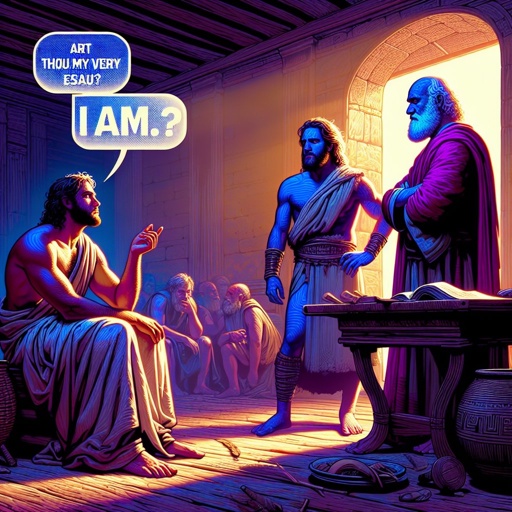
Genesis 27:24 - "And he said, Art thou my very son Esau? And he said, I am."
"And he said, Art thou my very son Esau? And he said, I am." - Genesis 27:24

Genesis 24-27
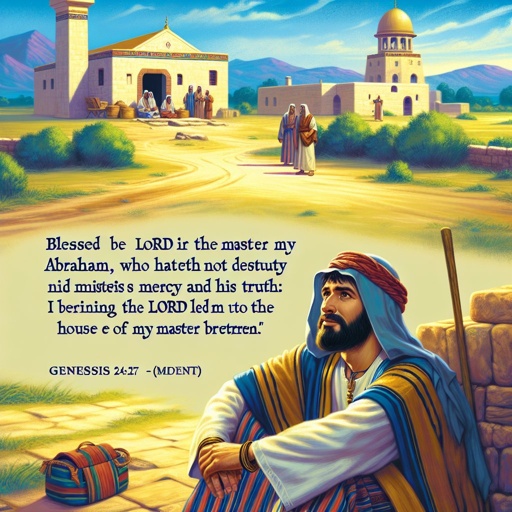
Genesis 24:27 - "And he said, Blessed be the LORD God of my master Abraham, who hath not left destitute my master of his mercy and his truth: I being in the way, the LORD led me to the house of my master's brethren."

Genesis 24:24

Galatians 4:24-27

Matthew 24:27

Matthew 7:24-27

Genesis 27:5

Genesis 27:32

Genesis 25-27

Genesis 17-27

Genesis 18-27

Genesis 21-27

Genesis 19-27

Genesis 10:27 - "And Hadoram, and Uzal, and Diklah,"

Genesis 27:10 KJV

Genesis 27:18-19

Genesis 24-21

Genesis 25-24

Genesis 24-41

Genesis 24-61

Genesis 24:36

Genesis 24-54

Genesis 24-50

Genesis 24:60

Genesis 24-62

Genesis 24-7

Genesis 24-26

Genesis 24-55