What does Genesis 28:7 mean?
“And that Jacob obeyed his father and his mother, and was gone to Padan-aram;” — Genesis 28:7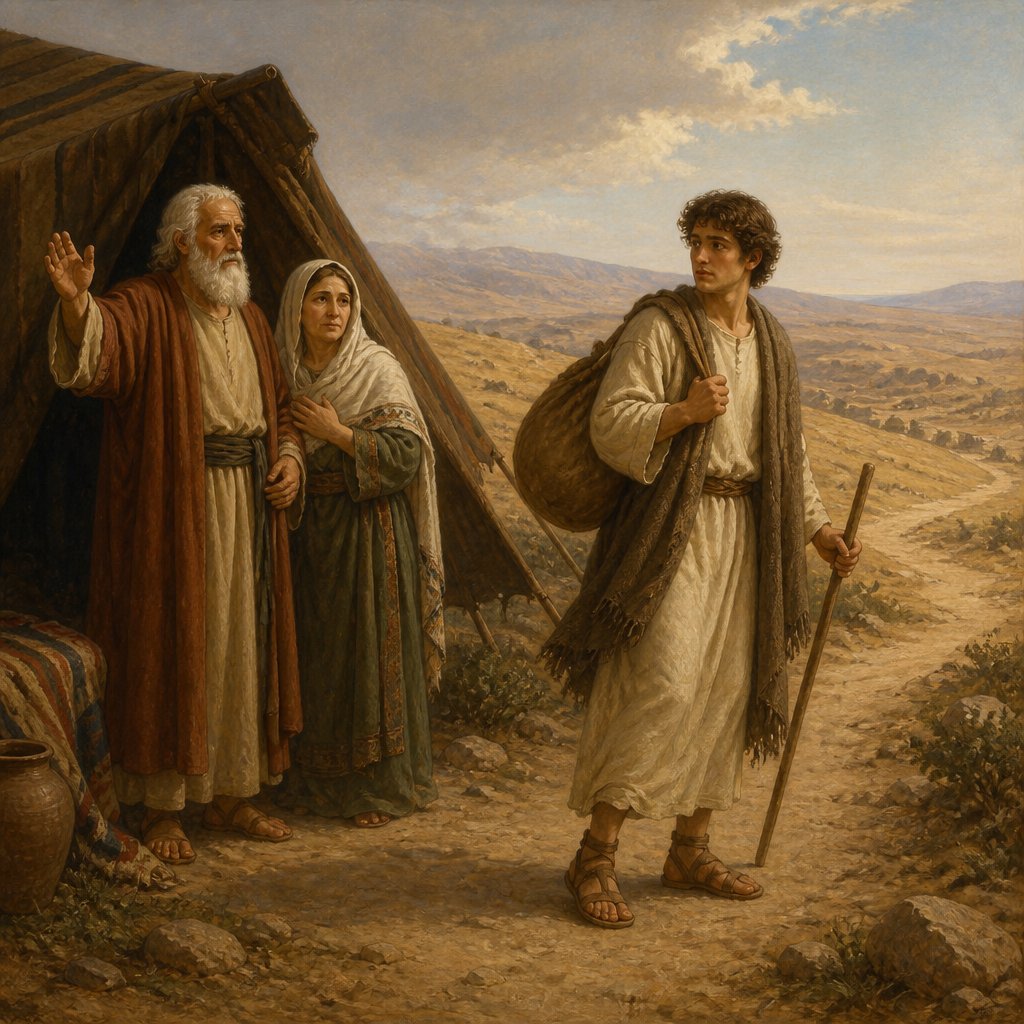
Genesis 28:7 in the King James Version (KJV) of the Bible states: "And that Jacob obeyed his father and his mother, and was gone to Padanaram."
This verse is part of the larger narrative of Jacob's journey to find a wife, as he is sent by his parents to find a wife from their own kin. This verse highlights the obedience of Jacob to his parents, a quality that was highly valued in ancient Hebrew culture.
The story of Jacob obeying his parents and journeying to Padanaram holds several important themes and lessons that are still relevant today. One of the key themes in this passage is the importance of honoring and obeying one's parents. In the Ten Commandments, found in Exodus 20, one of the commands is to "honor thy father and thy mother" (Exodus 20:12). Jacob's obedience to his parents in this verse reinforces the importance of honoring and obeying one's parents, a principle that is reiterated throughout the Bible.
Additionally, this verse also emphasizes the importance of family and the role of family in making important life decisions. In ancient Hebrew culture, the role of the family in arranging marriages and guiding the future of their children was crucial. Jacob's journey to Padanaram to find a wife is a clear example of the influence and guidance of his parents in his life. This can be seen as a reminder of the importance of seeking the counsel and guidance of family members in making important decisions.
Furthermore, this verse also reflects the theme of obedience to God's will. Jacob's obedience to his parents can be seen as being rooted in his obedience to God. In the broader context of the story of Jacob, his journey to Padanaram is part of God's plan for his life. This journey eventually leads to Jacob encountering God in a powerful way and receiving a divine promise and blessing (Genesis 28:10-22). Therefore, Jacob's obedience to his parents can be seen as a response to God's leading and guidance in his life.
The context of this verse is also significant as it is part of the larger narrative of Jacob's life and journey. Jacob, the son of Isaac and grandson of Abraham, plays a crucial role in the biblical narrative as one of the patriarchs of the Israelite nation. His journey to Padanaram marks a pivotal point in his life, leading to significant events and encounters with God.
Symbolically, Jacob's journey to Padanaram can be seen as a metaphor for the journey of faith. Just as Jacob embarked on a physical journey to find a wife, believers are also on a spiritual journey in seeking God's will and purpose for their lives. Jacob's obedience and faithfulness in this journey serve as an example for believers to follow in their own spiritual journey.
In conclusion, Genesis 28:7 from the King James Version of the Bible holds important themes of obedience to parents, the importance of family, and obedience to God's will. It serves as a reminder for believers to honor and obey their parents, seek the guidance of family in making important decisions, and to trust in God's leading in their journey of faith. This verse also highlights the significance of Jacob's journey in the broader context of his life and the biblical narrative, and symbolically represents the believer's spiritual journey in seeking God's will.
Get our apps


Artwork for Genesis 28:7

Genesis 28:7 - "And that Jacob obeyed his father and his mother, and was gone to Padan-aram;"

Genesis 28:7 KJV And that Jacob obeyed his father and his mother, and was gone to Padan–aram;

Genesis 28:7 KJV And that Jacob obeyed his father and his mother, and was gone to Padan–aram;
"And that Jacob obeyed his father and his mother, and was gone to Padan-aram;" - Genesis 28:7

Genesis 28-15

Genesis 28-12

Genesis 28-16

Genesis 28-21

Genesis 28-22

Genesis 28-17

Genesis 21:28

Genesis 28:18

Genesis 24:28

Genesis 28:18

Genesis 28-20

Genesis 28-13

Genesis 28-19

Genesis 28-14

Genesis 28-11

Genesis 19-28

Genesis 28:10

Genesis 18-28

Genesis 10:28 - "And Obal, and Abimael, and Sheba,"

Genesis 36:28 - "The children of Dishan are these; Uz, and Aran."

Genesis 35:28 - "And the days of Isaac were an hundred and fourscore years."

Genesis 21:28 - "And Abraham set seven ewe lambs of the flock by themselves."

"And Obal, and Abimael, and Sheba," - Genesis 10:28

Genesis 5:28 - "¶ And Lamech lived an hundred eighty and two years, and begat a son:"

Genesis 30:28 - "And he said, Appoint me thy wages, and I will give it."

1 Samuel 28:7