What does Genesis 31:14 mean?
“And Rachel and Leah answered and said unto him, Is there yet any portion or inheritance for us in our father’s house?” — Genesis 31:14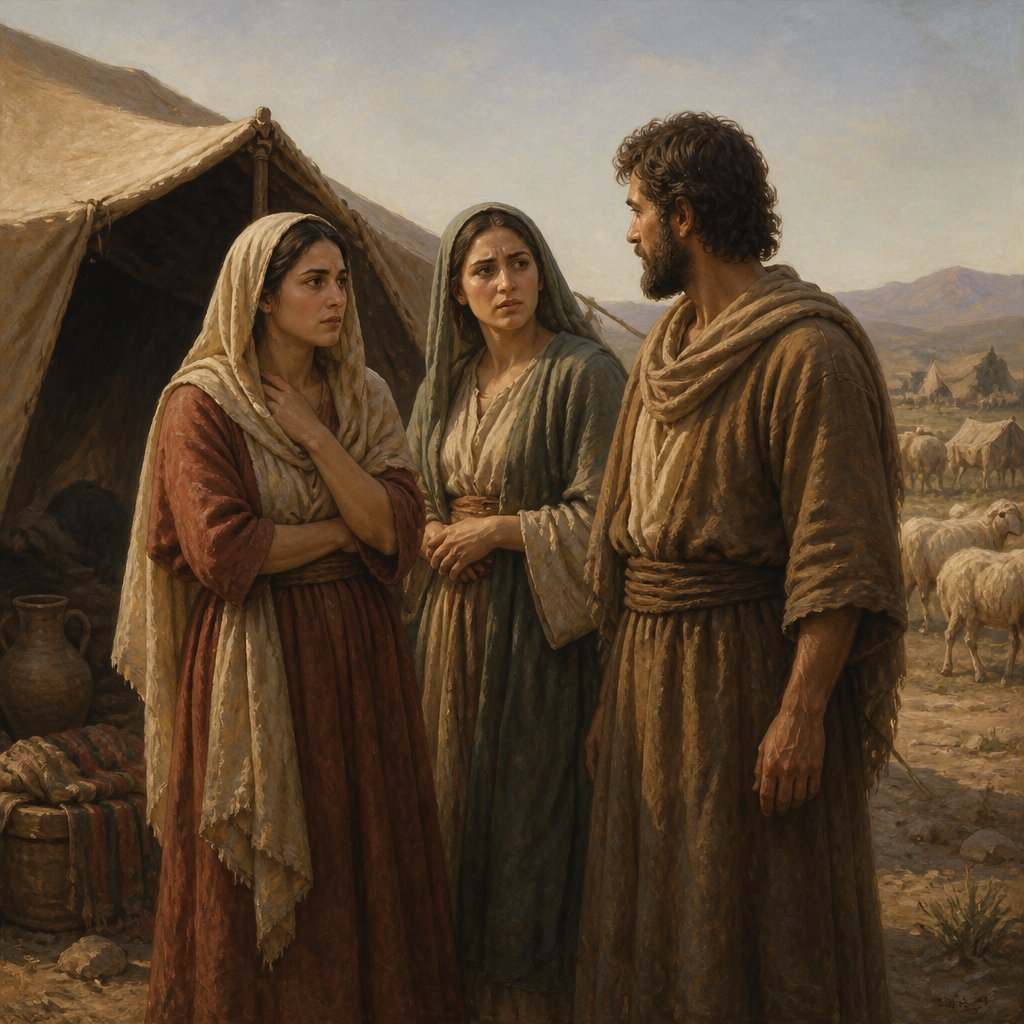
Genesis 31:14 (KJV) states, "And Rachel and Leah answered and said unto him, Is there yet any portion or inheritance for us in our father's house?" This verse is part of the larger narrative about Jacob's departure from his father-in-law Laban's house with his wives, children, and livestock. In this verse, Rachel and Leah express their concern about their future inheritance and security as they prepare to leave their father's house.
In order to fully understand the significance of this verse, it is important to consider the context in which it appears. Jacob had been working for his father-in-law, Laban, for twenty years, during which time he had married Laban's daughters, Rachel and Leah, and built up a substantial flock of livestock. However, tensions between Jacob and Laban had been growing, and Jacob decided to take his family and belongings and leave without informing Laban. In the verses leading up to Genesis 31:14, Jacob had already set out on his journey with his family and possessions, and Laban had pursued him, leading to a confrontation between the two men.
As Rachel and Leah confront Jacob with the question of their portion or inheritance in their father's house, they are expressing their concern about their future security and status. In the patriarchal society of ancient Israel, women were often dependent on their male relatives for their economic and social well-being. Rachel and Leah's question reveals their awareness of their vulnerable position as they prepare to leave behind the protection and resources of their father's household.
The theme of inheritance is significant in this verse, as it reflects the broader biblical theme of God's covenant and the promise of inheritance for his chosen people. In the Old Testament, inheritance was not only a matter of material possessions but also carried spiritual and theological significance. The concept of inheritance is closely tied to the promises of God, particularly in relation to the land of Canaan and the covenant with Abraham and his descendants.
Furthermore, the question posed by Rachel and Leah also highlights the broader theme of social justice and the rights of women. In a society where women's rights and autonomy were often limited, their concern about their inheritance reflects their desire for security and a share in the family's resources. Their question serves as a reminder of the importance of addressing the rights and well-being of marginalized and vulnerable members of society, including women.
The symbolism in this verse is also noteworthy. Rachel and Leah's inquiry about their portion or inheritance can be seen as a symbol of their desire for belonging and security. It also serves as a reminder of the biblical themes of justice, equity, and the importance of caring for the vulnerable members of society.
In conclusion, Genesis 31:14 (KJV) carries important themes of inheritance, justice, and the rights of women, within the larger context of Jacob's departure from his father-in-law's house. Through their question, Rachel and Leah express their concerns about their future security and place in the world. This verse serves as a reminder of the broader biblical themes of God's covenant and the importance of caring for the vulnerable members of society.
Get our apps


Artwork for Genesis 31:14
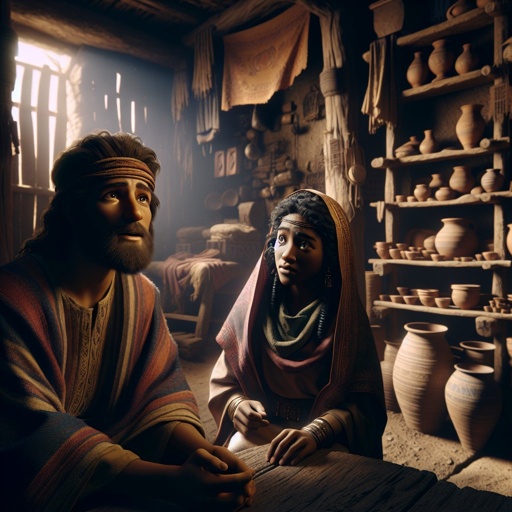
Genesis 31:14 - "And Rachel and Leah answered and said unto him, Is there yet any portion or inheritance for us in our father's house?"
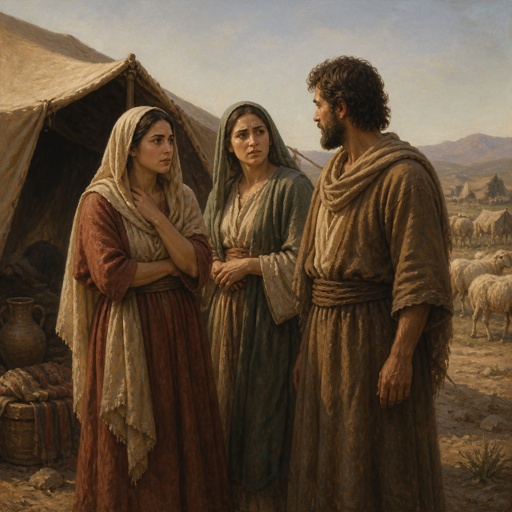
"And Rachel and Leah answered and said unto him, Is there yet any portion or inheritance for us in our father's house?" - Genesis 31:14

Genesis 21-31

Genesis 18-31

Genesis 31:35

Genesis 19-31

Genesis 24-31

Mateo 14:31

numbers 31:14-15

Genesis 31:22 - "And it was told Laban on the third day that Jacob was fled."

Genesis 31:45 - "And Jacob took a stone, and set it up for a pillar."

Genesis 31:47 - "And Laban called it Jegarsahadutha: but Jacob called it Galeed."

Genesis 31:31 - "And Jacob answered and said to Laban, Because I was afraid: for I said, Peradventure thou wouldest take by force thy daughters from me."

Genesis 34:31 - "And they said, Should he deal with our sister as with an harlot?"

Genesis 25:31 - "And Jacob said, Sell me this day thy birthright."

Genesis 31:2 - "And Jacob beheld the countenance of Laban, and, behold, it was not toward him as before."

Genesis 37:31 - "And they took Joseph's coat, and killed a kid of the goats, and dipped the coat in the blood;"

Genesis 31:4 - "And Jacob sent and called Rachel and Leah to the field unto his flock,"

Genesis 42:31 - "And we said unto him, We are true men; we are no spies:"
Genesis 10:31 - "These are the sons of Shem, after their families, after their tongues, in their lands, after their nations."

Genesis 41:31 - "And the plenty shall not be known in the land by reason of that famine following; for it shall be very grievous."

Genesis 21:31 - "Wherefore he called that place Beer-sheba; because there they sware both of them."

Genesis 31:17 - "¶ Then Jacob rose up, and set his sons and his wives upon camels;"

Genesis 31:6 - "And ye know that with all my power I have served your father."

Genesis 31:9 - "Thus God hath taken away the cattle of your father, and given them to me."

Genesis 5:31 - "And all the days of Lamech were seven hundred seventy and seven years: and he died."

Genesis 31:20 - "And Jacob stole away unawares to Laban the Syrian, in that he told him not that he fled."

Genesis 36:31 - "¶ And these are the kings that reigned in the land of Edom, before there reigned any king over the children of Israel."

Genesis 43:31 - "And he washed his face, and went out, and refrained himself, and said, Set on bread."

Genesis 29:31 - "¶ And when the LORD saw that Leah was hated, he opened her womb: but Rachel was barren."