What does Genesis 31:4 mean?
“And Jacob sent and called Rachel and Leah to the field unto his flock,” — Genesis 31:4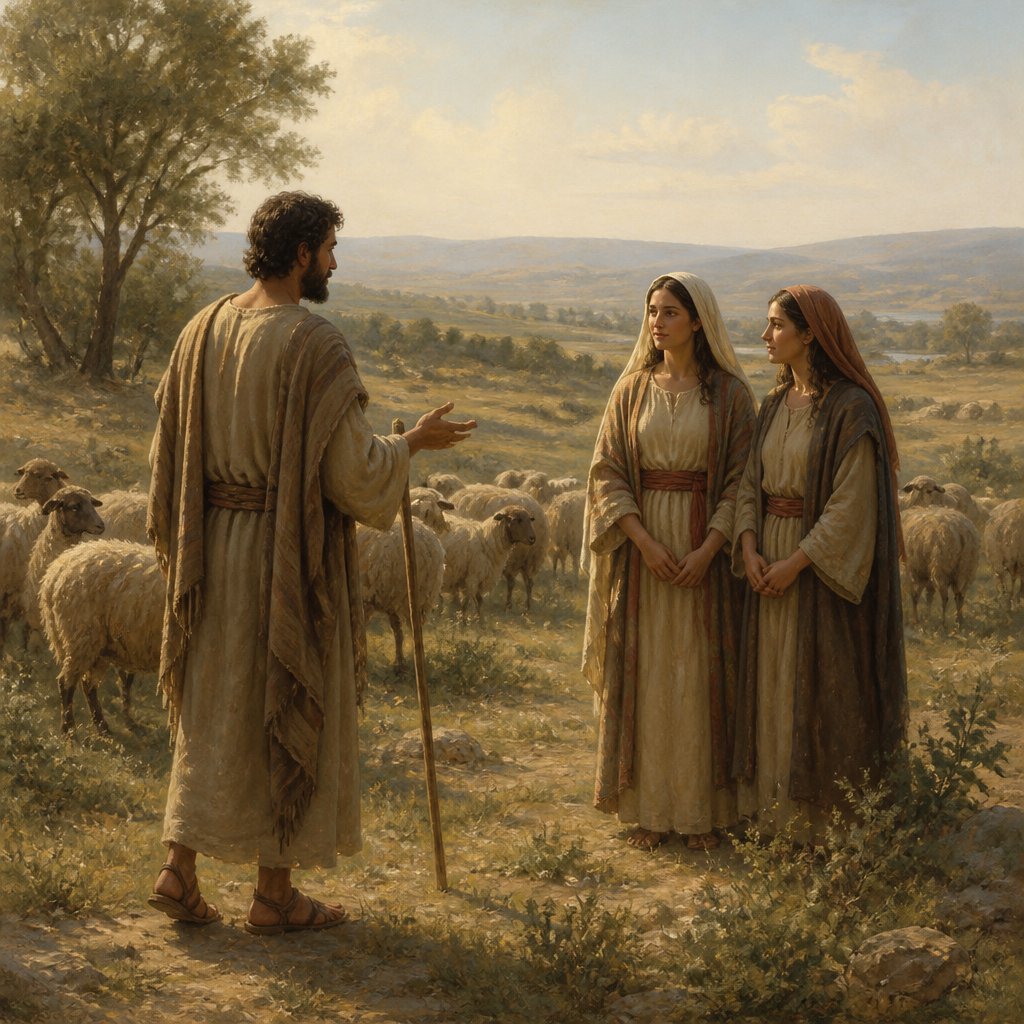
Genesis 31:4 in the King James Version of the Bible reads, "And Jacob sent and called Rachel and Leah to the field unto his flock." This verse takes place in the Old Testament and is part of the story of Jacob and his relationships with his wives, Rachel and Leah.
To truly understand the meaning and significance of this verse, it is important to look at the context in which it appears. Jacob, the son of Isaac and the grandson of Abraham, is the central figure in the narrative. He is known for his tumultuous relationships with his family members, particularly his wives and their children. In the verses leading up to Genesis 31:4, Jacob has come to the realization that it is time for him to leave his father-in-law Laban's household and return to his own land.
The verse specifically mentions Jacob calling Rachel and Leah to the field unto his flock. Jacob’s statement reflects his intention to share with his wives his concerns about returning to Canaan and his desire to seek their input and ultimately gain their support. This highlights the importance of open communication and decision-making within the marriage relationship. Jacob values his wives’ opinions and recognizes the role they play in his life.
Furthermore, this verse depicts Jacob as a caring and responsible leader within his family. Instead of making decisions unilaterally, he seeks the input and involvement of his wives. This serves as a model for healthy and respectful relationships within a family where all members are valued and their voices are heard.
In addition, the field and the flock mentioned in the verse hold symbolic significance. The field represents a place of work and provision, as it is where the flocks graze and where Jacob would have likely spent much of his time caring for the animals. This symbolizes the importance of hard work and responsibility in providing for one’s family. By calling his wives to the field, Jacob is inviting them to participate and be involved in his work, recognizing their importance in the management of the household.
The flock is also symbolic of the family unit. In biblical times, the livestock represented wealth and prosperity, and they were crucial for sustaining a household. By inviting Rachel and Leah to the flock, Jacob is inviting them to be co-partners in the family's enterprise, signifying their shared roles and responsibilities in building a prosperous future together.
One of the overarching themes in this verse is the importance of unity and collaboration within a family. Jacob’s action of including his wives in the decision-making process showcases the value of mutual respect, communication, and partnership in familial relationships. This model of mutual respect and communication is an important lesson for families today, highlighting the significance of listening, engaging in dialogue, and making decisions together as a unit.
Another key theme in this verse is the concept of leadership within the family. Jacob’s actions demonstrate a leadership style that is inclusive, respectful, and considerate. He seeks to involve and consider the opinions of his wives, acknowledging their integral role in the family dynamic. This serves as a reminder of the importance of mutual respect and consideration in family leadership, where decisions are made collectively and with the best interest of the entire family in mind.
In conclusion, Genesis 31:4 captures a significant moment in the story of Jacob, highlighting the value of open communication, unity, and shared responsibility within the family. The verse offers timeless lessons on the importance of mutual respect and consideration in familial relationships, as well as the significance of inclusive and considerate leadership within the family unit. It serves as a reminder of the importance of listening and engaging in dialogue within the family, ultimately contributing to a healthy, respectful, and collaborative family dynamic.
Get our apps


Artwork for Genesis 31:4

Genesis 31:4 - "And Jacob sent and called Rachel and Leah to the field unto his flock,"
"And Jacob sent and called Rachel and Leah to the field unto his flock," - Genesis 31:4

Genesis 21-31

Genesis 18-31

Genesis 31:35

Genesis 19-31

Genesis 24-31

Genesis 31:22 - "And it was told Laban on the third day that Jacob was fled."

Genesis 31:45 - "And Jacob took a stone, and set it up for a pillar."

Genesis 31:47 - "And Laban called it Jegarsahadutha: but Jacob called it Galeed."

Genesis 31:31 - "And Jacob answered and said to Laban, Because I was afraid: for I said, Peradventure thou wouldest take by force thy daughters from me."

Genesis 34:31 - "And they said, Should he deal with our sister as with an harlot?"

Genesis 25:31 - "And Jacob said, Sell me this day thy birthright."

Genesis 31:2 - "And Jacob beheld the countenance of Laban, and, behold, it was not toward him as before."

Genesis 37:31 - "And they took Joseph's coat, and killed a kid of the goats, and dipped the coat in the blood;"

Genesis 42:31 - "And we said unto him, We are true men; we are no spies:"
Genesis 10:31 - "These are the sons of Shem, after their families, after their tongues, in their lands, after their nations."

Genesis 41:31 - "And the plenty shall not be known in the land by reason of that famine following; for it shall be very grievous."

Genesis 21:31 - "Wherefore he called that place Beer-sheba; because there they sware both of them."

Genesis 31:17 - "¶ Then Jacob rose up, and set his sons and his wives upon camels;"

Genesis 31:6 - "And ye know that with all my power I have served your father."

Genesis 31:9 - "Thus God hath taken away the cattle of your father, and given them to me."

Genesis 5:31 - "And all the days of Lamech were seven hundred seventy and seven years: and he died."

Genesis 31:20 - "And Jacob stole away unawares to Laban the Syrian, in that he told him not that he fled."

Genesis 36:31 - "¶ And these are the kings that reigned in the land of Edom, before there reigned any king over the children of Israel."

Genesis 43:31 - "And he washed his face, and went out, and refrained himself, and said, Set on bread."

Genesis 29:31 - "¶ And when the LORD saw that Leah was hated, he opened her womb: but Rachel was barren."

Galatians 4:31 - "So then, brethren, we are not children of the bondwoman, but of the free."

Genesis 31:48 - "And Laban said, This heap is a witness between me and thee this day. Therefore was the name of it called Galeed;"

Genesis 31:19 - "And Laban went to shear his sheep: and Rachel had stolen the images that were her father's."