What does Genesis 31:5 mean?
“And said unto them, I see your father’s countenance, that it is not toward me as before; but the God of my father hath been with me.” — Genesis 31:5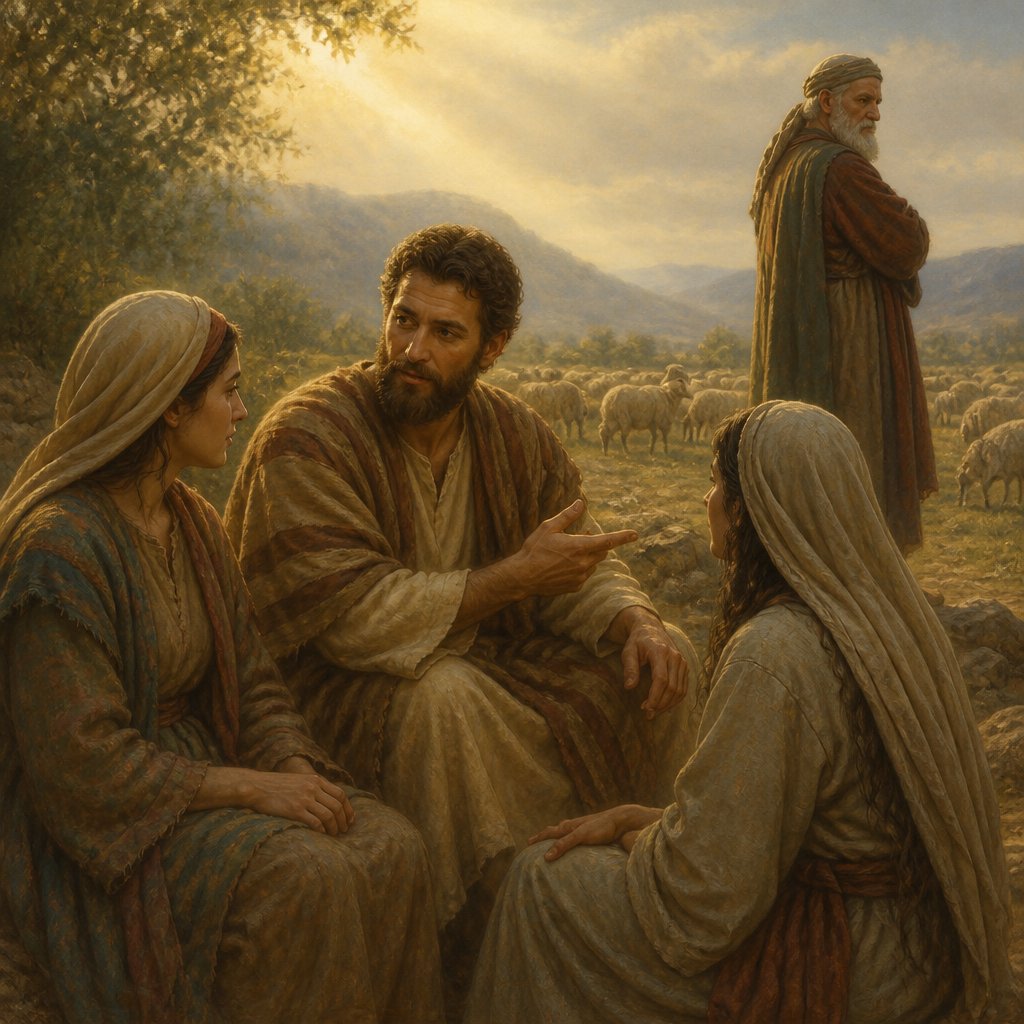
Genesis 31:5 - "And said unto them, I see your father's countenance, that it is not toward me as before; but the God of my father hath been with me."
This verse is part of the story of Jacob in the book of Genesis, and it reflects the tension and conflict that arises within the family. Understanding the context and symbolism behind this verse can provide valuable insights into the themes of faith, family dynamics, and divine guidance.
The patriarch Jacob, also known as Israel, is the central figure in this passage. At this point in the narrative, Jacob has spent many years working for his uncle Laban, and it is clear that relations between them have deteriorated. Jacob's statement to Laban's sons reflects his awareness of the changing attitude of his father-in-law; he perceives that Laban's favor towards him has waned.
This shift in Laban's attitude represents a significant turning point in the story. It signals Jacob's realization that he can no longer rely on Laban's support and must seek guidance and protection elsewhere. In this moment of uncertainty and conflict, Jacob turns to the God of his father for reassurance and guidance.
The theme of family dynamics is central to this verse. Jacob's relationship with Laban is fraught with tension and deception, mirroring the struggles that often arise within families. Sibling rivalry, parental favoritism, and betrayal are all themes that run throughout the book of Genesis, and they are exemplified in the story of Jacob and Laban. As Jacob navigates these complex familial dynamics, he learns to rely on his faith and the guidance of God to navigate the challenges he faces.
This verse also highlights the theme of divine guidance and providence. Throughout the narrative, the presence of God is palpable in Jacob's life. From his dream of the ladder reaching into heaven to his encounters with angels, Jacob's story is marked by divine intervention. In this verse, Jacob acknowledges the faithfulness of the God of his father, recognizing that it is God's presence and favor that has sustained him through his trials and challenges.
The symbolism in this verse is profound. The shifting countenance of Laban represents the fickle nature of human relationships and the instability of earthly support. By contrast, the unwavering presence of the God of his father symbolizes the constancy and reliability of divine guidance. Jacob's acknowledgment of God's presence in his life serves as a reminder that, even in the midst of conflict and uncertainty, the faithful can find comfort and strength in their relationship with God.
In conclusion, Genesis 31:5 portrays Jacob's recognition of the changing dynamics within his family and his subsequent reliance on the God of his father for guidance. The themes of family dynamics, faith, and divine providence are central to this verse, and its symbolism underscores the enduring presence of God amidst the complexities of human relationships. Jacob's journey serves as a reminder that, in times of conflict and uncertainty, the faithful can find solace and direction by turning to the unfailing support of their Creator.
Get our apps


Artwork for Genesis 31:5

Genesis 31:5 - "And said unto them, I see your father's countenance, that it is not toward me as before; but the God of my father hath been with me."
"And said unto them, I see your father's countenance, that it is not toward me as before; but the God of my father hath been with me." - Genesis 31:5

Genesis 5:31 - "And all the days of Lamech were seven hundred seventy and seven years: and he died."
"And all the days of Lamech were seven hundred seventy and seven years: and he died." - Genesis 5:31

Genesis 21-31

Genesis 18-31

Genesis 31:35

Genesis 19-31

Genesis 24-31

Genesis 31:22 - "And it was told Laban on the third day that Jacob was fled."

Genesis 31:45 - "And Jacob took a stone, and set it up for a pillar."

Genesis 31:47 - "And Laban called it Jegarsahadutha: but Jacob called it Galeed."

Genesis 31:31 - "And Jacob answered and said to Laban, Because I was afraid: for I said, Peradventure thou wouldest take by force thy daughters from me."

Genesis 34:31 - "And they said, Should he deal with our sister as with an harlot?"

Genesis 25:31 - "And Jacob said, Sell me this day thy birthright."

Genesis 31:2 - "And Jacob beheld the countenance of Laban, and, behold, it was not toward him as before."

Genesis 37:31 - "And they took Joseph's coat, and killed a kid of the goats, and dipped the coat in the blood;"

Genesis 31:4 - "And Jacob sent and called Rachel and Leah to the field unto his flock,"

Genesis 42:31 - "And we said unto him, We are true men; we are no spies:"
Genesis 10:31 - "These are the sons of Shem, after their families, after their tongues, in their lands, after their nations."

Genesis 41:31 - "And the plenty shall not be known in the land by reason of that famine following; for it shall be very grievous."

Genesis 21:31 - "Wherefore he called that place Beer-sheba; because there they sware both of them."

Genesis 31:17 - "¶ Then Jacob rose up, and set his sons and his wives upon camels;"

Genesis 31:6 - "And ye know that with all my power I have served your father."

Genesis 31:9 - "Thus God hath taken away the cattle of your father, and given them to me."

Genesis 31:20 - "And Jacob stole away unawares to Laban the Syrian, in that he told him not that he fled."

Genesis 36:31 - "¶ And these are the kings that reigned in the land of Edom, before there reigned any king over the children of Israel."

Genesis 43:31 - "And he washed his face, and went out, and refrained himself, and said, Set on bread."

Genesis 29:31 - "¶ And when the LORD saw that Leah was hated, he opened her womb: but Rachel was barren."

John 5:31 - "If I bear witness of myself, my witness is not true."