What does Genesis 31:50 mean?
“If thou shalt afflict my daughters, or if thou shalt take other wives beside my daughters, no man is with us; see, God is witness betwixt me and thee.” — Genesis 31:50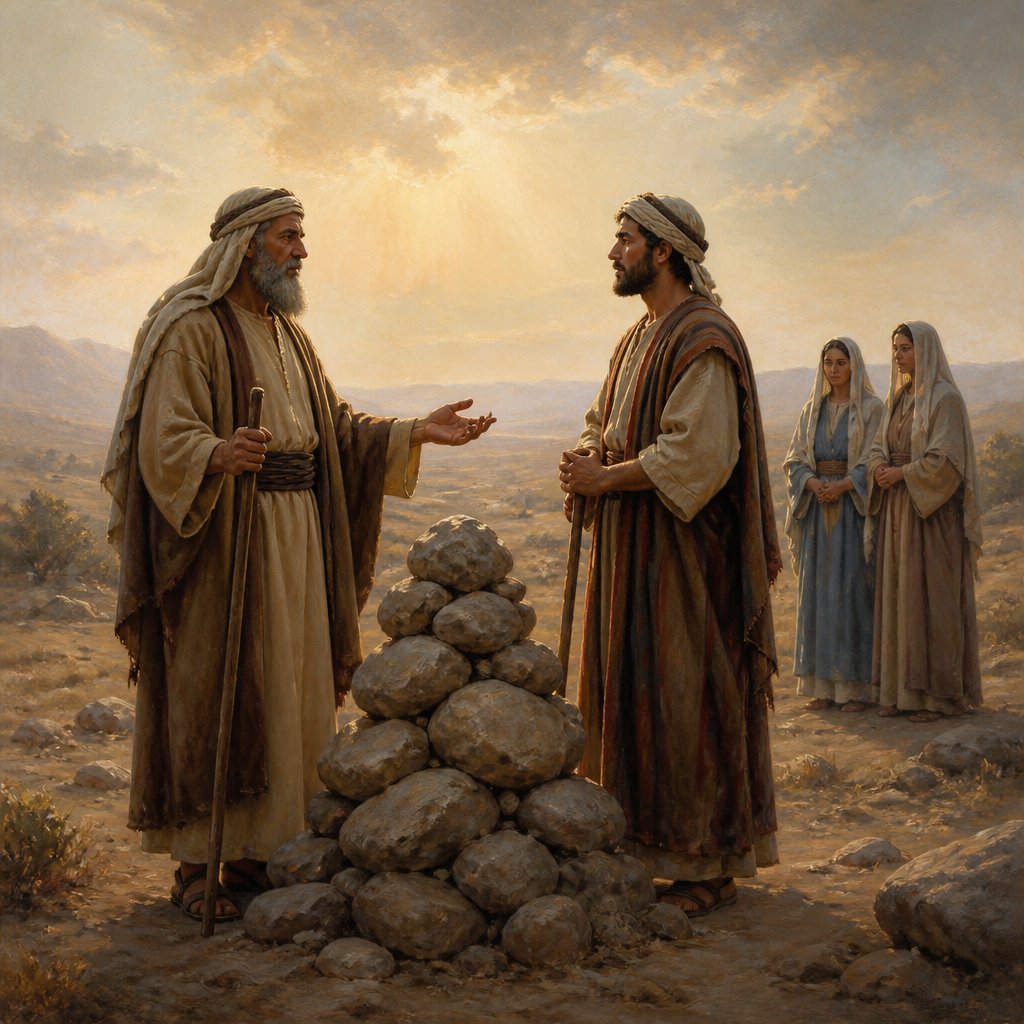
Genesis 31:50 in the King James Version of the Bible states, "If thou shalt afflict my daughters, or if thou shalt take other wives beside my daughters, no man is with us; see, God is witness betwixt me and thee." This verse is found within the larger context of the story of Jacob and Laban and carries important themes of family, relationship dynamics, and the presence of God as a witness to human interactions.
To fully understand the significance of Genesis 31:50, it is important to explore the context in which it is situated. In the preceding chapters of Genesis, we read about Jacob's time with his uncle Laban. Jacob had worked for Laban for many years, primarily in order to marry Laban's daughters, Leah and Rachel. However, Laban had been deceitful and manipulative in his dealings with Jacob, and the relationship between the two men had become strained.
In Genesis 31, Jacob decides to leave Laban's household and return to his own land. Laban catches up with Jacob, and they engage in a confrontation about their grievances with each other. It is in this tense and charged atmosphere that Genesis 31:50 is spoken. Laban is warning Jacob not to mistreat his daughters, or take other wives, and asserts that God is a witness to their agreement.
The first theme that is prominent in this verse is the theme of family. Laban's concern for the well-being of his daughters is evident in his warning to Jacob. This reveals the importance of family relationships and the duty of care and protection that one should have towards family members. Laban's words also reflect the patriarchal nature of ancient society, where women were often seen as the property of their fathers or husbands. In this context, Laban's concern for his daughters' well-being is also a reflection of his own honor and reputation.
The verse also touches upon the theme of relationship dynamics. Both Laban and Jacob are seeking to assert their own rights and interests in this interaction. Laban is concerned about maintaining control over his daughters' lives, while Jacob is seeking to establish his own independence and autonomy. This verse serves as a reminder of the complexities and tensions that can arise in family relationships, particularly in the context of marriage and inheritance.
Furthermore, the concept of God as a witness is central to the meaning of Genesis 31:50. In the ancient near eastern culture, making a covenant or agreement in the presence of a deity was considered binding and sacred. Laban is invoking the presence of God as a way of emphasizing the seriousness of their agreement and as a way of deterring Jacob from mistreating his daughters. This also reflects the theme of divine justice and accountability, as both men are acknowledging God as the ultimate witness and judge of their actions.
In terms of symbolism, the presence of God as a witness serves as a powerful symbol of divine oversight and moral accountability. It underscores the belief that human actions are subject to divine scrutiny and judgment. It also highlights the importance of integrity and fidelity in human relationships, as God stands as a witness to the agreements and interactions between individuals.
In conclusion, Genesis 31:50 from the King James Version of the Bible encapsulates important themes of family, relationship dynamics, and the presence of God as a witness. The verse serves as a reminder of the complexities of familial relationships and the moral and ethical obligations that individuals have towards each other. It also underscores the belief in divine justice and accountability, as God is invoked as the ultimate witness to human interactions. Overall, this verse provides a poignant reflection on the multifaceted nature of human relationships and the significance of moral and spiritual values in guiding our actions.
Get our apps


Artwork for Genesis 31:50

Genesis 31:50 - "If thou shalt afflict my daughters, or if thou shalt take other wives beside my daughters, no man is with us; see, God is witness betwixt me and thee."
"If thou shalt afflict my daughters, or if thou shalt take other wives beside my daughters, no man is with us; see, God is witness betwixt me and thee." - Genesis 31:50

Genesis 24-50

Genesis 50:26

Genesis 50:25

Genesis 50:26

Genesis 50:25

Genesis 50:26

Genesis 50:25

Genesis 50:26

Genesis 50:12 - "And his sons did unto him according as he commanded them:"

Genesis 50:19 - "And Joseph said unto them, Fear not: for am I in the place of God?"

Create a coffin for Joseph Genesis 50:26

Genesis 50:1 - "And Joseph fell upon his father's face, and wept upon him, and kissed him."

Genesis 50:9 - "And there went up with him both chariots and horsemen: and it was a very great company."

Genesis 50:22 - "¶ And Joseph dwelt in Egypt, he, and his father's house: and Joseph lived an hundred and ten years."

Genesis 50:2 - "And Joseph commanded his servants the physicians to embalm his father: and the physicians embalmed Israel."

Genesis 50:6 - "And Pharaoh said, Go up, and bury thy father, according as he made thee swear."

Jeremiah 50:31 - "Behold, I am against thee, O thou most proud, saith the Lord GOD of hosts: for thy day is come, the time that I will visit thee."

Genesis 50:16 - "And they sent a messenger unto Joseph, saying, Thy father did command before he died, saying,"

Genesis 21-31

Genesis 18-31

Genesis 31:35

Genesis 19-31

Genesis 24-31

Genesis 50:18 - "And his brethren also went and fell down before his face; and they said, Behold, we be thy servants."

Genesis 50:26 - "So Joseph died, being an hundred and ten years old: and they embalmed him, and he was put in a coffin in Egypt."

Genesis 50:20 - "But as for you, ye thought evil against me; but God meant it unto good, to bring to pass, as it is this day, to save much people alive."

Genesis 50:3 - "And forty days were fulfilled for him; for so are fulfilled the days of those which are embalmed: and the Egyptians mourned for him threescore and ten days."

Genesis 24:50 - "Then Laban and Bethuel answered and said, The thing proceedeth from the LORD: we cannot speak unto thee bad or good."