What does Genesis 31:33 mean?
“And Laban went into Jacob’s tent, and into Leah’s tent, and into the two maidservants’ tents; but he found them not. Then went he out of Leah’s tent, and entered into Rachel’s tent.” — Genesis 31:33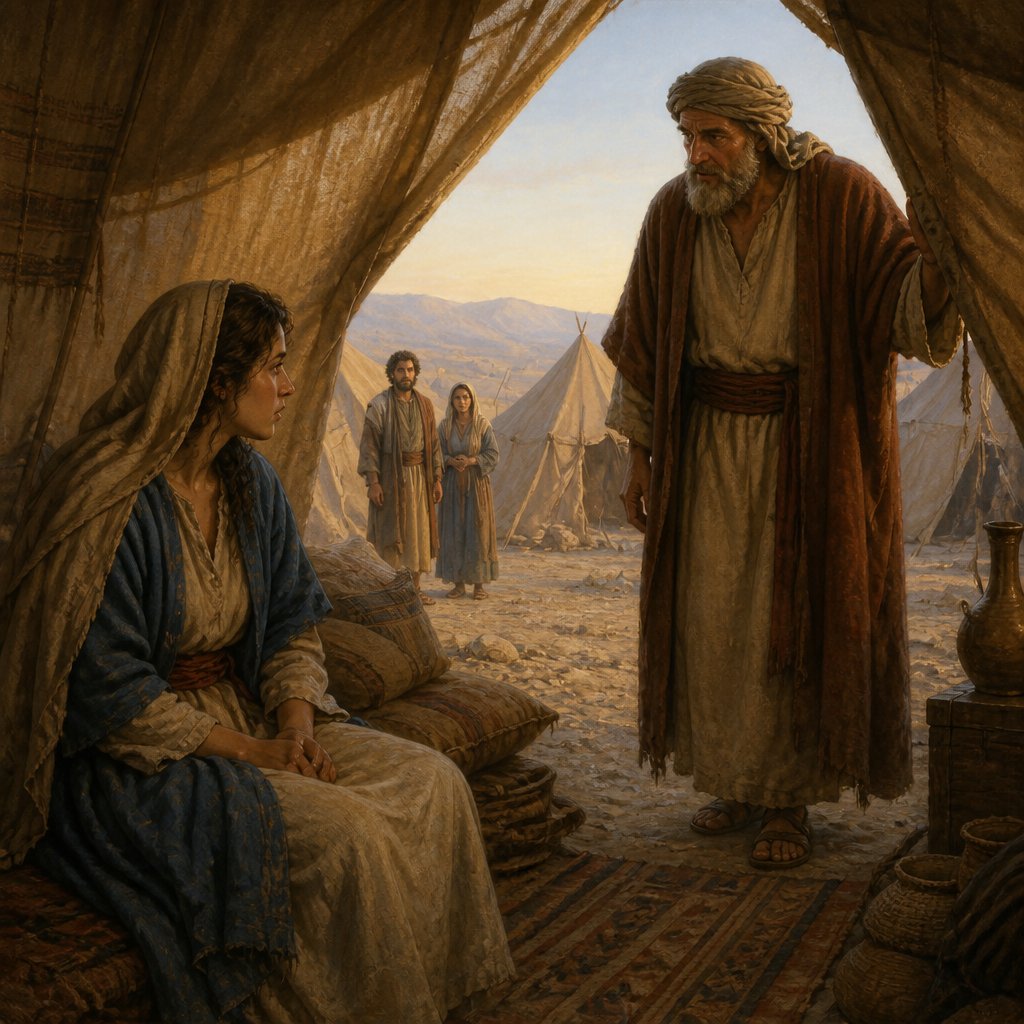
Genesis 31:33 (KJV) states, "And Laban went into Jacob's tent, and into Leah's tent, and into the two maidservants' tents; but he found them not. Then went he out of Leah's tent, and entered into Rachel's tent."
This verse is a part of the narrative of Jacob's departure from his father-in-law Laban's household and is significant in highlighting the tensions and deceptions that characterized their relationship. The broader context of this verse is that Jacob had fled from Laban with his wives, children, and possessions, following years of mistreatment and deception by Laban. Laban pursued Jacob, accusing him of stealing his household idols, and upon catching up with him, demanded that his belongings be returned. As the verse describes Laban's search through the tents, it portrays the climax of the tension between the two men and builds towards the resolution of their conflict.
The theme of deception and manipulation is central to the narrative in Genesis 31, as both Jacob and Laban have been guilty of using deceit to further their own interests. Laban deceived Jacob by giving him Leah instead of Rachel as his wife, and then manipulated him into working for him for an extended period of time. In turn, Jacob deceived Laban by acquiring the best livestock through selective breeding and then fleeing with his family without informing him. The search through the tents for the stolen idols serves as a symbol of the ongoing deception and mistrust between the two men.
Another prominent theme in this verse is the idea of divine justice and protection. Throughout the narrative, it is clear that God is watching over Jacob and his family, ensuring that they are kept safe from Laban's hostility. This is evident in the fact that Laban does not find the idols he seeks, despite searching through all the tents. It is a reminder that God is aware of the injustices done to Jacob and is actively intervening on his behalf.
The symbolism in this verse is also noteworthy. The search through the tents can be interpreted as a metaphor for the search for truth and righteousness. Laban's actions represent an attempt to uncover the wrongs committed against him, while also reflecting his own moral shortcomings. The tents, as the dwelling places of Jacob's family, symbolize their unity and sanctity, which Laban's intrusion disrupts. The focus on Rachel's tent, in particular, highlights her significance in the narrative, as she is the beloved wife of Jacob and the mother of Joseph, who plays a crucial role in the later parts of Genesis.
In a broader context, this verse contributes to the overarching narrative of God's covenant with Jacob and his descendants. Despite the challenges and conflicts that Jacob faces, God's promise of protection and blessing remains steadfast. This is further emphasized in the subsequent verses, where God commands Laban not to speak to Jacob either good or bad, signifying His protection over Jacob and his family.
In conclusion, Genesis 31:33 captures the climax of the conflict between Jacob and Laban, emphasizing themes of deception, divine protection, and the search for truth. The verse's rich symbolism and nuanced portrayal of human relationships make it a significant part of the broader narrative of Jacob's life and his place in the unfolding plan of God's covenant.
Get our apps


Artwork for Genesis 31:33

Genesis 31:33 - "And Laban went into Jacob's tent, and into Leah's tent, and into the two maidservants' tents; but he found them not. Then went he out of Leah's tent, and entered into Rachel's tent."
"And Laban went into Jacob's tent, and into Leah's tent, and into the two maidservants' tents; but he found them not. Then went he out of Leah's tent, and entered into Rachel's tent." - Genesis 31:33

Jeremiah 31:31-33

Jeremiah 31:31-33

Exodus 26:31-33

Numbers 31:33 - "And threescore and twelve thousand beeves,"

Numbers 33:31 - "And they departed from Moseroth, and pitched in Bene-jaakan."

Genesis 19-33

Genesis 21-33

Genesis 18-33

Genesis 24-33

Genesis 25-33

"And threescore and twelve thousand beeves," - Numbers 31:33

Job 31:33 - "If I covered my transgressions as Adam, by hiding mine iniquity in my bosom:"

Genesis 21-31

Genesis 18-31

Genesis 31:35

Genesis 19-31

Genesis 24-31

Job 33:31 - "Mark well, O Job, hearken unto me: hold thy peace, and I will speak."

Genesis 33:6 - "Then the handmaidens came near, they and their children, and they bowed themselves."

"And they departed from Moseroth, and pitched in Bene-jaakan." - Numbers 33:31

Genesis 33:20 - "And he erected there an altar, and called it El-elohe-Israel."

Genesis 31:22 - "And it was told Laban on the third day that Jacob was fled."

Genesis 33:16 - "¶ So Esau returned that day on his way unto Seir."

Genesis 36:33 - "And Bela died, and Jobab the son of Zerah of Bozrah reigned in his stead."

Genesis 31:45 - "And Jacob took a stone, and set it up for a pillar."

Genesis 31:47 - "And Laban called it Jegarsahadutha: but Jacob called it Galeed."

Genesis 31:31 - "And Jacob answered and said to Laban, Because I was afraid: for I said, Peradventure thou wouldest take by force thy daughters from me."

Genesis 34:31 - "And they said, Should he deal with our sister as with an harlot?"