What does Genesis 34:20 mean?
“And Hamor and Shechem his son came unto the gate of their city, and communed with the men of their city, saying,” — Genesis 34:20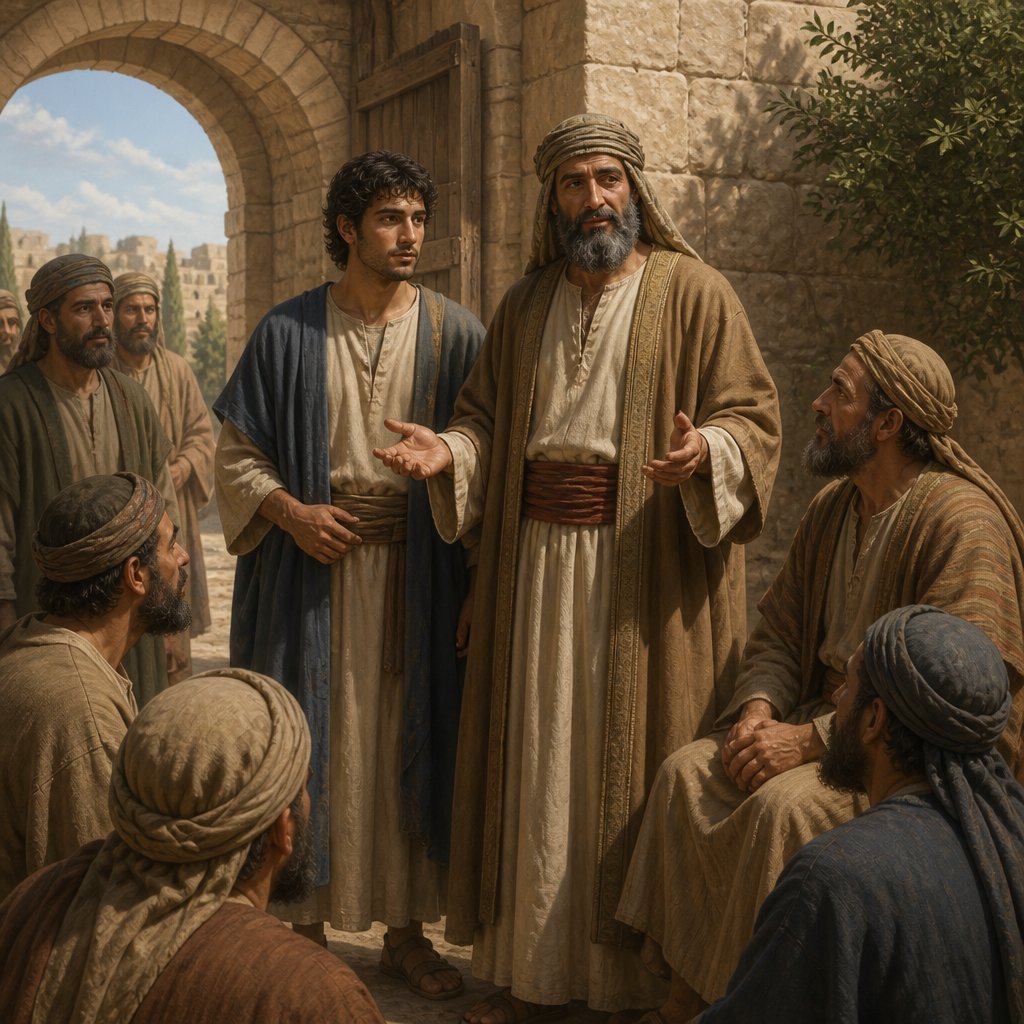
Genesis 34:20 (KJV) - "And Hamor and Shechem his son came unto the gate of their city, and communed with the men of their city, saying:"
The book of Genesis is the first book of the Bible and is considered to be a foundational text for the faith of Judaism, Christianity, and Islam. It is a text that contains the creation story of the world, the fall of man, the flood, and the stories of the patriarchs of the Jewish faith. Genesis 34:20 occurs within the story of Dinah, the daughter of Jacob, which provides insight into themes of family, honor, and justice.
In Genesis 34, we find the story of Dinah, the daughter of Jacob, who is violated by Shechem, a prince of the land. After this event, Shechem falls in love with Dinah and asks his father, Hamor, to seek her hand in marriage. The verse occurs within the context of Hamor and Shechem going to the city gate to speak with the leaders of the city about this request. This is significant as the city gate was the place where legal and social transactions took place, making it a symbol of authority and judgment.
The significance of this verse lies in the themes of honor, justice, and the consequences of actions. In ancient Near Eastern culture, honor was of utmost importance, and the violation of Dinah was not only a personal offense but also a disgrace to Jacob's family. The conversation that Hamor and Shechem have with the men of their city at the gate can be seen as an attempt to rectify the situation and restore honor. This suggests the importance of seeking reconciliation and finding a resolution to conflicts within the community.
Furthermore, the concept of justice is also central to this verse. By communing with the men of their city, Hamor and Shechem are taking the proper steps to address the wrong that has been done. In many ways, this scene mirrors the later legal proceedings found in the Mosaic law, where disputes are settled at the city gate. It highlights the importance of seeking justice and resolving conflicts in a peaceful and lawful manner.
The symbolism of the city gate is worth exploring further. As mentioned earlier, the city gate was a place of authority and judgment. Within the biblical narrative, it is often the place where important decisions are made, and where the elders of the city gather to resolve disputes. In this verse, the city gate serves as a microcosm of the social and legal order of the community. It is a place where justice is sought and where the ethical conduct of individuals is challenged.
In the broader context of the book of Genesis, this verse also reflects the complexities of human relationships and the moral consequences of our actions. The story of Dinah and the subsequent events highlight the impact of personal choices on the community, and the need for accountability and restitution. It serves as a reminder that our actions have broader implications and that seeking reconciliation and justice is essential for the flourishing of the community.
In conclusion, Genesis 34:20 is a verse that provides insight into the themes of honor, justice, and the consequences of our actions. The setting of the city gate symbolizes the authority and judgment of the community, and the actions of Hamor and Shechem reflect the importance of seeking reconciliation and justice. In the broader context of the book of Genesis, this verse serves as a moral lesson on the impact of personal choices and the need for accountability within the community. Ultimately, it highlights the importance of ethical behavior and the pursuit of justice in the face of conflict.
Get our apps


Artwork for Genesis 34:20

Genesis 34:20 - "¶ And Hamor and Shechem his son came unto the gate of their city, and communed with the men of their city, saying,"
"¶ And Hamor and Shechem his son came unto the gate of their city, and communed with the men of their city, saying," - Genesis 34:20

Genesis 21-34

Genesis 19-34

Genesis 24-34

Matthew 20:29-34

Lucas 20:34-35

Numbers 34:20 - "And of the tribe of the children of Simeon, Shemuel the son of Ammihud."

Genesis 21:34 - "And Abraham sojourned in the Philistines' land many days."

Genesis 24:34 - "And he said, I am Abraham's servant."

Genesis 34:18 - "And their words pleased Hamor, and Shechem Hamor's son."

Psalms 34:20 - "He keepeth all his bones: not one of them is broken."

Genesis 34:31 - "And they said, Should he deal with our sister as with an harlot?"

Genesis 36:34 - "And Jobab died, and Husham of the land of Temani reigned in his stead."

Genesis 34:28 - "They took their sheep, and their oxen, and their asses, and that which was in the city, and that which was in the field,"

Genesis 30:34 - "And Laban said, Behold, I would it might be according to thy word."

Genesis 34:6 - "¶ And Hamor the father of Shechem went out unto Jacob to commune with him."

Genesis 20

Luke 20:34 - "And Jesus answering said unto them, The children of this world marry, and are given in marriage:"

Genesis 34:15 - "But in this will we consent unto you: If ye will be as we be, that every male of you be circumcised;"

Genesis 34:27 - "The sons of Jacob came upon the slain, and spoiled the city, because they had defiled their sister."

Genesis 34:4 - "And Shechem spake unto his father Hamor, saying, Get me this damsel to wife."

Genesis 34:17 - "But if ye will not hearken unto us, to be circumcised; then will we take our daughter, and we will be gone."

Genesis 20-18

Genesis 20-13

Genesis 20-16

Genesis 15:20

Genesis 20-4

Genesis 20-1

Genesis 20-15