What does Genesis 36:17 mean?
“And these are the sons of Reuel Esau’s son; duke Nahath, duke Zerah, duke Shammah, duke Mizzah: these are the dukes that came of Reuel in the land of Edom; these are the sons of Bashemath Esau’s wife.” — Genesis 36:17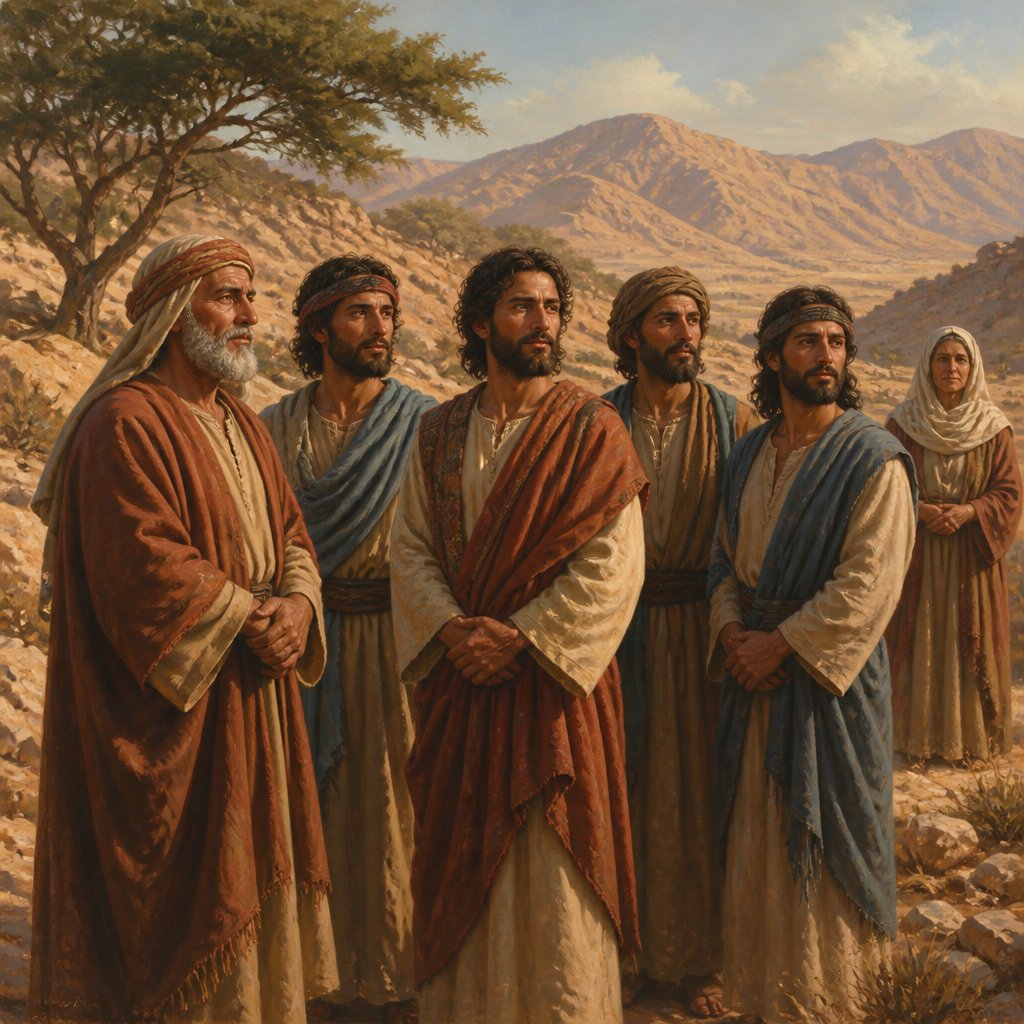
Genesis 36:17 in the King James Version (KJV) of the Bible reads, "And these are the sons of Reuel, Esau's son; duke Nahath, duke Zerah, duke Shammah, duke Mizzah: these are the dukes that came of Reuel in the land of Edom; these are the sons of Bashemath, Esau's wife."
This verse is part of the genealogy of Esau, the eldest son of Isaac and the twin brother of Jacob. Esau is a significant figure in the Bible, and his story is characterized by themes of family, struggle, and redemption. This particular verse lists the descendants of Esau's son Reuel, also known as Reuel or Reuel. It emphasizes the continuity of the family line and the establishment of leadership and authority in the land of Edom.
The context of this verse is important for understanding its significance in the broader narrative of the Bible. Esau, as the elder son of Isaac, was entitled to the birthright and blessing traditionally given to the firstborn. However, he was tricked by his younger brother, Jacob, and lost both the birthright and the blessing to him. This led to a deep and longstanding rivalry between the two brothers, symbolizing the struggles within families and the consequences of deceit and betrayal.
The genealogy of Esau's descendants, including the listing of dukes or leaders, reflects the establishment of power and authority within the community. The repetition of the word "duke" emphasizes the hierarchical structure of leadership, which was crucial in the ancient world for maintaining order and stability. It also highlights the prominence of the descendants of Esau and their role in shaping the history of Edom.
Furthermore, this verse also underscores the importance of marriage and familial relationships in shaping the future of a community. The mention of Bashemath, Esau's wife, indicates the significance of women in the lineage and the continuation of the family line. The Bible often emphasizes the role of women in the patriarchal society of ancient Israel, and this verse is no exception.
Symbolically, this verse represents the continuity of the family line and the establishment of leadership within the land of Edom. It reflects the broader themes of inheritance, legacy, and the consequences of choices made within families. The mention of dukes and leaders also highlights the importance of governance and order within society, as well as the role of individuals in shaping the destiny of their community.
In conclusion, Genesis 36:17 is a verse that is deeply rooted in the historical and cultural context of the ancient world, reflecting the values and traditions of the time. It serves as a reminder of the significance of family, leadership, and the consequences of decisions made within familial relationships. It also points to the continued importance of these themes in shaping the broader narrative of the Bible and the history of the people of Israel.
Get our apps


Artwork for Genesis 36:17

Genesis 36:17 - "¶ And these are the sons of Reuel Esau's son; duke Nahath, duke Zerah, duke Shammah, duke Mizzah: these are the dukes that came of Reuel in the land of Edom; these are the sons of Bashemath Esau's wife."
"¶ And these are the sons of Reuel Esau's son; duke Nahath, duke Zerah, duke Shammah, duke Mizzah: these are the dukes that came of Reuel in the land of Edom; these are the sons of Bashemath Esau's wife." - Genesis 36:17

Genesis 36:36 - "And Hadad died, and Samlah of Masrekah reigned in his stead."

Genesis 24:36

Genesis 19-36

Genesis 36:28 - "The children of Dishan are these; Uz, and Aran."

"And Hadad died, and Samlah of Masrekah reigned in his stead." - Genesis 36:36

Genesis 36:27 - "The children of Ezer are these; Bilhan, and Zaavan, and Akan."

Genesis 36:19 - "These are the sons of Esau, who is Edom, and these are their dukes."

Genesis 36:3 - "And Bashemath Ishmael's daughter, sister of Nebajoth."

Genesis 36:1 - "Now these are the generations of Esau, who is Edom."

Genesis 36:26 - "And these are the children of Dishon; Hemdan, and Eshban, and Ithran, and Cheran."

Genesis 36:42 - "Duke Kenaz, duke Teman, duke Mibzar,"

Genesis 36:9 - "¶ And these are the generations of Esau the father of the Edomites in mount Seir:"

Genesis 36:41 - "Duke Aholibamah, duke Elah, duke Pinon,"

Genesis 19:36 - "Thus were both the daughters of Lot with child by their father."

Genesis 36:8 - "Thus dwelt Esau in mount Seir: Esau is Edom."

Genesis 36:25 - "And the children of Anah were these; Dishon, and Aholibamah the daughter of Anah."

Genesis 36:4 - "And Adah bare to Esau Eliphaz; and Bashemath bare Reuel;"

Genesis 36:11 - "And the sons of Eliphaz were Teman, Omar, Zepho, and Gatam, and Kenaz."

Genesis 36:23 - "And the children of Shobal were these; Alvan, and Manahath, and Ebal, Shepho, and Onam."

Genesis 36:34 - "And Jobab died, and Husham of the land of Temani reigned in his stead."

Genesis 36:22 - "And the children of Lotan were Hori and Hemam; and Lotan's sister was Timna."
Genesis 36:37 - "And Samlah died, and Saul of Rehoboth by the river reigned in his stead."

Genesis 36:33 - "And Bela died, and Jobab the son of Zerah of Bozrah reigned in his stead."

Genesis 36:38 - "And Saul died, and Baal-hanan the son of Achbor reigned in his stead."

Genesis 17-17

Luke 17:36 - "Two men shall be in the field; the one shall be taken, and the other left."

Genesis 36:21 - "And Dishon, and Ezer, and Dishan: these are the dukes of the Horites, the children of Seir in the land of Edom."

Genesis 36:32 - "And Bela the son of Beor reigned in Edom: and the name of his city was Dinhabah."