What does Genesis 36:33 mean?
“And Bela died, and Jobab the son of Zerah of Bozrah reigned in his stead.” — Genesis 36:33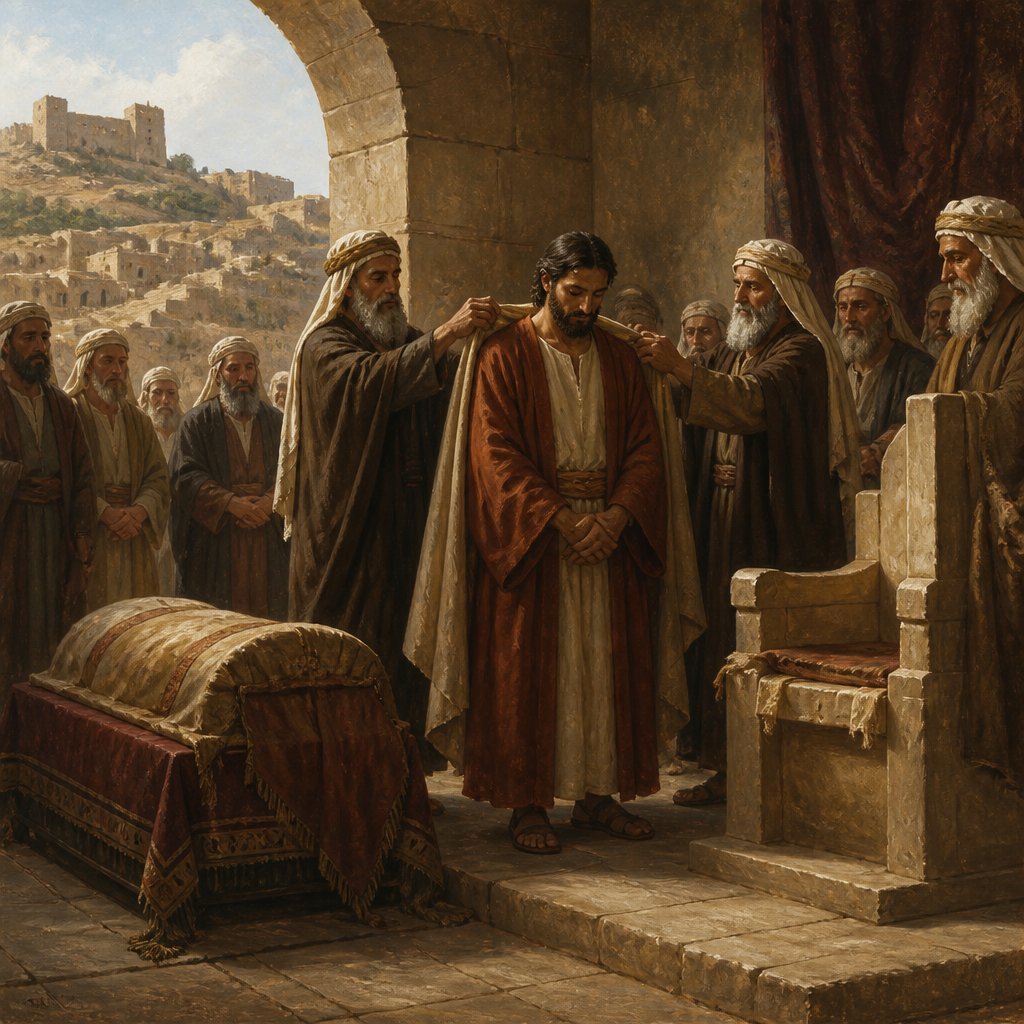
Genesis 36:33 in the King James Version of the Bible reads: "And Bela died, and Jobab the son of Zerah of Bozrah reigned in his stead."
This verse is part of the genealogy of Esau, the elder son of Isaac and the twin brother of Jacob. The chapter detailing the genealogy of Esau is a testament to the fulfillment of God's promise to Abraham regarding his descendants. This verse specifically refers to the reign of Jobab after the death of Bela.
The book of Genesis, where this verse is found, is the first book of the Bible and is considered to be a historical account of the creation of the world, the origins of humanity, and the formation of the nation of Israel. The genealogies in Genesis are significant in establishing the lineages of the main characters and the fulfillment of God's promises to their descendants. The genealogy of Esau is particularly important because it illustrates how God's covenant with Abraham extends to all of his descendants, not just those in the line of Isaac and Jacob.
In the broader context of the book of Genesis, the genealogy of Esau serves to contrast the line of Esau with that of Jacob, his twin brother. While Jacob's descendants, the Israelites, are known for being the chosen people of God and the inheritors of the covenant, the descendants of Esau are also portrayed as prosperous and numerous. This contrast emphasizes the faithfulness of God to His promises and His sovereignty over all nations, not just the nation of Israel.
The theme of succession and replacement is evident in this verse, as Bela's death leads to the reign of Jobab. This theme is common throughout the Bible, as the passing of leadership from one generation to the next is a recurring pattern in the narratives of the Old Testament. This succession of leadership serves as a reminder of the transient nature of power and the ultimate authority of God over the affairs of humanity.
The mention of Bozrah, the city from which Jobab hails, is also significant. Bozrah was a prominent city in Edom, the territory inhabited by the descendants of Esau. Symbolically, Bozrah represents the strength and prosperity of the Edomites, as it was a well-fortified and economically important city. The mention of Bozrah in connection with Jobab highlights the significance and influence of his reign as the leader of a prosperous and powerful city.
In a broader theological sense, this verse can also serve as a reminder of the cyclical nature of life and the reality of mortality. The passing of Bela and the ascension of Jobab to the throne illustrate the inevitable transitions that occur in human existence. This can be seen as a reflection of the biblical truth that all things on earth are temporary and subject to change, while the kingdom of God is eternal and unchanging.
In conclusion, Genesis 36:33 is a seemingly simple verse that holds profound significance within the broader context of the book of Genesis and the Bible as a whole. It is part of the rich tapestry of genealogies and narratives that illustrate the fulfillment of God's promises, the succession of leadership, and the sovereignty of God over the affairs of humanity. Ultimately, it serves as a reminder of the transient nature of human existence and the unchanging faithfulness of God.
Get our apps


Artwork for Genesis 36:33

Genesis 36:33 - "And Bela died, and Jobab the son of Zerah of Bozrah reigned in his stead."
"And Bela died, and Jobab the son of Zerah of Bozrah reigned in his stead." - Genesis 36:33

Romana 11:33-36

Job 36:33 - "The noise thereof sheweth concerning it, the cattle also concerning the vapour."

Genesis 36:36 - "And Hadad died, and Samlah of Masrekah reigned in his stead."

Numbers 33:36 - "And they removed from Ezion-gaber, and pitched in the wilderness of Zin, which is Kadesh."

Genesis 24:36

Genesis 19-36

Exodus 36:33 - "And he made the middle bar to shoot through the boards from the one end to the other."

Genesis 19-33

Genesis 21-33

Genesis 18-33

Genesis 24-33

Genesis 25-33

Genesis 36:28 - "The children of Dishan are these; Uz, and Aran."

"And Hadad died, and Samlah of Masrekah reigned in his stead." - Genesis 36:36

Genesis 36:27 - "The children of Ezer are these; Bilhan, and Zaavan, and Akan."

Genesis 36:19 - "These are the sons of Esau, who is Edom, and these are their dukes."

Genesis 36:3 - "And Bashemath Ishmael's daughter, sister of Nebajoth."

Genesis 36:1 - "Now these are the generations of Esau, who is Edom."

Genesis 36:26 - "And these are the children of Dishon; Hemdan, and Eshban, and Ithran, and Cheran."

Genesis 36:42 - "Duke Kenaz, duke Teman, duke Mibzar,"

Genesis 36:9 - "¶ And these are the generations of Esau the father of the Edomites in mount Seir:"

Genesis 36:41 - "Duke Aholibamah, duke Elah, duke Pinon,"

Genesis 19:36 - "Thus were both the daughters of Lot with child by their father."

Genesis 36:8 - "Thus dwelt Esau in mount Seir: Esau is Edom."

Genesis 36:25 - "And the children of Anah were these; Dishon, and Aholibamah the daughter of Anah."

Genesis 36:4 - "And Adah bare to Esau Eliphaz; and Bashemath bare Reuel;"

"The noise thereof sheweth concerning it, the cattle also concerning the vapour." - Job 36:33

Genesis 36:11 - "And the sons of Eliphaz were Teman, Omar, Zepho, and Gatam, and Kenaz."