What does Genesis 36:5 mean?
“And Aholibamah bare Jeush, and Jaalam, and Korah: these are the sons of Esau, which were born unto him in the land of Canaan.” — Genesis 36:5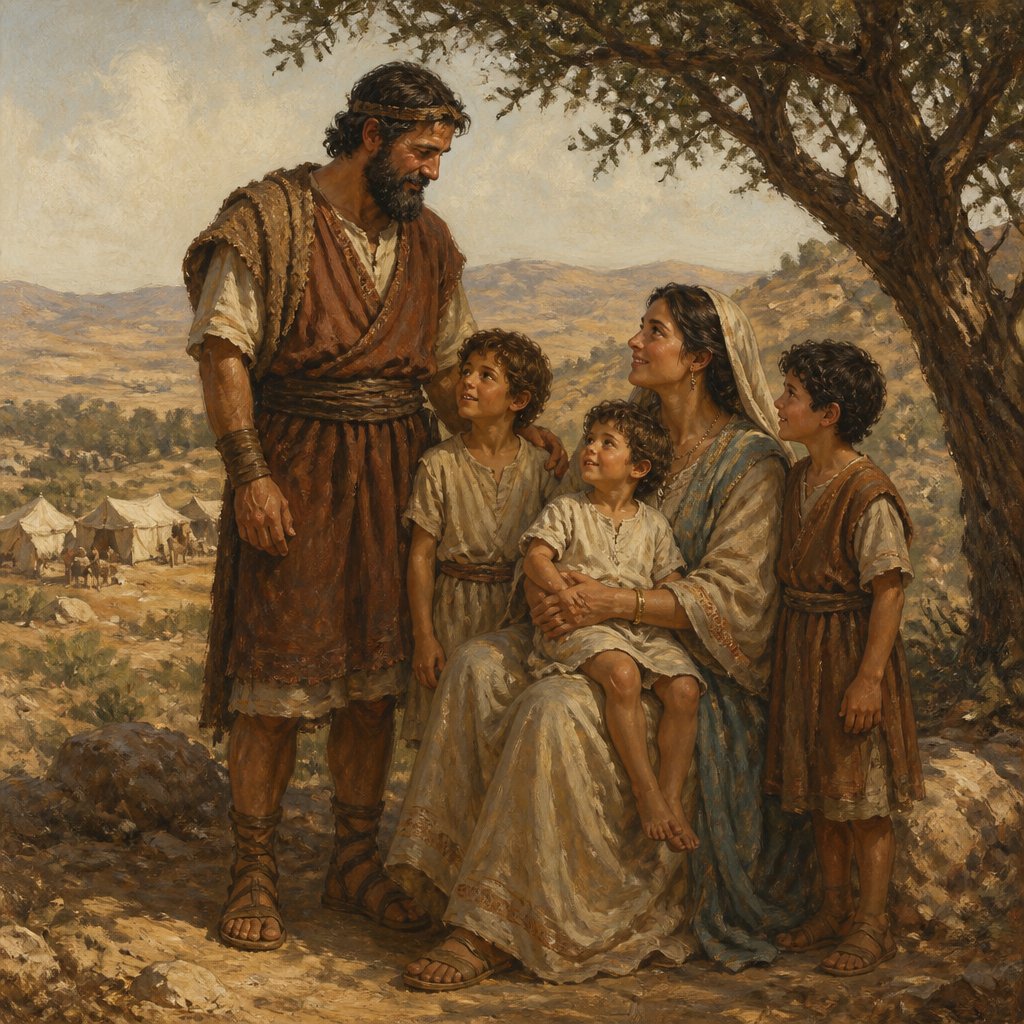
Genesis 36:5 in the King James Version of the Bible reads, "And Aholibamah the daughter of Anah the daughter of Zibeon the Hivite."
This verse is found in the genealogy of Esau, the older twin son of Isaac and Rebekah. Esau, also known as Edom, was the ancestor of the Edomites, a people who lived in the region south of the Dead Sea. The verse mentions Aholibamah, who was one of Esau's wives. This genealogy is significant, as it shows the continuation of the family line and the fulfillment of God's promises to Abraham, Isaac, and Jacob.
Although this verse may seem like a simple record of a marriage, it contains several important themes and elements that are significant to the overall narrative of the Bible. One of the key themes in this verse is the importance of lineage and ancestry. Throughout the Bible, genealogies are often used to establish the continuity of God's plan and the fulfillment of his promises. In the case of Esau, his descendants would become a powerful nation, and their lineage was an important aspect of God's plan for redemption and salvation.
Another theme present in this verse is the concept of marriage and family. In ancient times, marriage was not only a union between individuals but also a means of solidifying alliances and establishing social status. Aholibamah's marriage to Esau was a part of this larger social and political context, and it reflected the customs and traditions of her time.
Moreover, the mentioning of Aholibamah's lineage underscores the idea of God's sovereignty and his work in the midst of human history. Aholibamah was the daughter of Anah who was the son of Zibeon the Hivite. The Hivites were one of the indigenous Canaanite tribes who inhabited the land that God had promised to Abraham and his descendants. By including Aholibamah's lineage, the verse highlights the interconnectedness of various people groups and the ways in which God's plan encompasses and transcends human divisions and boundaries.
Symbolically, Aholibamah's inclusion in the genealogy of Esau also points to the broader theme of God's redemptive work among all people. Despite the Canaanites being a people group outside of the covenant with God, the inclusion of Aholibamah and her descendants in the genealogy of Esau speaks to God's universal plan of salvation. Throughout the Bible, there are numerous examples of God reaching out to individuals and nations beyond the boundaries of Israel, and Aholibamah's presence in the genealogy serves as a reminder of God's inclusive and all-encompassing love.
In conclusion, Genesis 36:5 may appear to be a simple record of a marriage, but it contains rich themes and symbolism that are integral to the overarching narrative of the Bible. From the importance of lineage and ancestry to the broader implications of God's redemptive plan for all people, this verse serves as a reminder of God's faithfulness and sovereignty throughout history. The inclusion of Aholibamah in the genealogy of Esau reflects the interconnectedness of God's plan and the universal scope of His redemptive work.
Get our apps


Artwork for Genesis 36:5

Genesis 36:5 - "And Aholibamah bare Jeush, and Jaalam, and Korah: these are the sons of Esau, which were born unto him in the land of Canaan."
"And Aholibamah bare Jeush, and Jaalam, and Korah: these are the sons of Esau, which were born unto him in the land of Canaan." - Genesis 36:5

Genesis 36:36 - "And Hadad died, and Samlah of Masrekah reigned in his stead."

Genesis 24:36

Genesis 19-36

Genesis 36:28 - "The children of Dishan are these; Uz, and Aran."

"And Hadad died, and Samlah of Masrekah reigned in his stead." - Genesis 36:36

Luke 5:36

Genesis 36:27 - "The children of Ezer are these; Bilhan, and Zaavan, and Akan."

Genesis 36:19 - "These are the sons of Esau, who is Edom, and these are their dukes."

Genesis 36:3 - "And Bashemath Ishmael's daughter, sister of Nebajoth."

Genesis 36:1 - "Now these are the generations of Esau, who is Edom."

Genesis 36:26 - "And these are the children of Dishon; Hemdan, and Eshban, and Ithran, and Cheran."

Genesis 36:42 - "Duke Kenaz, duke Teman, duke Mibzar,"

Genesis 36:9 - "¶ And these are the generations of Esau the father of the Edomites in mount Seir:"

Genesis 36:41 - "Duke Aholibamah, duke Elah, duke Pinon,"

Genesis 19:36 - "Thus were both the daughters of Lot with child by their father."

Genesis 36:8 - "Thus dwelt Esau in mount Seir: Esau is Edom."

Genesis 36:25 - "And the children of Anah were these; Dishon, and Aholibamah the daughter of Anah."

Genesis 36:4 - "And Adah bare to Esau Eliphaz; and Bashemath bare Reuel;"

Genesis 36:11 - "And the sons of Eliphaz were Teman, Omar, Zepho, and Gatam, and Kenaz."

Genesis 36:23 - "And the children of Shobal were these; Alvan, and Manahath, and Ebal, Shepho, and Onam."

Genesis 36:34 - "And Jobab died, and Husham of the land of Temani reigned in his stead."

Genesis 36:22 - "And the children of Lotan were Hori and Hemam; and Lotan's sister was Timna."
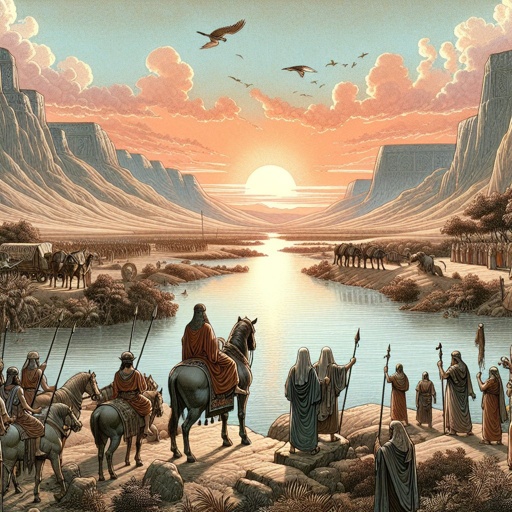
Genesis 36:37 - "And Samlah died, and Saul of Rehoboth by the river reigned in his stead."

Genesis 36:33 - "And Bela died, and Jobab the son of Zerah of Bozrah reigned in his stead."

Genesis 36:38 - "And Saul died, and Baal-hanan the son of Achbor reigned in his stead."

Genesis 36:21 - "And Dishon, and Ezer, and Dishan: these are the dukes of the Horites, the children of Seir in the land of Edom."

Genesis 36:32 - "And Bela the son of Beor reigned in Edom: and the name of his city was Dinhabah."

"The children of Dishan are these; Uz, and Aran." - Genesis 36:28