What does Genesis 37:7 mean?
“For, behold, we were binding sheaves in the field, and, lo, my sheaf arose, and also stood upright; and, behold, your sheaves stood round about, and made obeisance to my sheaf.” — Genesis 37:7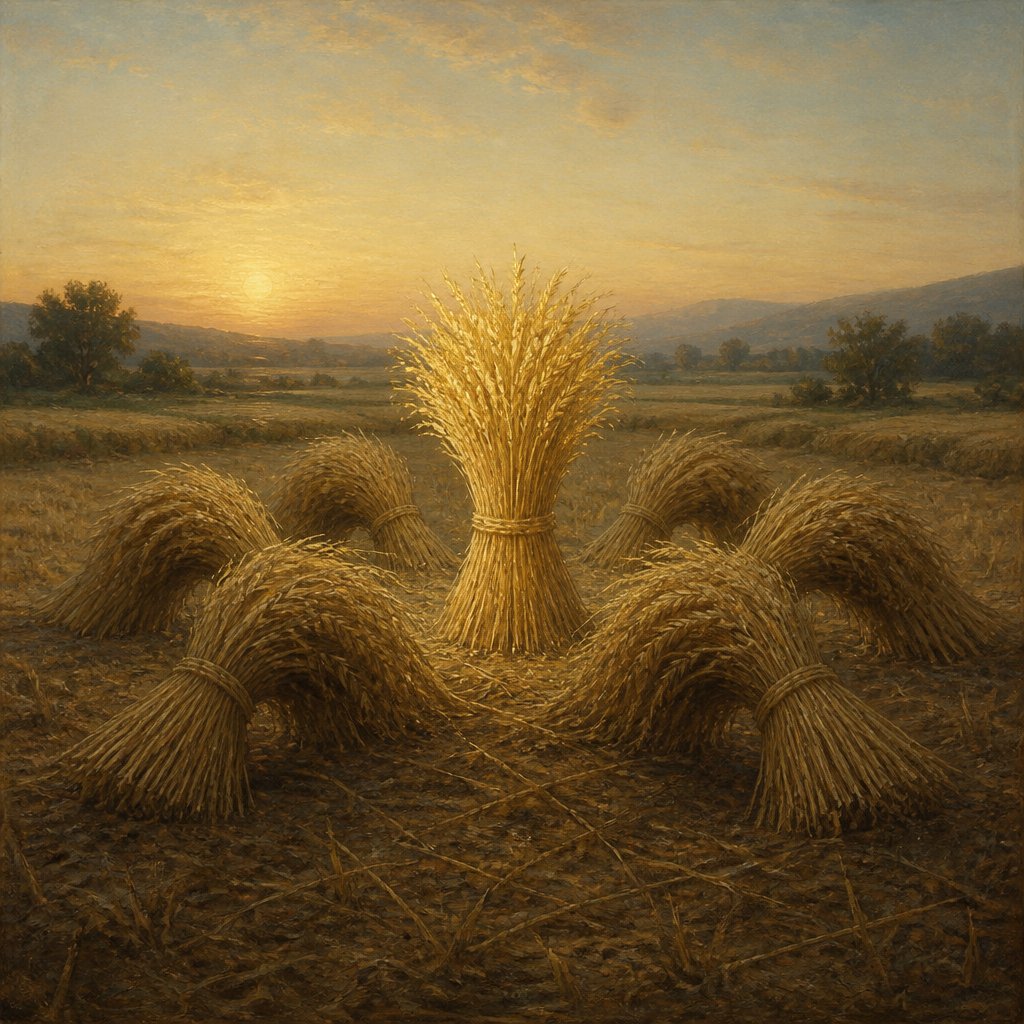
Genesis 37:7 (KJV) states: "For, behold, we were binding sheaves in the field, and, lo, my sheaf arose, and also stood upright; and, behold, your sheaves stood round about, and made obeisance to my sheaf."
This verse comes from the book of Genesis in the Old Testament and is part of the story of Joseph, the son of Jacob. Joseph was the favorite son of Jacob, which led to jealousy and resentment from his brothers. This verse is part of a dream that Joseph had and shared with his brothers, which further fueled their animosity towards him.
The significance of this verse lies in its foreshadowing of Joseph's future rise to power and authority. The imagery of sheaves in a field and the act of them bowing down alludes to Joseph's eventual position of leadership and authority over his family.
The theme of jealousy and favoritism is prevalent in this verse, reflecting the dysfunctional family dynamics of Jacob's household. The favoritism shown towards Joseph by his father Jacob causes deep-seated resentment and jealousy among his brothers. This theme of family strife and jealousy is a recurring motif throughout the book of Genesis and sets the stage for the eventual conflict and reconciliation within the family.
The context of this verse is important to understand its full meaning. At this point in the story, Joseph is still a young and brash individual, unaware of the consequences of sharing his dreams with his brothers. His innocence and naivety serve as a contrast to the treachery and malice of his brothers. This sets the stage for the events that follow, including Joseph's betrayal by his brothers, his enslavement in Egypt, and his eventual rise to power.
The symbolism in this verse is rich and layered. The sheaves in the field represent the brothers and their respective positions within the family. Joseph's sheaf standing upright symbolizes his eventual rise to prominence and authority. The act of the brothers' sheaves making obeisance to Joseph's sheaf foreshadows their submission to him in the future. This imagery is a powerful metaphor for the themes of power, authority, and the divine plan at work in the lives of the characters.
From a spiritual perspective, this verse serves as a reminder of the sovereignty of God and His ability to use even the most unlikely and unforeseen circumstances to fulfill His purposes. The unfolding of Joseph's life, from being betrayed by his brothers to becoming a powerful ruler in Egypt, is a testament to God's providence and faithfulness. It also speaks to the power of dreams and how they can be used by God to communicate His will and purposes.
In conclusion, Genesis 37:7 is a pivotal verse in the story of Joseph, rich in symbolism and foreshadowing. It captures the themes of jealousy, favoritism, divine providence, and the ultimate triumph of good over evil. It serves as a reminder of God's sovereignty and the intricate ways in which He works His will in the lives of individuals. Overall, this verse is a powerful testament to the timeless and universal truths found in the book of Genesis.
Get our apps


Artwork for Genesis 37:7

Genesis 37:7 - "For, behold, we were binding sheaves in the field, and, lo, my sheaf arose, and also stood upright; and, behold, your sheaves stood round about, and made obeisance to my sheaf."
"For, behold, we were binding sheaves in the field, and, lo, my sheaf arose, and also stood upright; and, behold, your sheaves stood round about, and made obeisance to my sheaf." - Genesis 37:7

genesis 37

Genesis 19-37

Genesis 24-37

Genesis 37:2

John 7:37-39

John 7:37-39

Ezekiel 37:7

Psalms 37:7

Genesis 37:19 - "And they said one to another, Behold, this dreamer cometh."

Genesis 37:12 - "¶ And his brethren went to feed their father's flock in Shechem."

Mark 7:31-37

Ezekiel 37 1-7

Mark 7:31-37

Genesis 37:24 - "And they took him, and cast him into a pit: and the pit was empty, there was no water in it."

Genesis 37:11 - "And his brethren envied him; but his father observed the saying."

Genesis 41:37 - "¶ And the thing was good in the eyes of Pharaoh, and in the eyes of all his servants."
Genesis 36:37 - "And Samlah died, and Saul of Rehoboth by the river reigned in his stead."

Genesis 37:31 - "And they took Joseph's coat, and killed a kid of the goats, and dipped the coat in the blood;"

Genesis 37:1 - "And Jacob dwelt in the land wherein his father was a stranger, in the land of Canaan."

Genesis 37:36 - "And the Midianites sold him into Egypt unto Potiphar, an officer of Pharaoh's, and captain of the guard."

Genesis 37:29 - "¶ And Reuben returned unto the pit; and, behold, Joseph was not in the pit; and he rent his clothes."

1 Chronicles 7:37 - "Bezer, and Hod, and Shamma, and Shilshah, and Ithran, and Beera."

Genesis 37:5 - "¶ And Joseph dreamed a dream, and he told it his brethren: and they hated him yet the more."

Genesis 37:30 - "And he returned unto his brethren, and said, The child is not; and I, whither shall I go?"

Nehemiah 7:37 - "The children of Lod, Hadid, and Ono, seven hundred twenty and one."

Genesis 19:37 - "And the firstborn bare a son, and called his name Moab: the same is the father of the Moabites unto this day."

Genesis 37:21 - "And Reuben heard it, and he delivered him out of their hands; and said, Let us not kill him."

Genesis 37:6 - "And he said unto them, Hear, I pray you, this dream which I have dreamed:"