What does Genesis 41:25 mean?
“And Joseph said unto Pharaoh, The dream of Pharaoh is one: God hath shewed Pharaoh what he is about to do.” — Genesis 41:25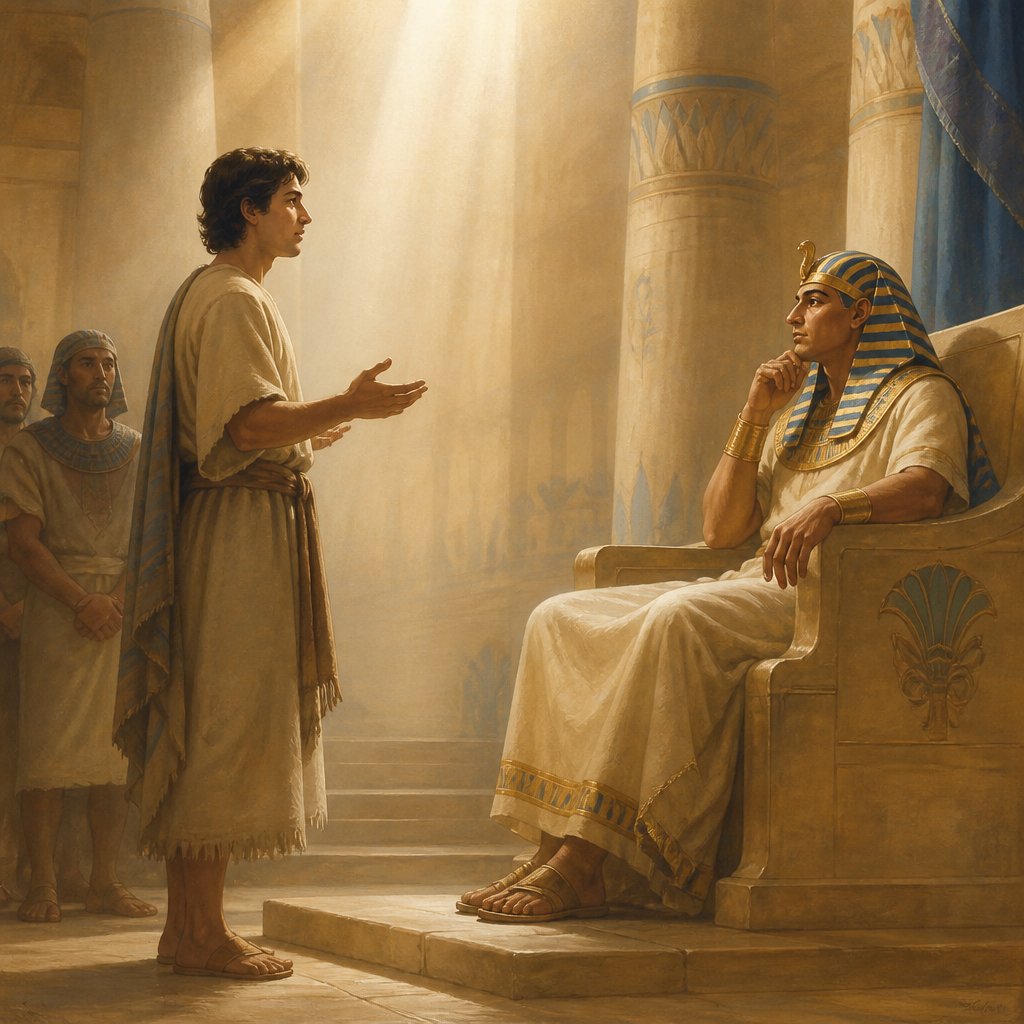
In Genesis 41:25, the verse from the King James Version reads: "And Joseph said unto Pharaoh, The dream of Pharaoh is one: God hath shewed Pharaoh what he is about to do."
This verse is part of the story of Joseph, a prominent figure in the book of Genesis. He was the son of Jacob and Rachel and was favored by his father, which resulted in his brothers' jealousy and his subsequent sale into slavery in Egypt. Through a series of events, Joseph rises to a position of power and influence in Egypt, ultimately becoming second in command to Pharaoh.
The context of this verse finds Joseph interpreting Pharaoh's dreams. Pharaoh had two dreams that troubled him, and when his wise men and magicians were unable to interpret them, Joseph was summoned to provide an interpretation. Before Joseph delves into the meaning of the dreams, he prefaces his interpretation by acknowledging God's role in the situation.
One of the central themes of this verse and the overall story of Joseph is the idea of divine providence and God's sovereignty. Joseph attributes the interpretation of Pharaoh's dreams to God, highlighting his belief that God is the one who reveals the future and has a plan for all things. This theme is woven throughout the entire narrative of Joseph's life, from his early experiences of betrayal and hardship to his eventual rise to power and reconciliation with his family.
The verse also speaks to the idea of interpreting dreams and the significance of dreams in the biblical context. Throughout the Bible, dreams are often seen as a means through which God communicates with people. In the case of Pharaoh's dreams, they were seen as a message from God about the impending famine that would affect the land.
The symbolism in this verse lies in the acknowledgment of God as the ultimate source of wisdom and knowledge. By attributing the interpretation of the dreams to God, Joseph is emphasizing the belief that God's wisdom surpasses human understanding and that he is the one who reveals the hidden meanings of events and circumstances.
Furthermore, the verse also speaks to the idea of the importance of trusting in God's plan and guidance. Joseph's recognition of God's involvement in the situation serves as a reminder for believers to lean on God's wisdom and seek his direction in all aspects of life.
In a broader theological sense, this verse can be seen as a reflection of the biblical understanding of God's omniscience and omnipotence. It emphasizes the belief that God is in control of all things and that his plans will ultimately be fulfilled, regardless of the circumstances.
Overall, Genesis 41:25 is a verse that highlights the themes of divine providence, the significance of dreams, and the ultimate sovereignty of God. It serves as a reminder for believers to trust in God's wisdom and guidance, even in times of uncertainty. Throughout the story of Joseph, this verse stands as a testament to the belief that God's plans will ultimately prevail and that His wisdom surpasses all human understanding.
Get our apps


Artwork for Genesis 41:25

Genesis 41:25 - "And Joseph said unto Pharaoh, The dream of Pharaoh is one: God hath shewed Pharaoh what he is about to do."
"And Joseph said unto Pharaoh, The dream of Pharaoh is one: God hath shewed Pharaoh what he is about to do." - Genesis 41:25

Genesis 41:41 and make pharaoh black

Genesis 24-41

Genesis 41:41-42 focus on signet ring

Genesis 41:41 - "And Pharaoh said unto Joseph, See, I have set thee over all the land of Egypt."

Genesis 25:25

Genesis 41:47 - "And in the seven plenteous years the earth brought forth by handfuls."

Job 41:25 - "When he raiseth up himself, the mighty are afraid: by reason of breakings they purify themselves."

Genesis 36:41 - "Duke Aholibamah, duke Elah, duke Pinon,"

Genesis 41:53 - "¶ And the seven years of plenteousness, that was in the land of Egypt, were ended."

Genesis 41:37 - "¶ And the thing was good in the eyes of Pharaoh, and in the eyes of all his servants."

Genesis 41:31 - "And the plenty shall not be known in the land by reason of that famine following; for it shall be very grievous."

Genesis 41:29 - "Behold, there come seven years of great plenty throughout all the land of Egypt:"

Genesis 41:6 - "And, behold, seven thin ears and blasted with the east wind sprung up after them."

Genesis 41:2 - "And, behold, there came up out of the river seven well favoured kine and fatfleshed; and they fed in a meadow."

Genesis 41:26 - "The seven good kine are seven years; and the seven good ears are seven years: the dream is one."

Genesis 41:23 - "And, behold, seven ears, withered, thin, and blasted with the east wind, sprung up after them:"

Genesis 1:1-25

Genesis 1:1-25

Genesis 1:1-25

Genesis 41:20 - "And the lean and the ill favoured kine did eat up the first seven fat kine:"

Genesis 41:16 - "And Joseph answered Pharaoh, saying, It is not in me: God shall give Pharaoh an answer of peace."

Genesis 41:32 - "And for that the dream was doubled unto Pharaoh twice; it is because the thing is established by God, and God will shortly bring it to pass."

Genesis 41:52 - "And the name of the second called he Ephraim: For God hath caused me to be fruitful in the land of my affliction."

Genesis 41:22 - "And I saw in my dream, and, behold, seven ears came up in one stalk, full and good:"

Genesis 25-2

Genesis 25-18

Genesis 25-24

Genesis 25-7