What does Genesis 42:10 mean?
“And they said unto him, Nay, my lord, but to buy food are thy servants come.” — Genesis 42:10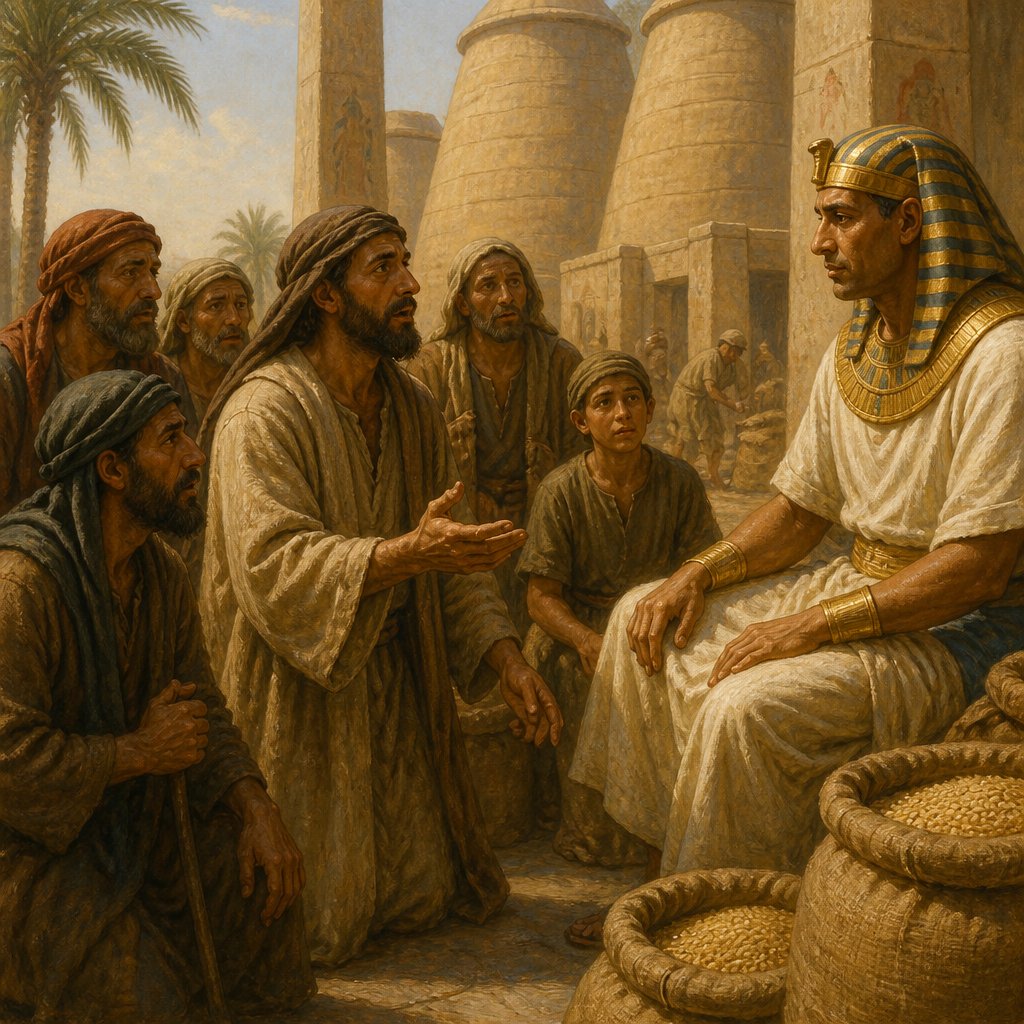
Genesis 42:10 (KJV) reads, "And they said unto him, Nay, my lord, but to buy food are thy servants come."
This verse is part of the story of Joseph and his brothers, which takes place during a time of great famine in the land of Canaan. Joseph's brothers go to Egypt to buy food, unaware that they will encounter their long-lost brother, whom they had betrayed and sold into slavery many years before. The verse captures the brothers' response to Joseph, whom they do not recognize at this point.
The theme of forgiveness is central to the story of Joseph and his brothers. Although the brothers had wronged Joseph in the past, Joseph eventually forgives them and provides for their needs during the famine. This verse demonstrates the brothers' humility as they address Joseph as "my lord" and seek to buy food from him. It also foreshadows the eventual reconciliation and forgiveness that will take place between Joseph and his brothers.
The context of this verse is important for understanding its significance. Joseph's rise to power in Egypt and the ensuing famine play a crucial role in the narrative. This moment marks a turning point in the relationship between Joseph and his brothers. The brothers, driven by hunger, are forced to seek help from the very person they had mistreated. This sets the stage for the emotional confrontation and reconciliation that will unfold in later chapters.
The symbolism in this verse is powerful. The act of buying food represents the brothers' recognition of their own need and dependence. It also symbolizes their acknowledgment of Joseph's authority and their willingness to submit to his leadership. Additionally, the transaction of buying food mirrors the spiritual truth that we are all in need of sustenance and provision, both physically and spiritually. The brothers' journey for food reflects the human condition of seeking fulfillment and sustenance in times of desperation.
Furthermore, the brothers' response to Joseph is significant. Their humility and acknowledgment of their need for food mirror the repentance and recognition of sin that is necessary for true reconciliation. Their willingness to seek help from the one they had wronged demonstrates a willingness to make amends and seek forgiveness. This theme of reconciliation and forgiveness is central to the overall message of the Joseph narrative.
In conclusion, Genesis 42:10 captures a pivotal moment in the story of Joseph and his brothers. The verse exemplifies the themes of forgiveness, reconciliation, and humility. It also carries powerful symbolism related to the human condition and the spiritual need for sustenance and provision. Through this verse, we are reminded of the importance of seeking forgiveness, acknowledging our own shortcomings, and ultimately, extending grace to others. The story of Joseph and his brothers serves as a powerful example of the transformative power of forgiveness and reconciliation.
Get our apps


Artwork for Genesis 42:10

Genesis 42:10 - "And they said unto him, Nay, my lord, but to buy food are thy servants come."
"And they said unto him, Nay, my lord, but to buy food are thy servants come." - Genesis 42:10

Genesis 42:29

Genesis 24-42

Genesis 42:1-2

Genesis 42:26 - "And they laded their asses with the corn, and departed thence."

Genesis 42:8 - "And Joseph knew his brethren, but they knew not him."

Genesis 36:42 - "Duke Kenaz, duke Teman, duke Mibzar,"

John 10:42 - "And many believed on him there."

Ezra 10:42 - "Shallum, Amariah, and Joseph."

Genesis 42:17 - "And he put them all together into ward three days."

Genesis 42:3 - "¶ And Joseph's ten brethren went down to buy corn in Egypt."

Genesis 42:31 - "And we said unto him, We are true men; we are no spies:"

Genesis 42:23 - "And they knew not that Joseph understood them; for he spake unto them by an interpreter."

Genesis 41:41-42 focus on signet ring

Genesis 42:12 - "And he said unto them, Nay, but to see the nakedness of the land ye are come."

Genesis 42:11 - "We are all one man's sons; we are true men, thy servants are no spies."

Genesis 42:14 - "And Joseph said unto them, That is it that I spake unto you, saying, Ye are spies:"

Genesis 42:5 - "And the sons of Israel came to buy corn among those that came: for the famine was in the land of Canaan."

"And many believed on him there." - John 10:42

"Shallum, Amariah, and Joseph." - Ezra 10:42

Genesis 42:30 - "The man, who is the lord of the land, spake roughly to us, and took us for spies of the country."

Genesis 42:18 - "And Joseph said unto them the third day, This do, and live; for I fear God:"

"And they laded their asses with the corn, and departed thence." - Genesis 42:26

Genesis 30:42 - "But when the cattle were feeble, he put them not in: so the feebler were Laban's, and the stronger Jacob's."

Genesis 42:32 - "We be twelve brethren, sons of our father; one is not, and the youngest is this day with our father in the land of Canaan."

"Duke Kenaz, duke Teman, duke Mibzar," - Genesis 36:42

"And Joseph knew his brethren, but they knew not him." - Genesis 42:8

Genesis 42:4 - "But Benjamin, Joseph's brother, Jacob sent not with his brethren; for he said, Lest peradventure mischief befall him."

Genesis 42:29 - "¶ And they came unto Jacob their father unto the land of Canaan, and told him all that befell unto them; saying,"